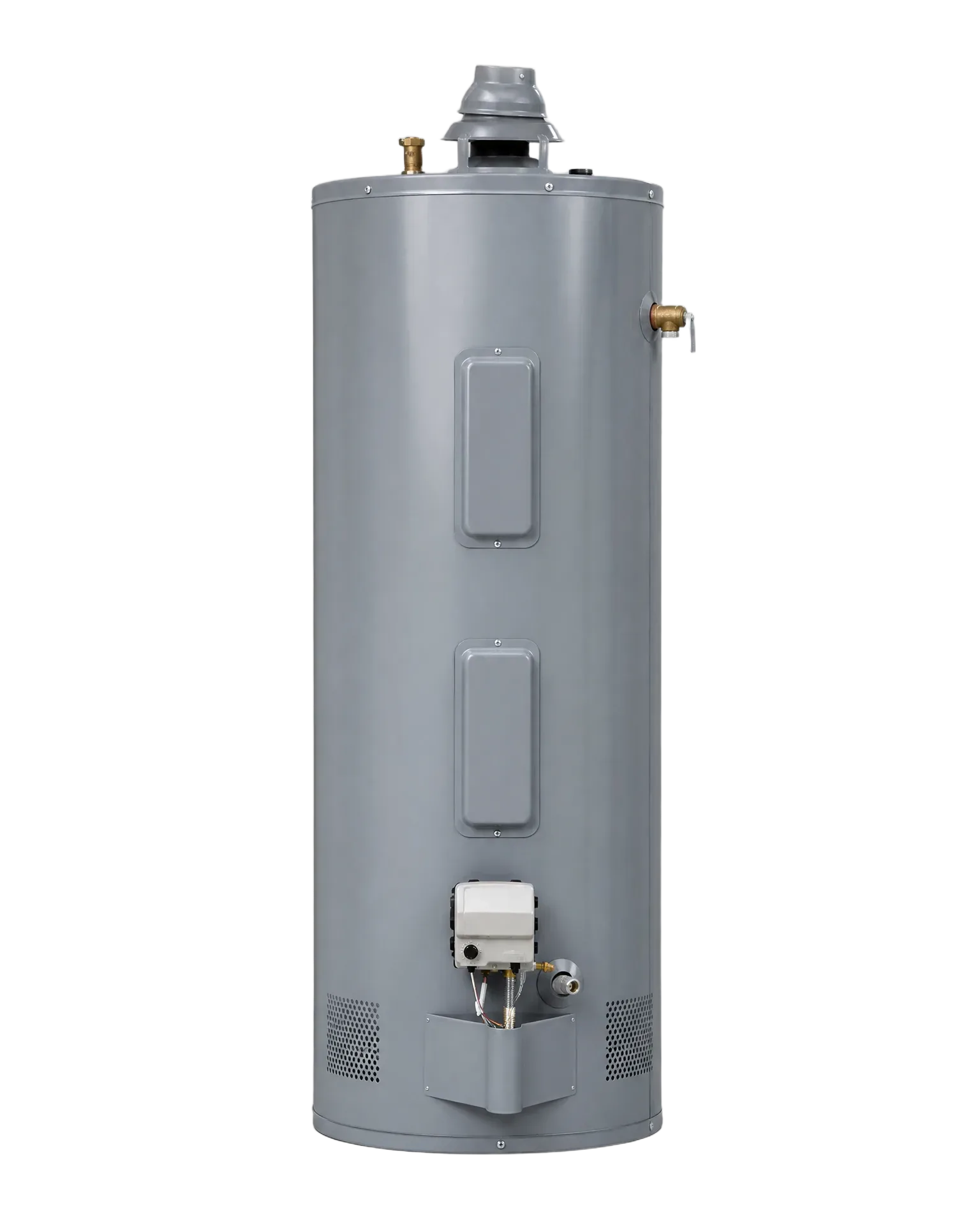
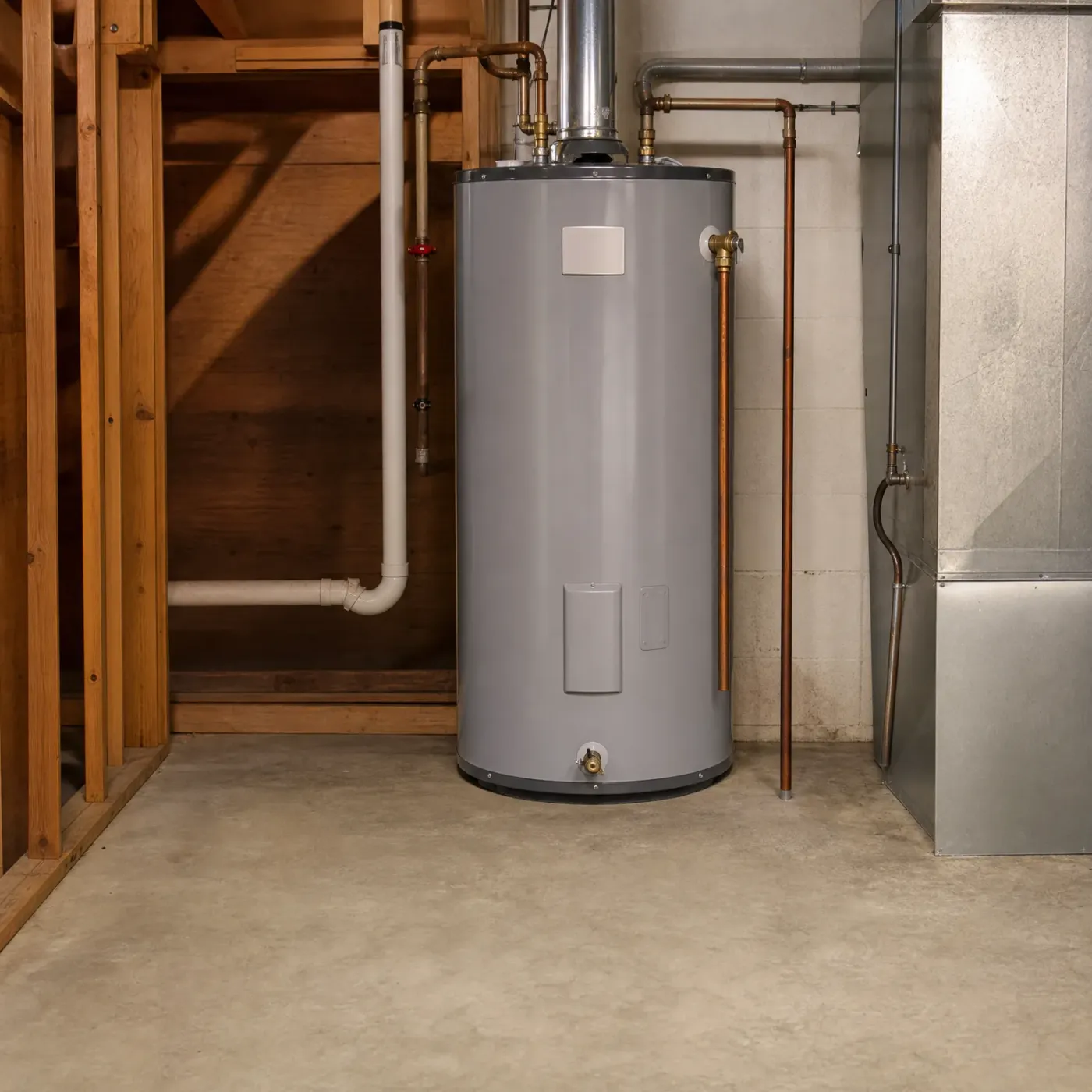
Still running fine
A water heater like this one is doing its job. No rust on the tank, no puddles on the floor, hot water comes up fast and stays hot. If yours looks like this and the pipes and fittings are dry, there's no reason to touch it yet.
A water heater in Alabama typically lasts 8 to 12 years. Most homes here run electric water heaters, and the tank works harder in the summer when the incoming water is warmer going in but the unit still cycles all day to keep up with showers and laundry in a muggy house. The heating elements and the tank itself wear down from mineral buildup over the years, and once a tank starts leaking or the elements fail repeatedly, replacing it costs less over time than keep repairing a unit that is already past its years. If your water heater came with the house and you don't know its age, check the label on the tank for the manufacture date. A unit nearing or past 10 years is worth having looked at before it fails on its own, especially with electricity rates here making an inefficient, aging unit expensive to keep running.
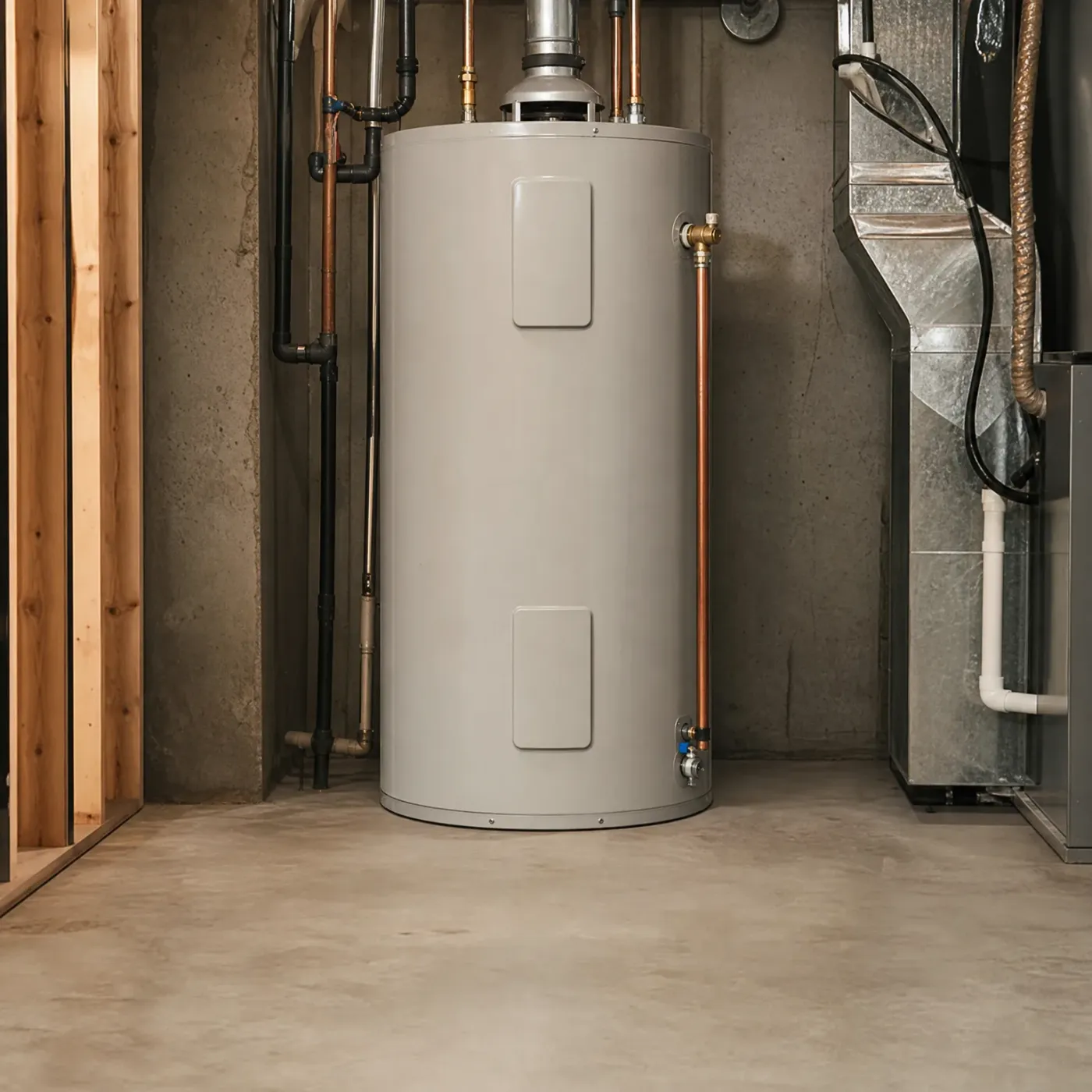
A water heater like this one is doing its job. No rust on the tank, no puddles on the floor, hot water comes up fast and stays hot. If yours looks like this and the pipes and fittings are dry, there's no reason to touch it yet.
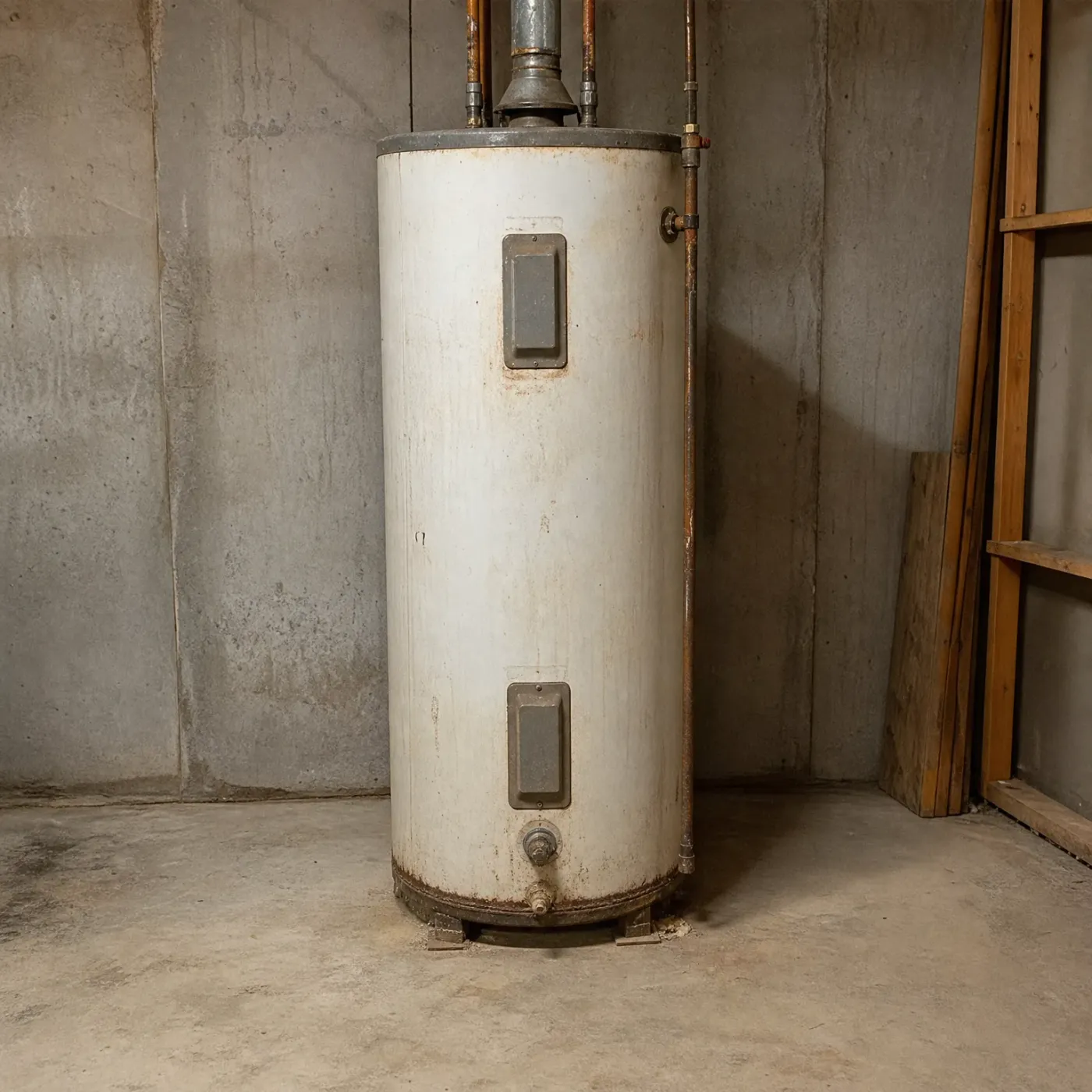
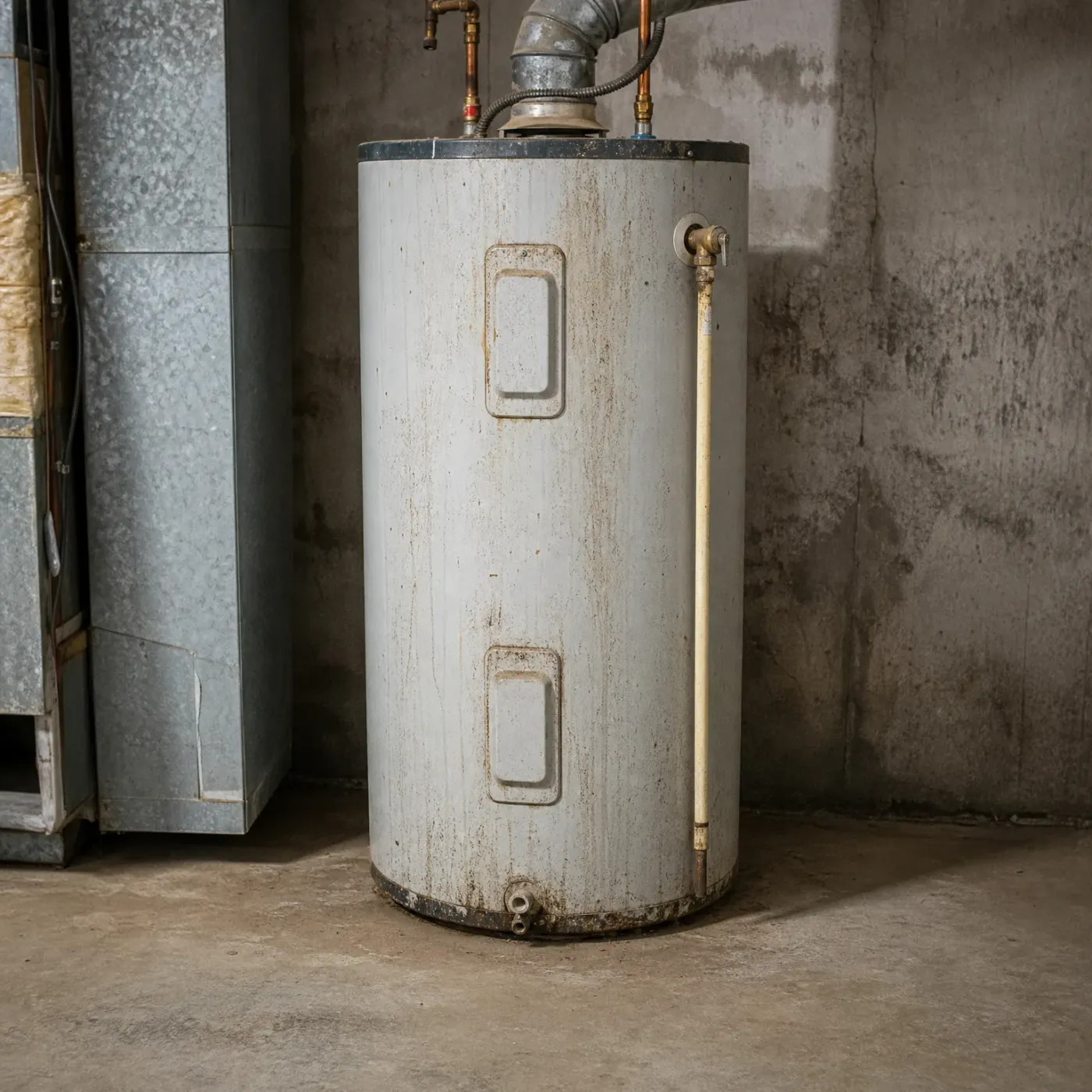
Rust on the tank, especially around the thermostat panels or the base, means the steel is failing from the inside. Once it shows like this, it can let go without much warning. A water heater at this stage is worth replacing before it fails on its own schedule, not yours.




Electric water heaters work the anode rod and heating elements harder than gas units do, since every bit of heat comes from electricity instead of a flame under the tank.
That extra strain is part of why most electric water heaters in Alabama homes land closer to 8 or 9 years than the full 12.
Most houses in Alabama run on electric water heaters, yours is likely one of them. The elements and anode rod inside are doing all the work of heating that water, with no gas flame sharing the load, so they wear down faster than a gas unit's parts would.
ACS 2020-2024 5-year B25040
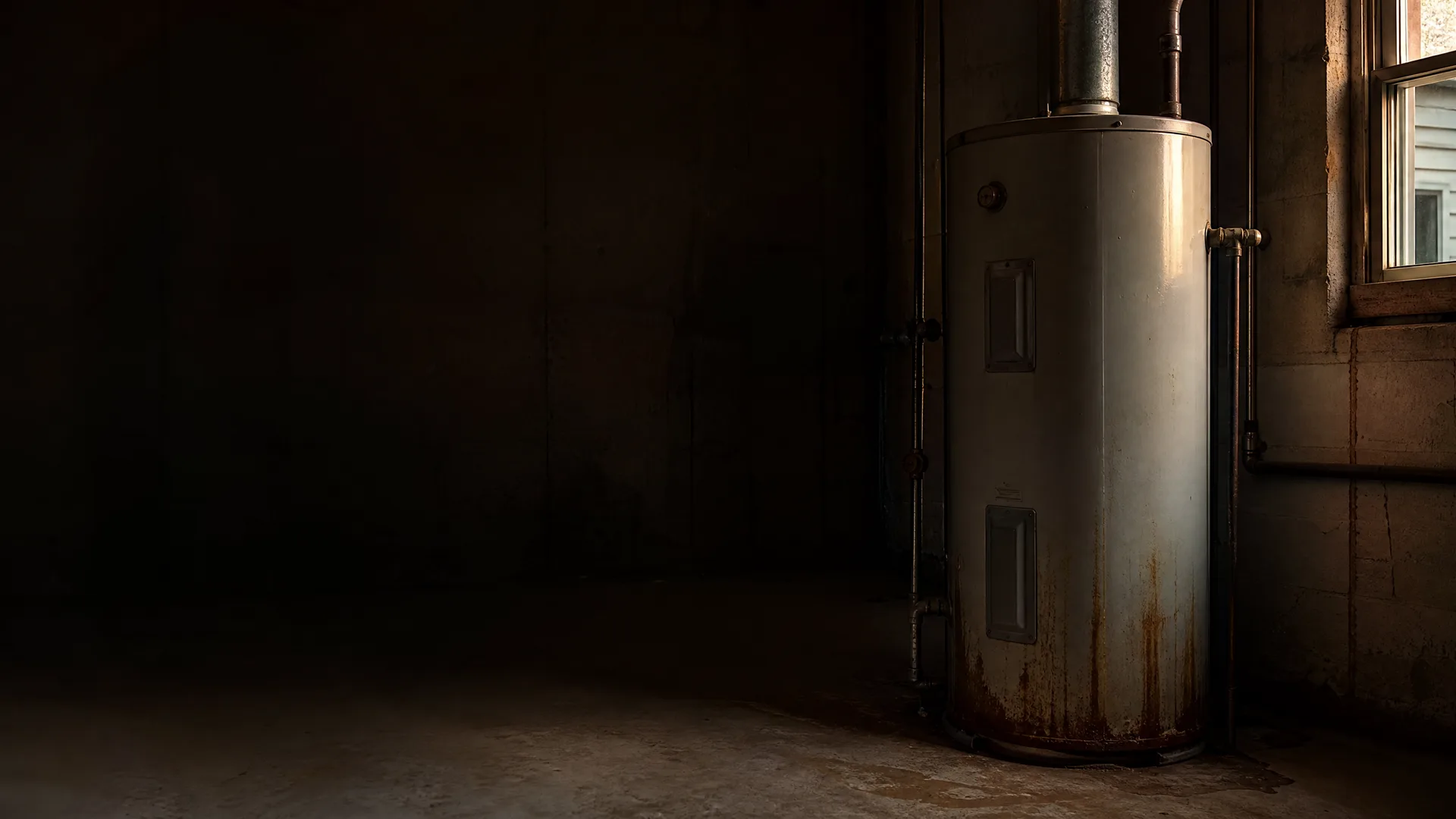
You go down to the utility room after supper to switch the laundry over. The air is thick, the kind of muggy that hangs on even after the sun's down this time of year. You set the basket on top of the dryer and that's when you see it, a thin rust streak running down the side of the tank and pooling where it meets the floor. You crouch down and touch it. Wet. Not a flood, just a slow weep that's been going on for a while judging by the stain already set into the concrete. You stand back up and look at the thing a long moment, doing the math on how many years it's been sitting there, humming along, before tonight.
A water heater that's past 10 years and starting to rust or struggle isn't going to get better on its own, and with power rates in Alabama what they are, an old unit running on electric elements costs you more every month it stays in service. Once it fails outright, you're looking at a cold shower and a flooded utility room on no notice, usually on a day you didn't plan for it. Getting ahead of that, while the tank is still working but clearly wearing out, means you get to pick the timing instead of the tank picking it for you. You don't have to spend your evenings calling around to figure out who's available and who's reliable. Fill out the form above and let a contractor who knows Alabama installations take it from there.
Eight to twelve years is the window for most electric water heaters in Alabama, and where yours falls in that window comes down to what's happening at the tank right now. An electric unit does all its heating through the elements and the anode rod, with no flame to split the work, so those parts are what give out first. A tank with no rust, no puddles underneath, and hot water that still comes up fast and holds is still doing its job, no matter what the calendar says about its age. The tank is the part that can't be fixed. Elements and thermostats get swapped out all the time, but rust working through a seam or a fitting means the steel itself is giving way, and no repair puts that back together. That's the line between a unit worth servicing and one that's done. The cost side matters too. Power rates in Alabama aren't cheap, and an electric water heater past its prime pulls more to do the same job it used to do on less, so an aging tank sitting in a utility room is a bill that climbs on its own. Once a tank starts leaking or can't keep pace with a household's hot water use, there's no maintenance step left to try. At that point the only real question is how soon the replacement gets done, not whether it's needed.


Get the right pro for your water heater
Send it once and finding someone is no longer on you.