Send the form and the water heater tune-up stops being something to remember.
Alabama water is hard enough in most places that sediment builds up in the bottom of the tank faster than people expect. Most homes here heat water with electricity, and power in Alabama isn't cheap, so a tank working harder than it needs to shows up on the bill before it shows up any other way.
A water heater that never gets flushed starts to tell you. It takes longer to deliver hot water. It makes a low rumbling or popping sound as the heating element fires under a layer of sediment. Eventually that sediment shortens the life of the tank itself, and a tank that would have lasted years gets replaced early.
Flushing clears that sediment out before it becomes a bigger problem. It's a straightforward piece of maintenance, but it means shutting off power to the unit, connecting a hose, and draining the tank correctly, and most homeowners would rather not be the one to find out what happens if a step gets missed.
Finding someone qualified to do it is the part that eats your afternoon. Looking up contractors, calling a few, explaining the same thing about your tank three or four times, waiting on quotes that come back different ways and trying to compare them fairly. None of that is the actual job, it's just what stands between you and the job getting done.
Send the form on this page and that search is over. You're not the one calling around anymore, not the one vetting who's reliable and who isn't. A licensed contractor takes it from here, and the only thing left on your end is answering when they reach out. The muggy summers and the cost of electric water heating in Alabama aren't going anywhere, but at least the job of tracking down help with this one is done the moment you hit send.
Flush your water heater once a year in Alabama. The hard water common across the state settles into the bottom of the tank as sediment, and that layer builds up faster here than it does in places with softer water. A flush once a year clears it out before it turns into a thick layer that sits between the burner or heating element and the water itself. Once that layer gets thick, the tank has to work harder to heat the same amount of water, and most homes here are paying electric rates for that extra work. Left long enough, the sediment can also hide a tank that's starting to fail, since a layer of grit along the bottom traps heat against the metal and wears it from the inside. Once a year keeps the tank working the way it was built to, and keeps the power bill tied to the hot water you actually use.
A tank nobody's flushed in a few years is still heating water, so there's no warning sign telling you it's overdue. That's what makes it easy to put off in Alabama, where the sediment is building up whether you notice or not. Every year it sits is a year that electric bill runs higher than it should, in a state where power already costs enough. Finding someone to do this work usually means a round of calls, explaining the same thing to each one, then weighing quotes that aren't quite comparable. Send the request here instead and that part is done. You're not the one tracking down a plumber or sorting through estimates anymore. One contractor gets your request, looks at your water heater, and takes it from there. That's one less thing competing for your attention this week, and one step closer to a tank that isn't working harder than it has to.
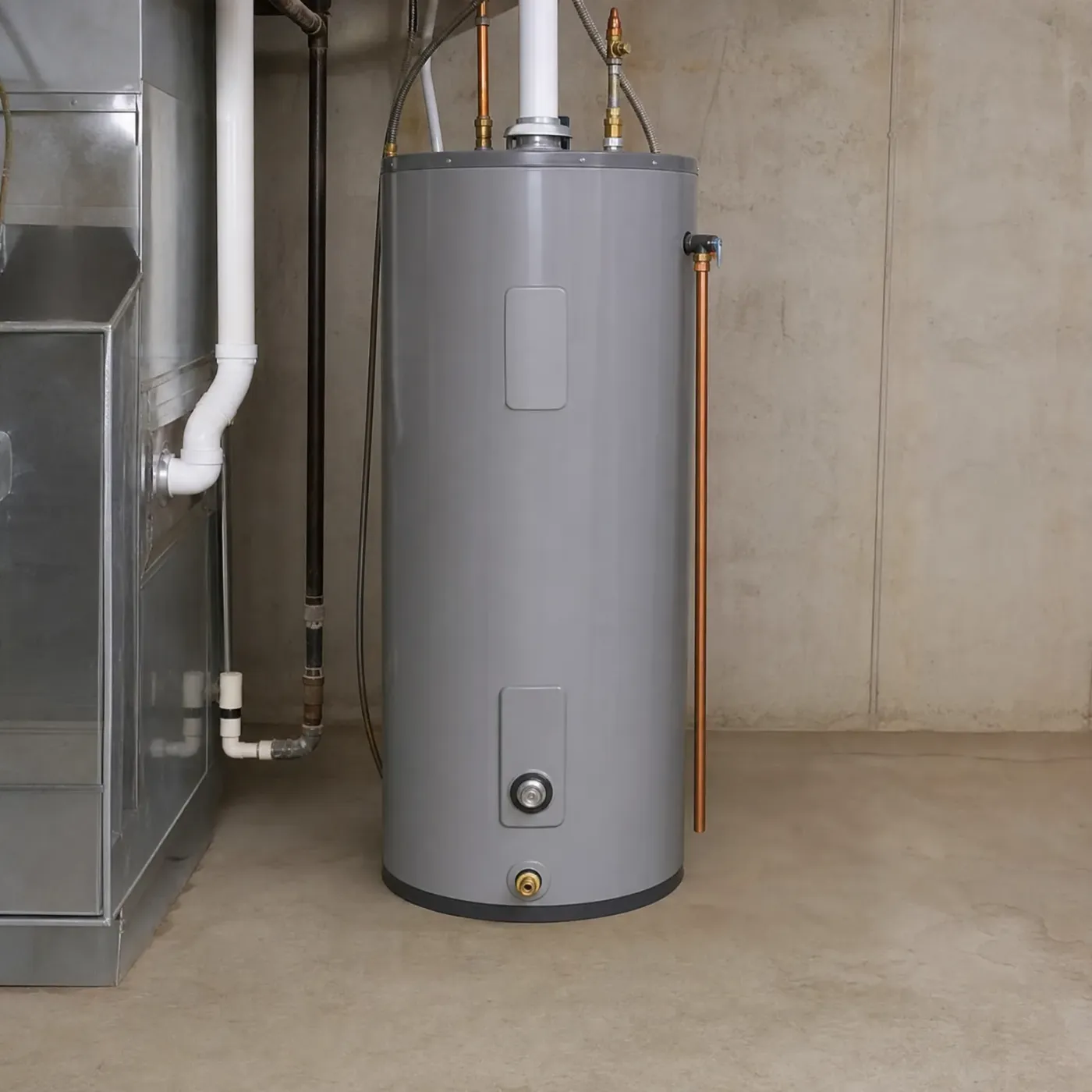
Flushed on schedule
This is what a tank looks like after regular flushes. The connections are clean, the drain valve at the base still turns, and the tank itself has no rust working through the metal. Electric rates in Alabama make it worth keeping that way.
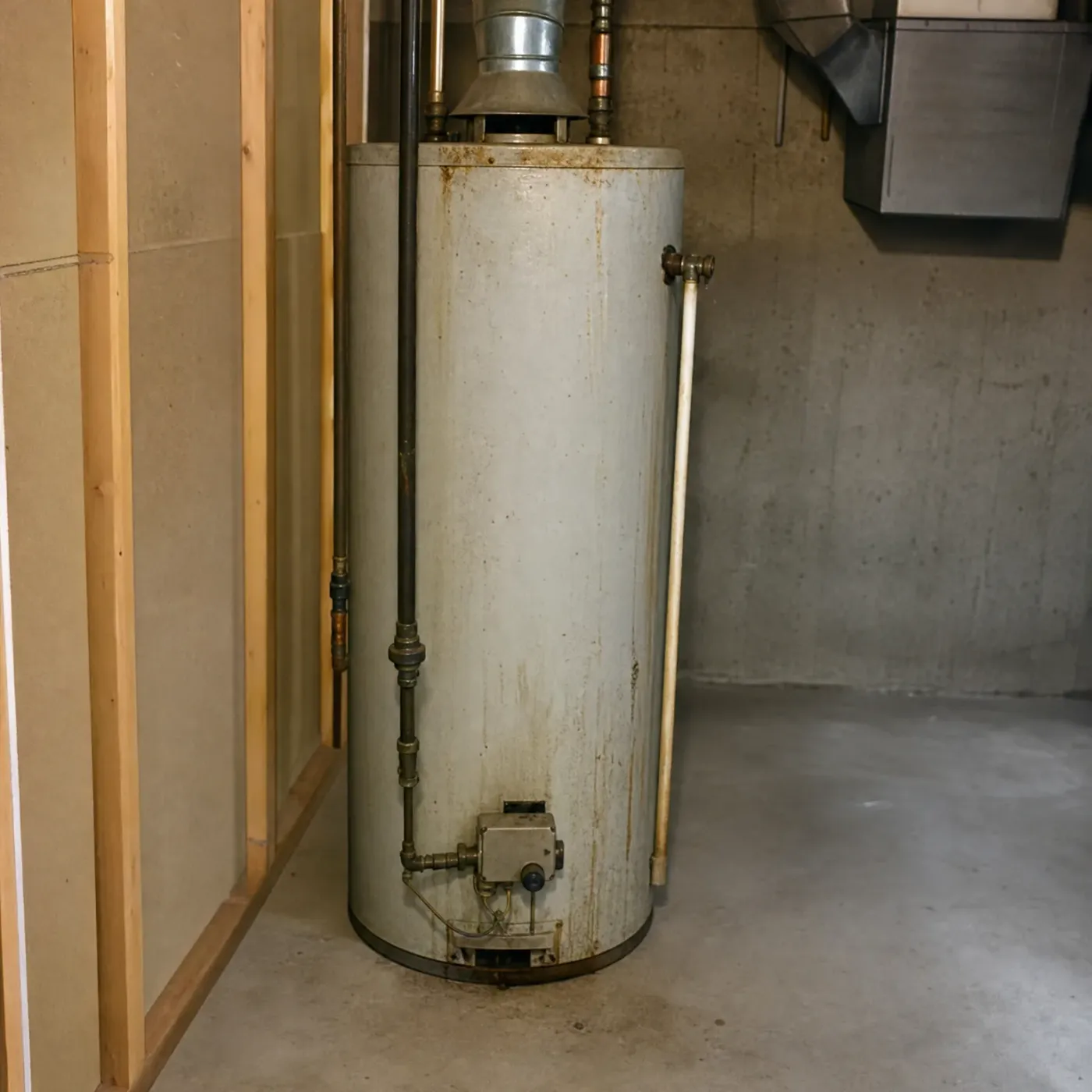
Years without one
Rust has taken hold on this tank, down through the gas valve assembly at the base. Sediment sits under that corrosion, holding heat against the steel until it gives out. Once rust shows on the outside, flushing won't undo what's already happened inside.
67.4% of homes statewide heat with electricity
Odds are your water heater runs on electricity, like most homes in Alabama. Sediment sitting on the bottom of an electric tank sits right against the lower heating element, so it has to push harder to heat the same water. A yearly flush keeps that element working the way it should.
ACS 2020-2024 5-year B25040
Once a Year, No Guesswork
A yearly flush is the right interval for most homes in Alabama given the hard water across the state.
Sediment that sits for years rather than months gets harder to clear and asks more of the heating element underneath it.
Electric tanks here work harder once sediment piles up, and that extra work shows up on the power bill.
A tank with no flush history can still look fine on the outside while sediment builds up on the inside.
Staying on a yearly schedule keeps the drain valve working and keeps rust from getting a foothold at the bottom seam.
None of this requires guessing. The sediment builds up every year whether or not anyone's checked on it.
Once a year covers it. That's the answer for Alabama, and the hard water across the state is why the interval stays fixed rather than stretching out the way it might somewhere with softer water. Sediment doesn't wait for a convenient time to build up, and it doesn't announce itself either. A tank can run for years without a flush and still deliver hot water every morning, which is exactly why it's easy to assume nothing's wrong. Underneath, the sediment is piling up against the heating element the whole time, and on an electric tank, that means the element is working harder than it should to do the same job. That extra effort is paid for on the power bill every month, quietly, without any single moment that points to the cause. A yearly flush breaks that cycle before the sediment has a chance to harden or spread across the bottom seam, where it can eventually invite rust. It also means the drain valve gets used often enough to keep working when it's actually needed. None of this is a judgment call that depends on how the tank looks or how old it is. The sediment builds up on the same schedule every year, whether or not anyone's paying attention, and a yearly flush is simply staying ahead of something that doesn't slow down on its own.
Water Heater Maintenance
Send one request and you're done looking
One form instead of hunting for a pro who does water heater tune-ups.