

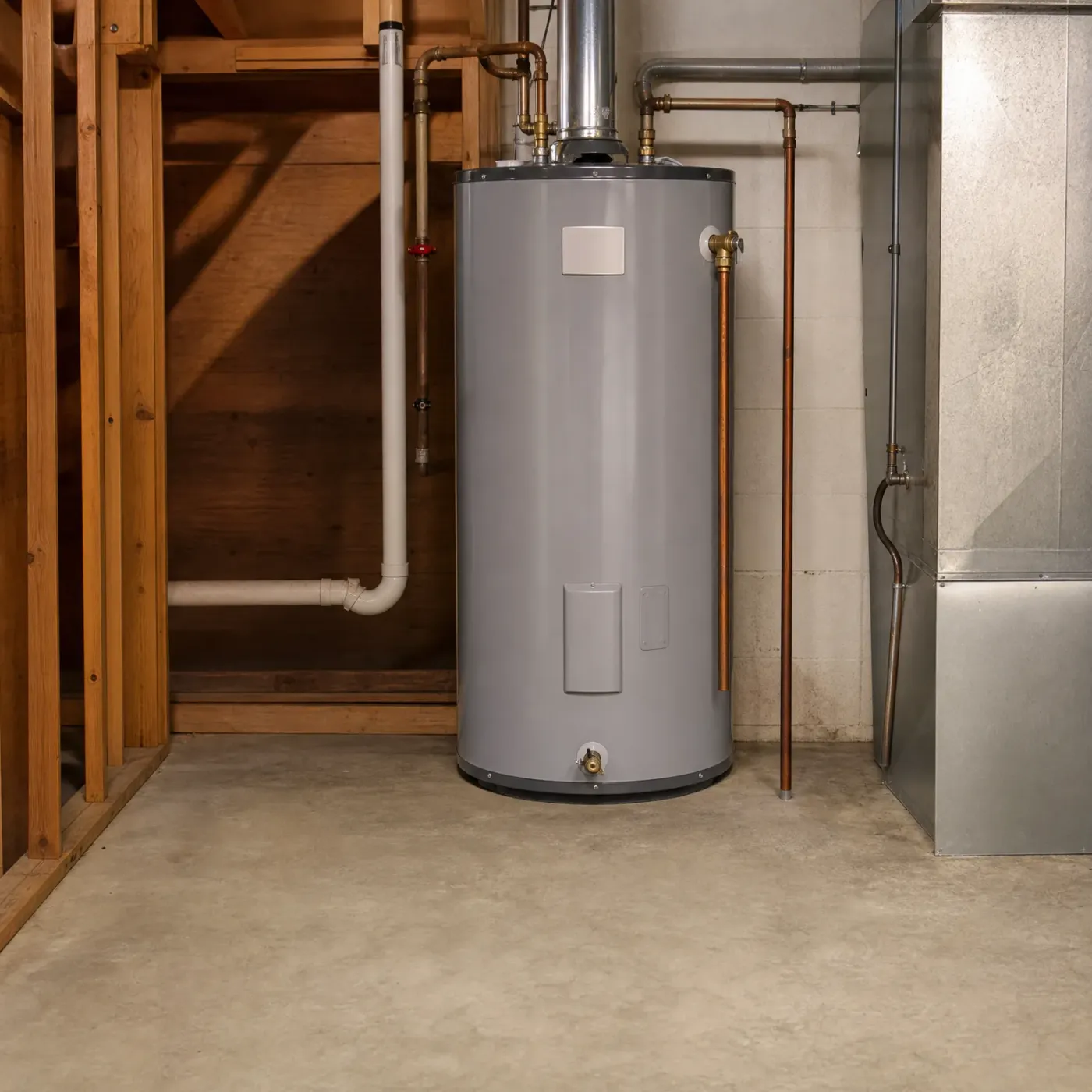
Flushed on schedule
Water heats at its normal rate, the tank stays quiet, and a licensed local contractor can tell you it's in good shape at a glance.
Your water heater tune-up request goes to a pro who covers Jefferson County.
Find a pro near meFlush your water heater once a year. Jefferson County's water runs hard enough that minerals settle out as sediment, and that sediment sinks to the bottom of the tank, where it sits on top of the burner or heating element. A gas water heater has to push heat through that layer before it ever reaches the water, so the tank works harder and uses more fuel just to keep up. An electric unit can go further: when sediment buries the lower element, that element can burn out well before it should. Once a year, draining the tank through the valve near the bottom clears that layer out before it builds into a problem. Skip it for several years and the sediment can harden into a crust that no longer drains easily, cuts the tank's capacity, and shortens the time before it needs replacing. If your water heater has gone more than a year without a flush, that is the sign to get it done now, not the calendar.
2.4 people per household on average
With 2.4 people typically in a Jefferson County home, your tank is cycling through hot water most days of the week, which gives sediment steady chances to settle.
Half the homes here were built by 1975
Half the homes here were built in 1975 or earlier, so if yours is one of them, the water heater itself is very likely newer than the house and worth checking rather than assuming.
Power here costs 17.78 cents per kilowatt-hour
At 17.78 cents per kilowatt-hour, an electric water heater coated in sediment underneath costs you more every month it runs that way.
ACS 2020-2024 · EIA-861 2025
Hard water leaves minerals behind, and inside the tank those minerals settle to the bottom as sediment. On a gas water heater, that sediment lands directly on top of the burner. Every time the burner fires, it has to heat through that layer before the water above it warms up, and over years that layer can bake into a hard crust. A crust like that scorches and can eventually crack, which is not something a flush alone fixes once it has set in. On an electric water heater, the lower heating element sits down in that same sediment. Buried under enough buildup, the element works harder than it should and can burn out before its time. You can often hear this happening. A tank that rumbles or pops as it heats is usually water trapped under the sediment, boiling and pushing bubbles up through it.
A flush is how that layer gets cleared out. Water drains from the bottom of the tank through the drain valve, and the flow carries loose sediment out with it. The key word is loose. Sediment that has sat for years and hardened does not always break free on the first pass, which is why it helps to run a few gallons through after you think the flush is done. If that water runs clear, the tank is clear. If it still carries grit, there is more sitting down there than one flush moved.
Shut off the power or gas before you start
Close the cold water valve feeding the tank
Hook a hose to the drain valve and run it outside
Open the drain valve and let the tank empty fully




The pro who gets in touch is licensed in Alabama and works in Jefferson County.
There's no charge for the request.

Jefferson County water isn't the softest, and that's what turns into sediment at the bottom of your tank. The harder the water, the faster it builds. A flush once a year keeps that layer thin enough that it rinses out in a few minutes. Skip a year or two and it packs down, and a quick flush turns into a longer job with sediment that won't break loose on the first pass.

Stick a flashlight near the drain valve once you've let a flush run for a minute. Clear water means you caught it in time. Water that runs cloudy or gray, then clears, is normal, that's sediment leaving on schedule. Water that stays gray, or that carries grit you can feel between your fingers, means sediment has been sitting for longer than a year and the tank needs more than one flush to clear it out.
You know your water isn't exactly soft here, but it's not obvious why that turns into a layer of grit at the bottom of a sealed tank. The water looks clear coming out of the faucet, so it's fair to wonder where the sediment actually comes from and why it ends up in the water heater instead of somewhere else in the plumbing.
Calcium and magnesium stay dissolved in cold water, but heat changes that. As the water in your tank heats up, those minerals come out of solution and settle as solid particles. They're heaviest at the bottom, so they sink and collect there instead of staying mixed in. Jefferson County water carries enough of both minerals that this happens in every tank, every cycle, whether the water heater runs on gas or electric. The burner or element keeps heating the same water over and over, so the same minerals keep dropping out in the same spot. Over months that turns into a layer thick enough to insulate the bottom of the tank from the heat meant for the water above it.
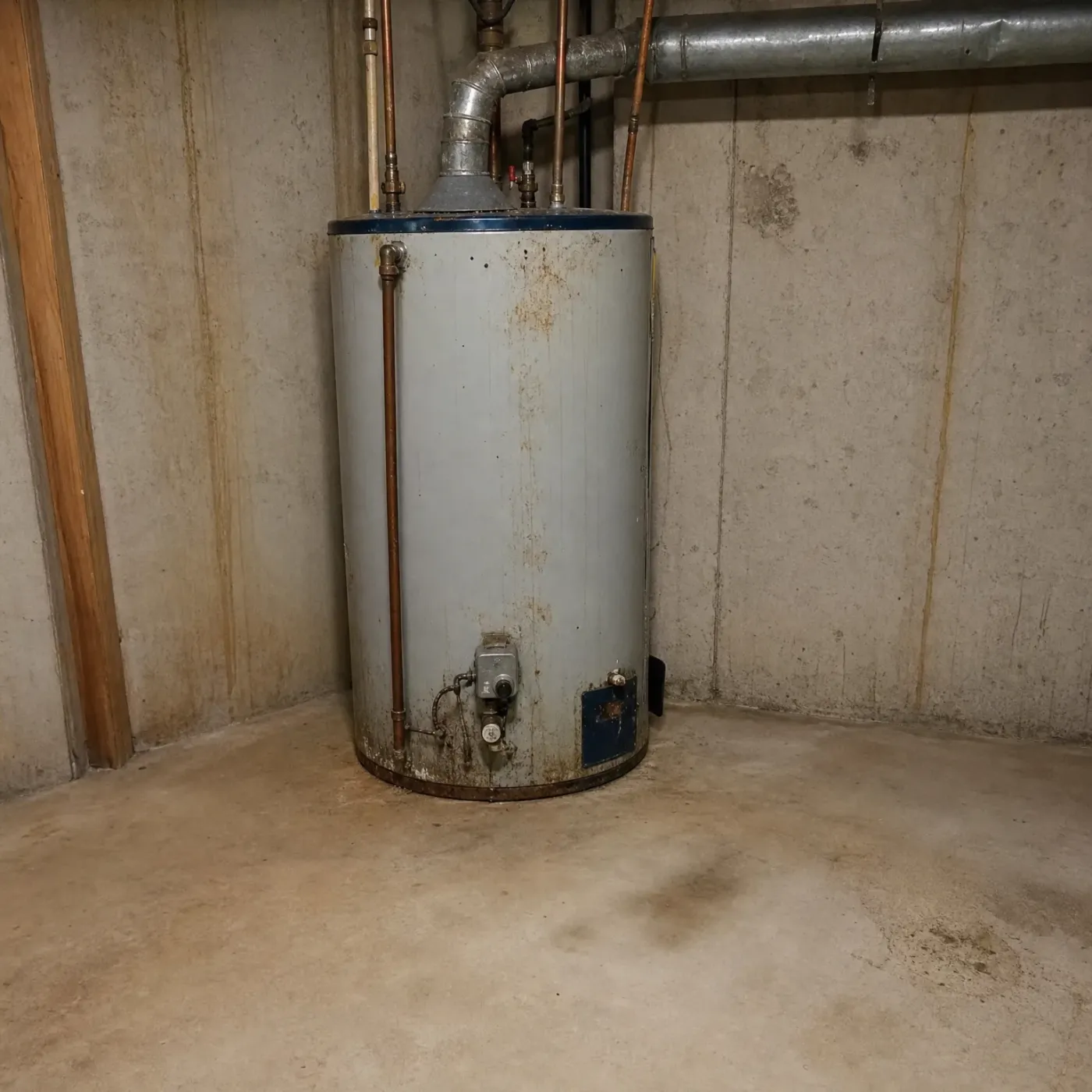
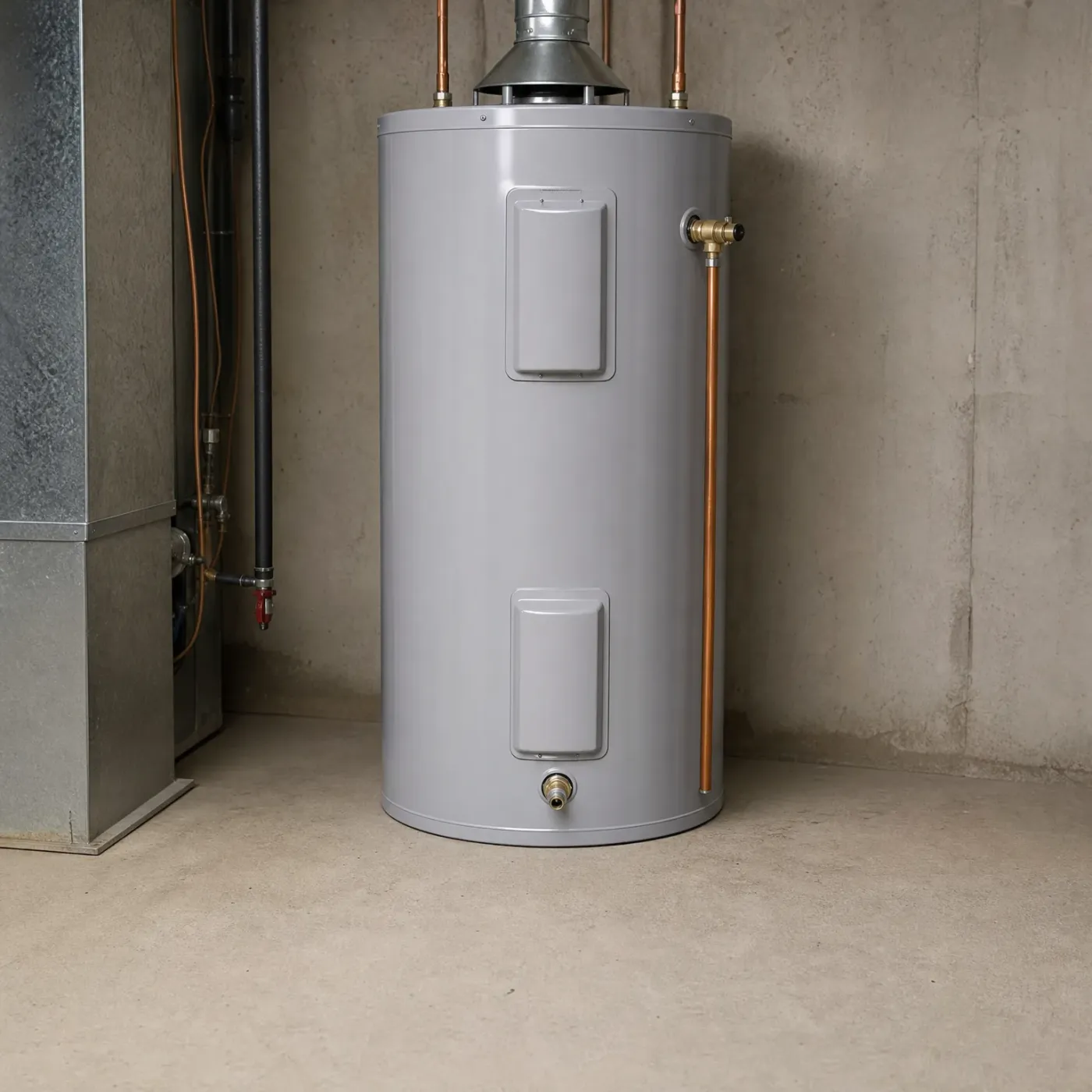
You'll notice it before you think to check the tank itself. Showers that used to run through the whole household start cutting short, because the burner or element is spending part of its effort pushing heat through sediment instead of water. The power bill creeps up for the same reason, since a gas water heater working through a layer of buildup takes longer to do what used to be quick. Some houses get a warning sound first, a pop or a rumble as water works its way through the grit at the bottom. That noise is not the tank breaking down. It is a sign to flush it soon. If the water coming out of the hot tap turns rusty or cloudy, the sediment has already started wearing into the metal underneath it. Left alone long enough, that corrosion reaches the seams, and a tank that fails there doesn't leak slowly. It empties, and a water heater holds forty gallons or more that end up on the floor around it. An hour of maintenance now is the alternative to all of that.


Water heats at its normal rate, the tank stays quiet, and a licensed local contractor can tell you it's in good shape at a glance.
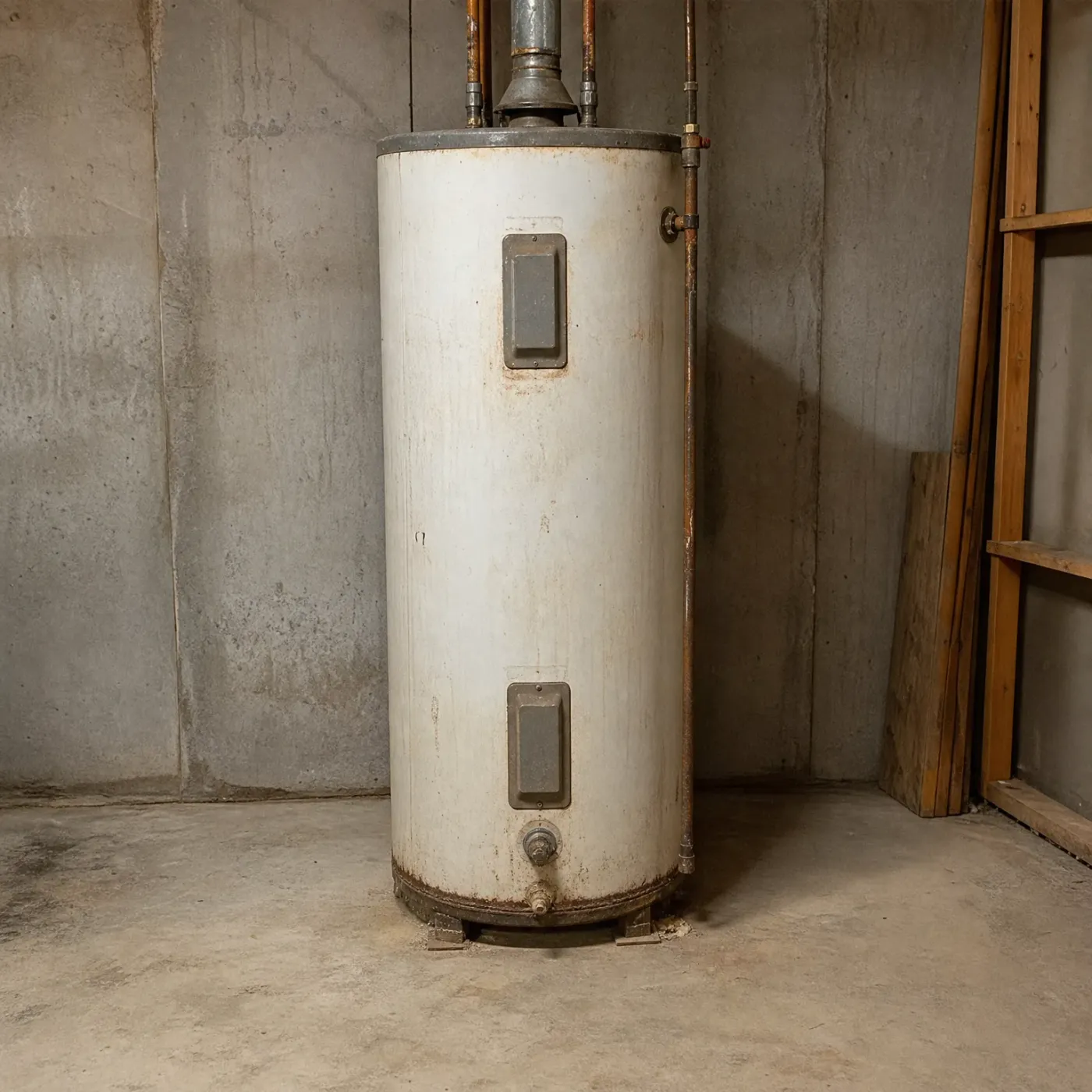
Sediment has hardened into a layer the burner or element has to push heat through, and a flush alone may not clear it anymore.
At 2.4 people, most Jefferson County households run the water heater through showers, laundry and dishes on the same daily schedule. That steady draw keeps hot water moving through the tank, and keeps sediment settling at the bottom just as steadily.
ACS 2020-2024

Once a year is the answer. Jefferson County's water and the way a household this size uses hot water both point the same direction, and a yearly flush is what keeps sediment from ever getting the chance to harden. That's it. Not a guess, not a maybe, just what the water here does to a tank over twelve months.
If you want a hand with it, you'll be matched with a licensed local contractor, not a handful of companies competing for your call. Someone who works on tanks like yours all year in this same water knows what the sediment looks like at month eleven versus month thirty, and what's worth checking while they're already in there.

A licensed local pro takes the request for your water heater tune-up.