
Is a heat pump water heater worth it in Alabama

Get in touch with a local installer about a new water heater.

Request a pro

Is a heat pump water heater worth it in Alabama?

You're looking at a heat pump water heater and trying to figure out if it actually makes sense where you live, or if it's just another upsell. Most homes in Alabama heat water with electricity already, and power costs real money here. You've probably heard these units cost more upfront, so you want to know if that extra cost actually pays off in your climate before you commit to anything.

Yes, a heat pump water heater makes sense in Alabama

A heat pump water heater pulls heat from the air around it instead of generating heat directly, so it uses a fraction of the electricity a standard electric water heater does to produce the same hot water. Alabama's long, muggy summers work in its favor. The unit draws on warm, humid air for much of the year, which is exactly the condition it runs most efficiently in. Since most homes here already heat water with electricity, you're swapping a less efficient electric unit for a more efficient one, not switching fuel types or rewiring anything major. With electricity rates in Alabama running high, the lower electricity draw shows up directly on your power bill every month, not just in a few mild weeks.

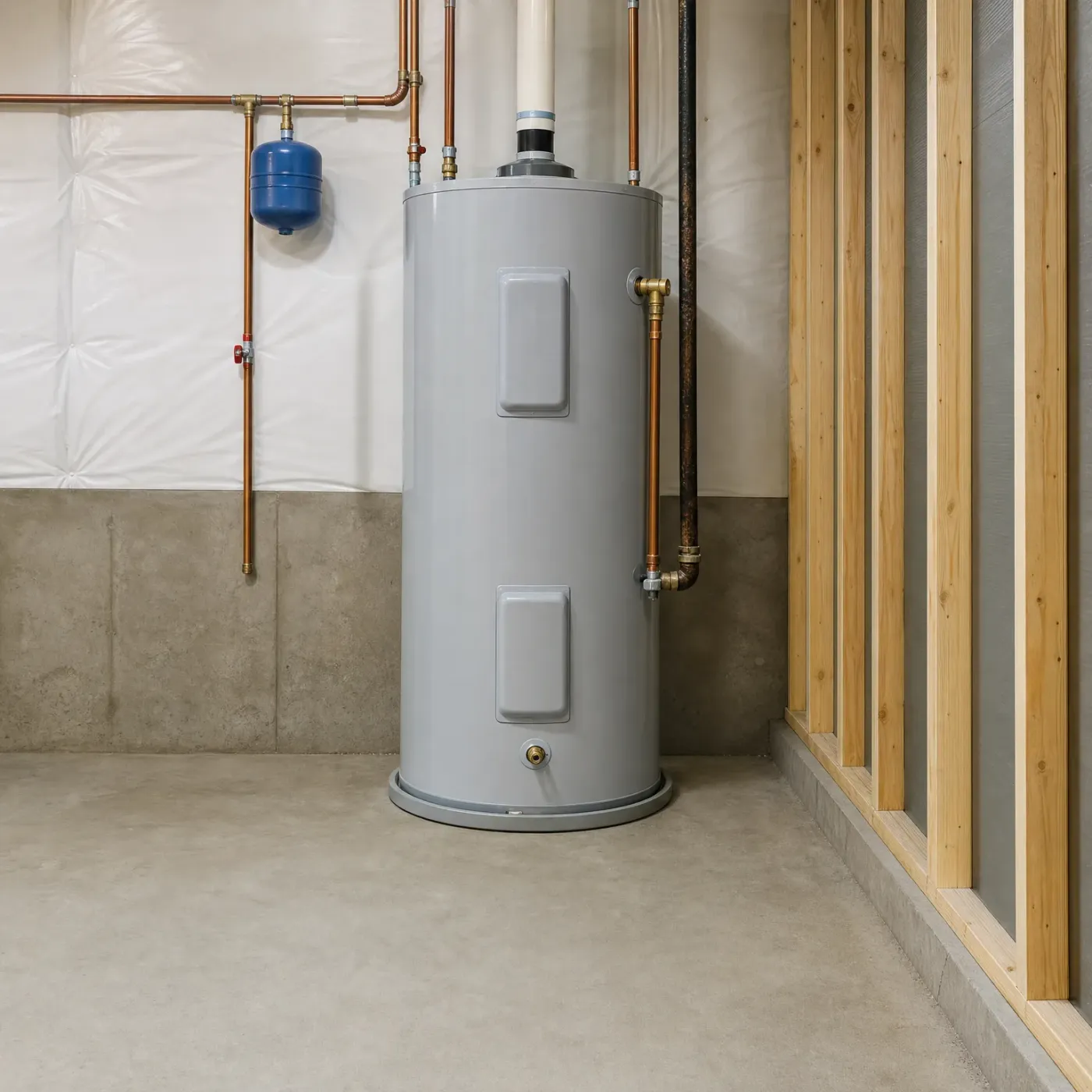
A gray cylindrical water heater stands on a concrete basement floor against a plastic-sheeted insulated wall, with copper supply pipes, a blue expansion tank, a black vertical pipe, and exposed wood wall framing at right.

Standard electric tank

This is what's likely in your utility room now. It heats water with electric resistance elements, the same way a space heater works, and that draws a lot of power. With electricity rates what they are in Alabama, that adds up every month, all year, not just in summer.
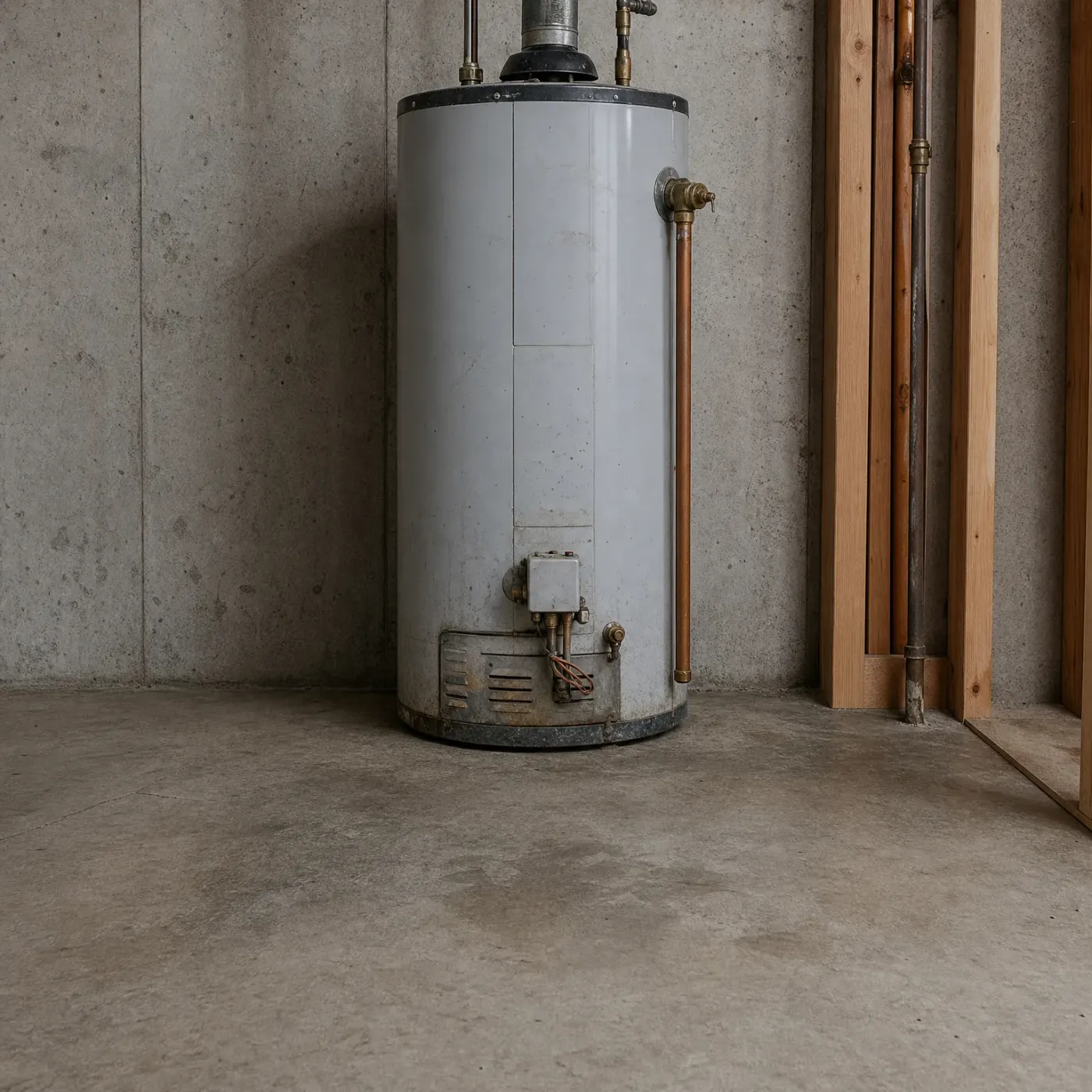

An older gray gas water heater with copper and brass piping stands on a concrete floor against a concrete wall, beside exposed wooden wall framing and vertical pipes.

Heat pump water heater

This pulls heat from the air around it instead of generating heat directly, so it uses a fraction of the electricity. It also cools and dries the air where it sits, which can be a plus in a muggy basement or utility closet. It needs more clearance and a drain for condensate.

A woman in a cream cardigan and jeans stands with one hand raised facing an open front door of a gray horizontal-siding house, with a black lantern wall light, a potted shrub with yellow flowers, and a stone-faced porch column.

What it looks like in your utility room

A heat pump water heater needs room to work. It pulls heat out of the air around it, so it wants space, not a closet door shut tight against it. If your water heater sits in a garage or a utility room with some air around the tank, that's a good sign. If it's crammed into a small closet, a contractor will tell you whether that space works or needs a change.

Right now your electric bill carries the full cost of heating that water with resistance elements. That's the number worth watching on next summer's bill, and the one a swap would change. Finding out whether your setup is a good fit means getting someone out to look at the space, the tank, and how your household uses hot water. A local contractor can walk through that with you instead of you guessing from a spec sheet.

A gray upholstered sofa with a matching cushion sits beside a potted plant and a wooden table holding a small green plant in a stone pot, near a curtained window.
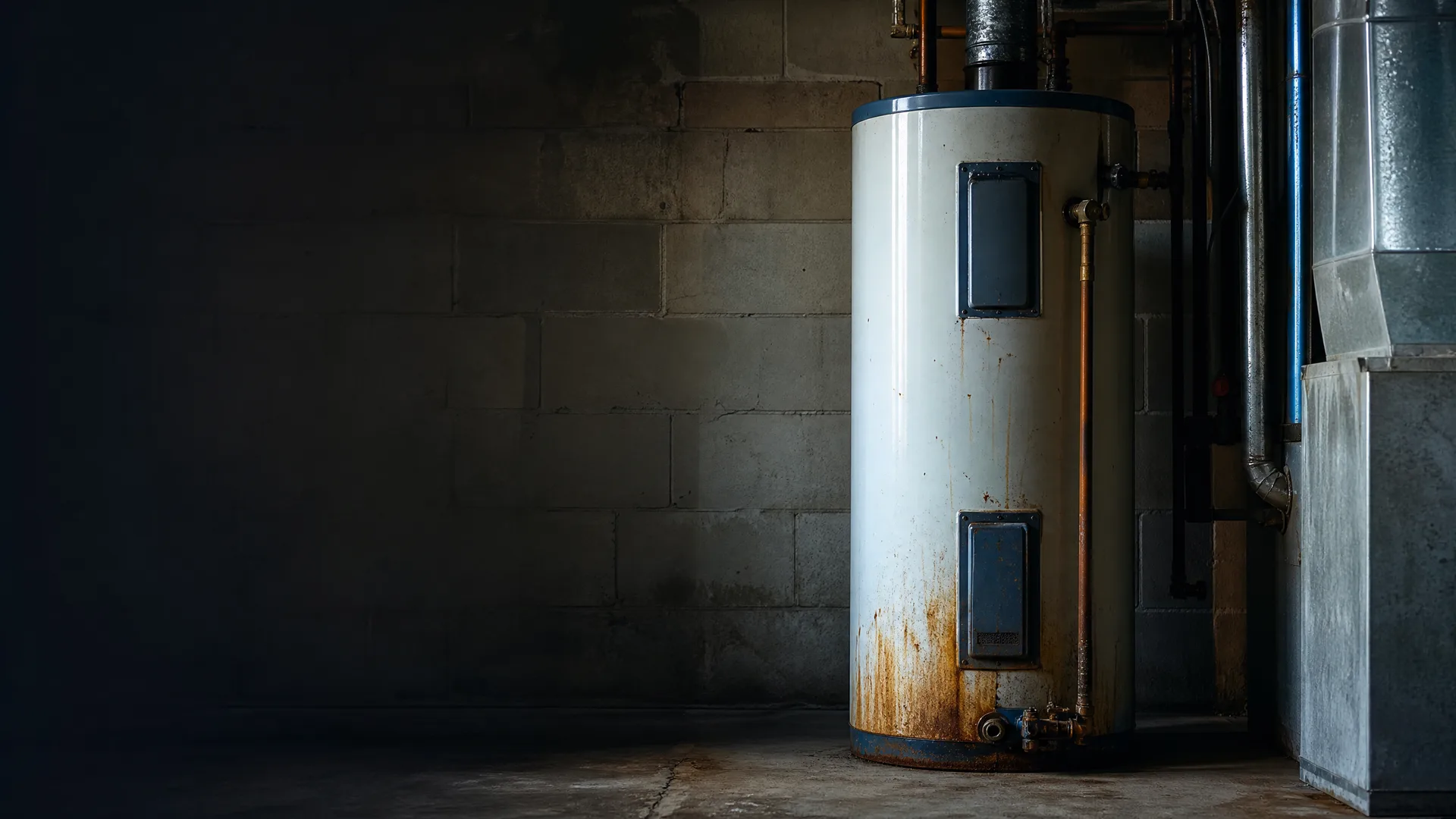
A rusting white and blue water heater with copper and steel pipes stands against a concrete block wall in a dim basement with a bare concrete floor.

You go down to the utility room after dinner to grab something out of the chest freezer, and the air feels warmer than it should, thick with that mineral smell. You see it then, rust streaking down the side of the tank, pooling faint and orange on the concrete at its base. It's humid out, same as every evening this time of year, and you figure that's part of why the floor looks damp, except the streak runs straight down from a seam near the bottom. You crouch and touch it. Wet. Not the floor sweating. The tank itself, giving out.

Why is your electric bill so high in summer

Go pull up last August's power bill next to one from March. If the jump is bigger than you'd expect from running the AC harder, the water heater is part of it. A standard electric tank runs those heating elements all day long to keep forty or fifty gallons hot, whether anyone's home or not. You'll notice it most in a house that's already working to keep electric heat and electric water heating going at the same time. Left alone long enough, an aging tank doesn't just cost more to run. It starts to fail, and a tank that fails can mean water across the utility room floor, or worse, down into whatever's below it.

An older woman with gray hair in a cream knit sweater sits under a blanket on a sofa by a window, looking outside toward yellow-leaved trees, with a lamp, shelves and an armchair in the room behind her.
A gray-haired woman in a chunky knit sweater sits in an armchair with a blanket, looking out a window at yellow autumn foliage, with bookshelves and a potted plant behind her.
A gray-haired woman in a navy sweater sits in an armchair with a knit blanket beside a window, looking out at yellow autumn foliage, with a dining table and houseplant in the room behind her.
A gray-haired woman in a gray cowl-neck sweater sits in an armchair with a blanket, looking out a dark-framed window toward yellow autumn trees.
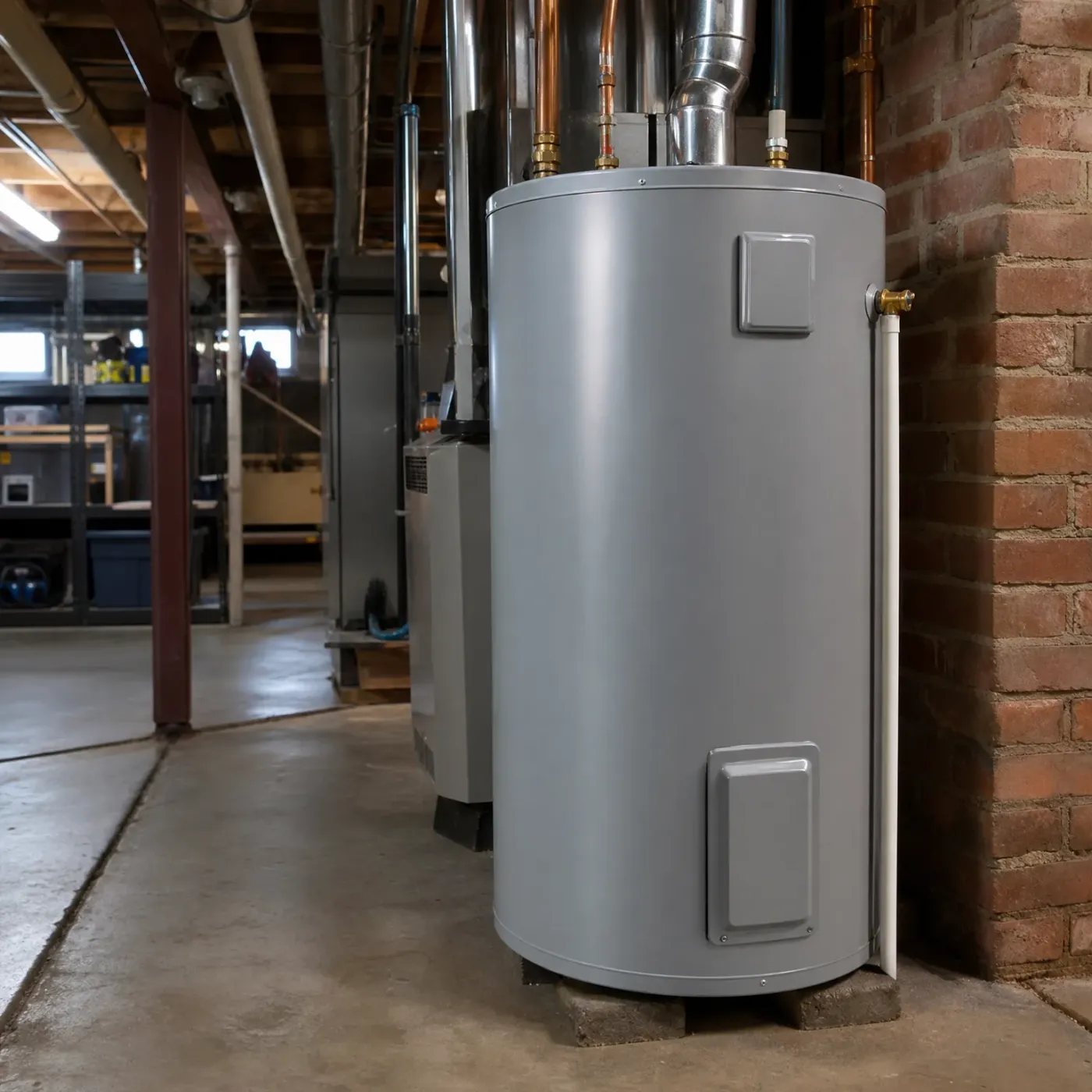
A gray cylindrical water heater with two access panels stands on concrete blocks beside a brick wall in a basement, with copper and metal pipes above and shelving visible in the background.

A water heater pro near you

Skip the round of in-home estimates for a new water heater.

A local installer who puts in water heaters gets your project.

Get matched

It costs nothing to send, and you don't have to hire anyone.

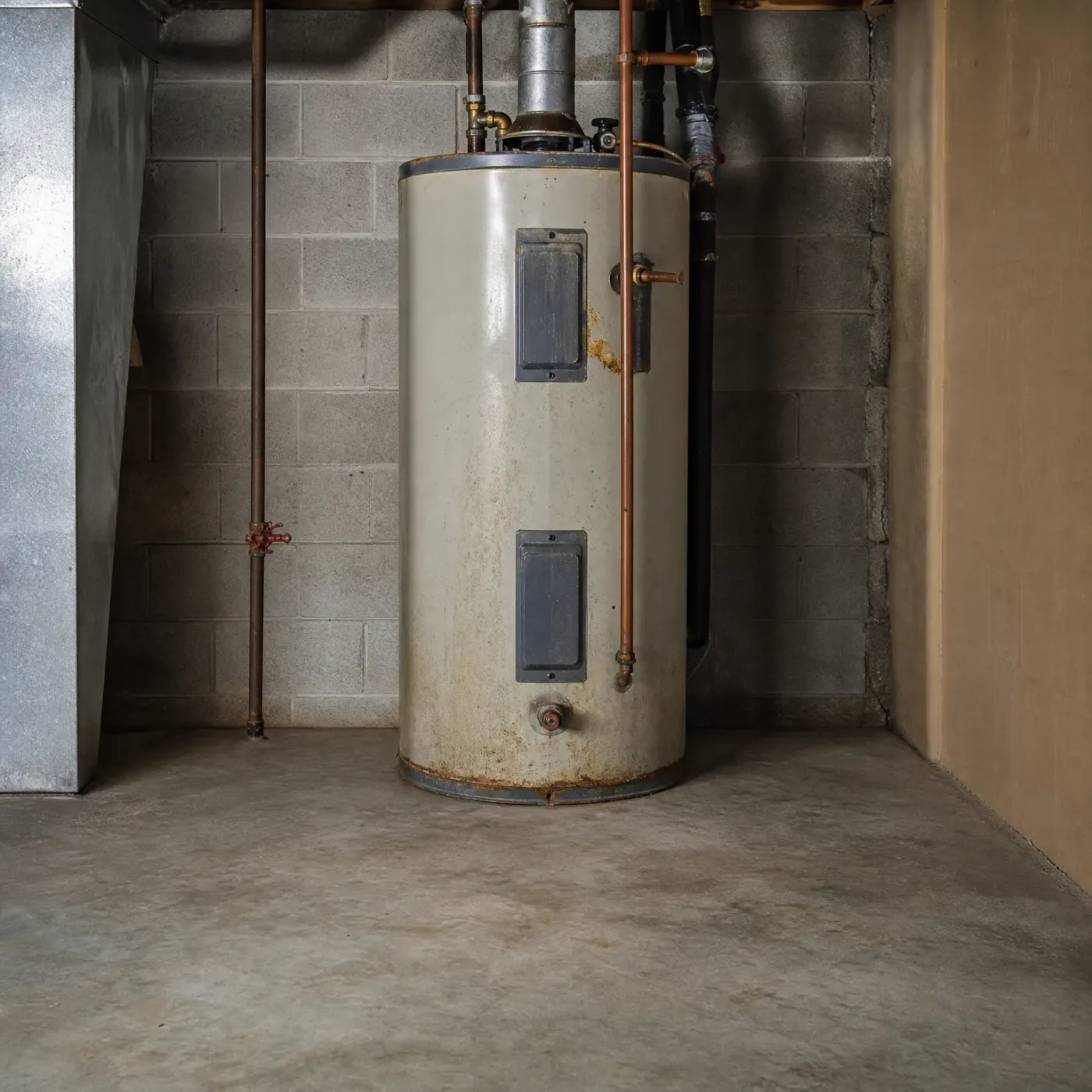
An aging cream-colored water heater with rust streaks and two access panels stands on a concrete floor against a concrete block basement wall, with copper and black pipes running up to the ceiling and a metal duct at left.
Before you get your water heater installation
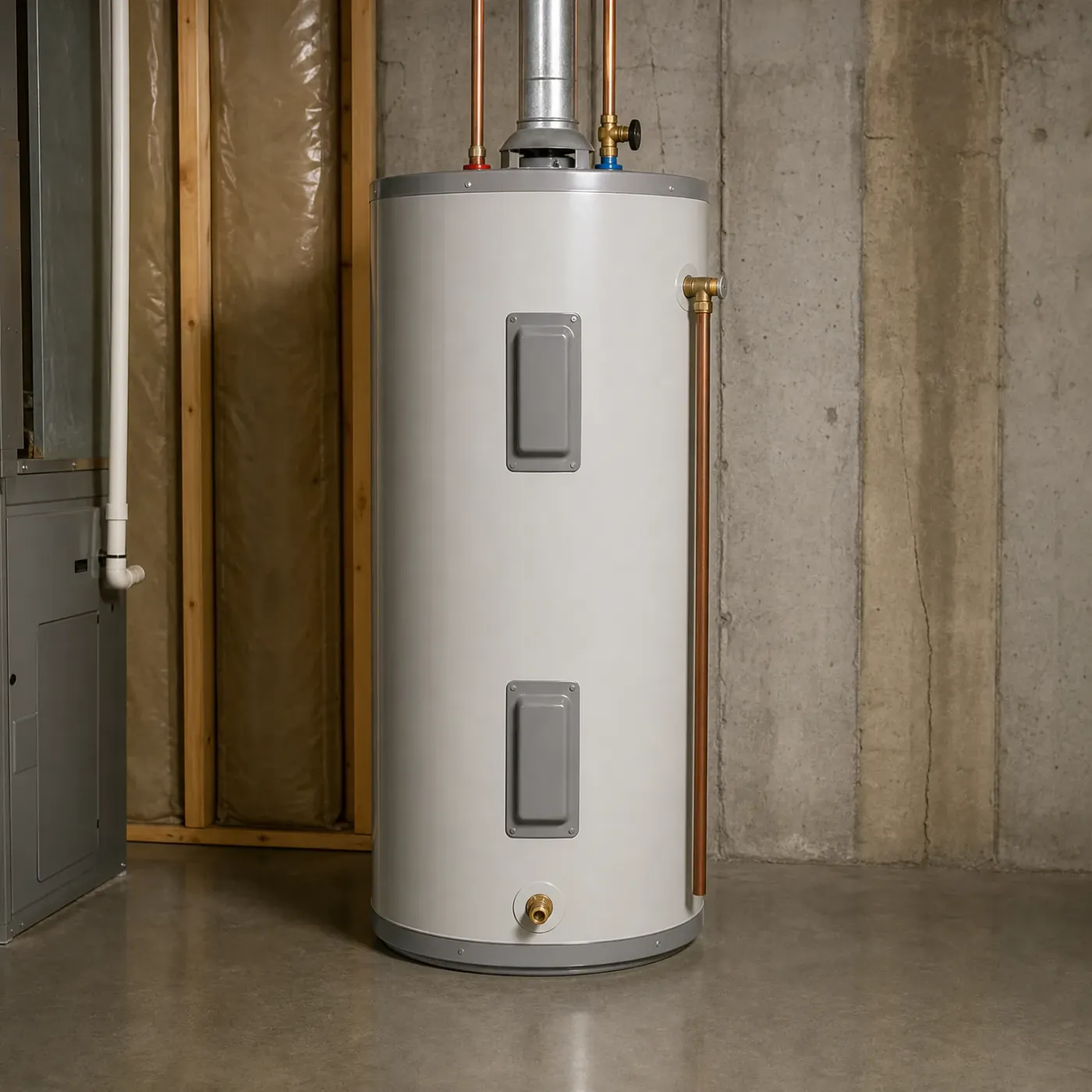
A white cylindrical water heater with two access panels, copper supply pipes and a metal flue, standing on a concrete floor against a concrete wall beside insulated wood framing and a gray electrical panel.
After you get your water heater installation

How much less power it actually uses

A heat pump water heater moves heat from the surrounding air into the tank instead of generating it with electric elements. That's why it uses a fraction of the electricity a standard electric tank does to heat the same amount of water. In Alabama, where electricity is already your main cost for hot water and for heating your home, that difference shows up directly on your bill, not as a vague improvement. The compressor and fan draw far less current than resistance elements ever will, because they're not creating heat, just relocating it from the air to the water.

Why Alabama's climate works in its favor

A heat pump water heater pulls warmth out of the air around it, and the warmer that air is, the less work the unit has to do. Alabama summers give it plenty of warm air to draw from for months at a time, which is when a standard electric tank would otherwise be running hardest. Winters here don't get cold enough to shut that advantage down the way a harsher climate would. A utility room or garage that stays mild most of the year keeps the unit working efficiently nearly all year, not just in the warm stretch.

67.4% of homes statewide heat with electricity

With two out of three homes in Alabama heating by electricity, yours is probably one of them, and your water heater is likely electric too. That's the tank a heat pump model would replace, and the one drawing the most power to heat water in your house.

ACS 2020-2024 5-year B25040

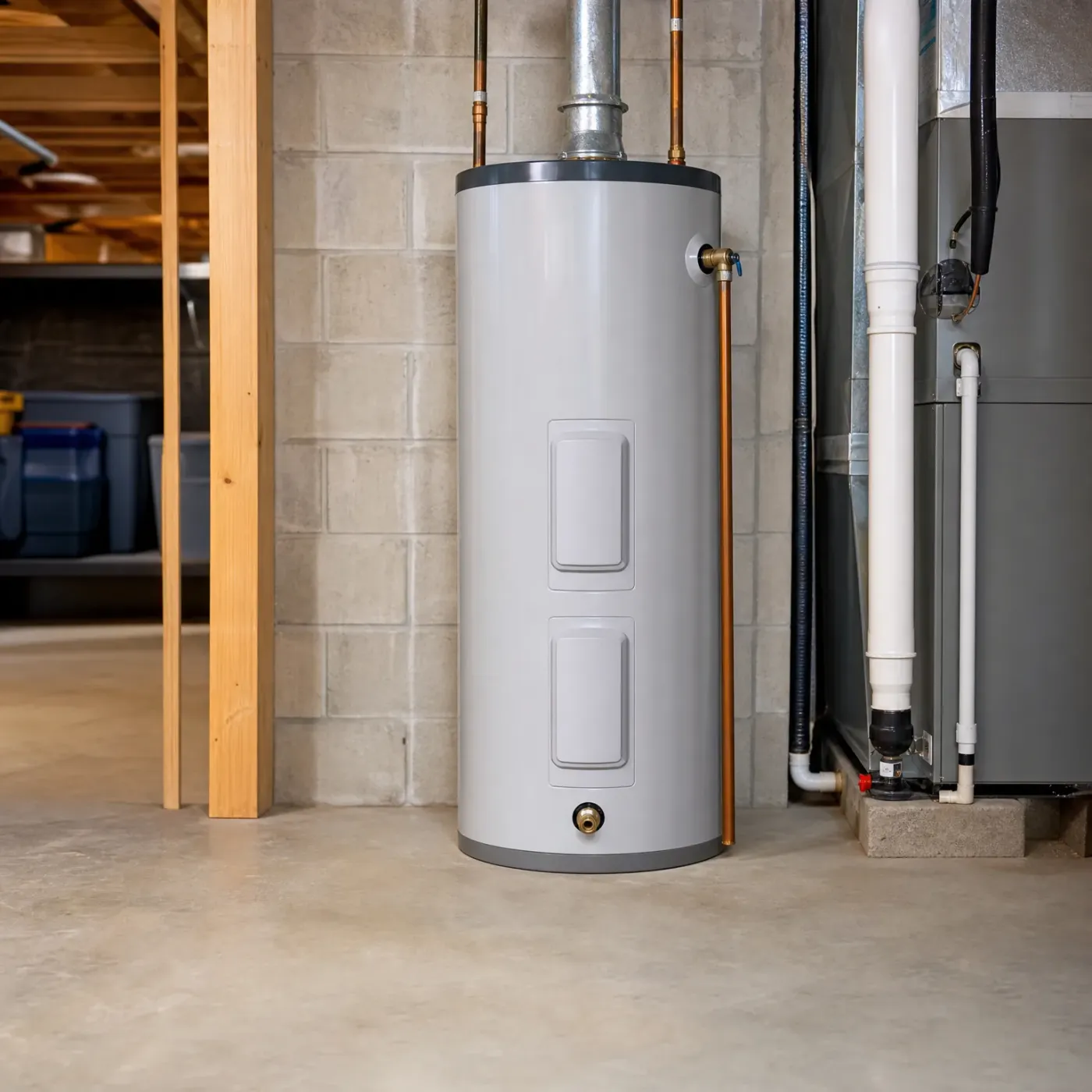
A gray cylindrical water heater with copper pipes stands against a concrete block wall in a basement, next to white PVC piping and a gray furnace, with wood framing and storage bins at left.
A working tank like this heats water fine, but every one of those elements is pulling power straight through your summer bill.
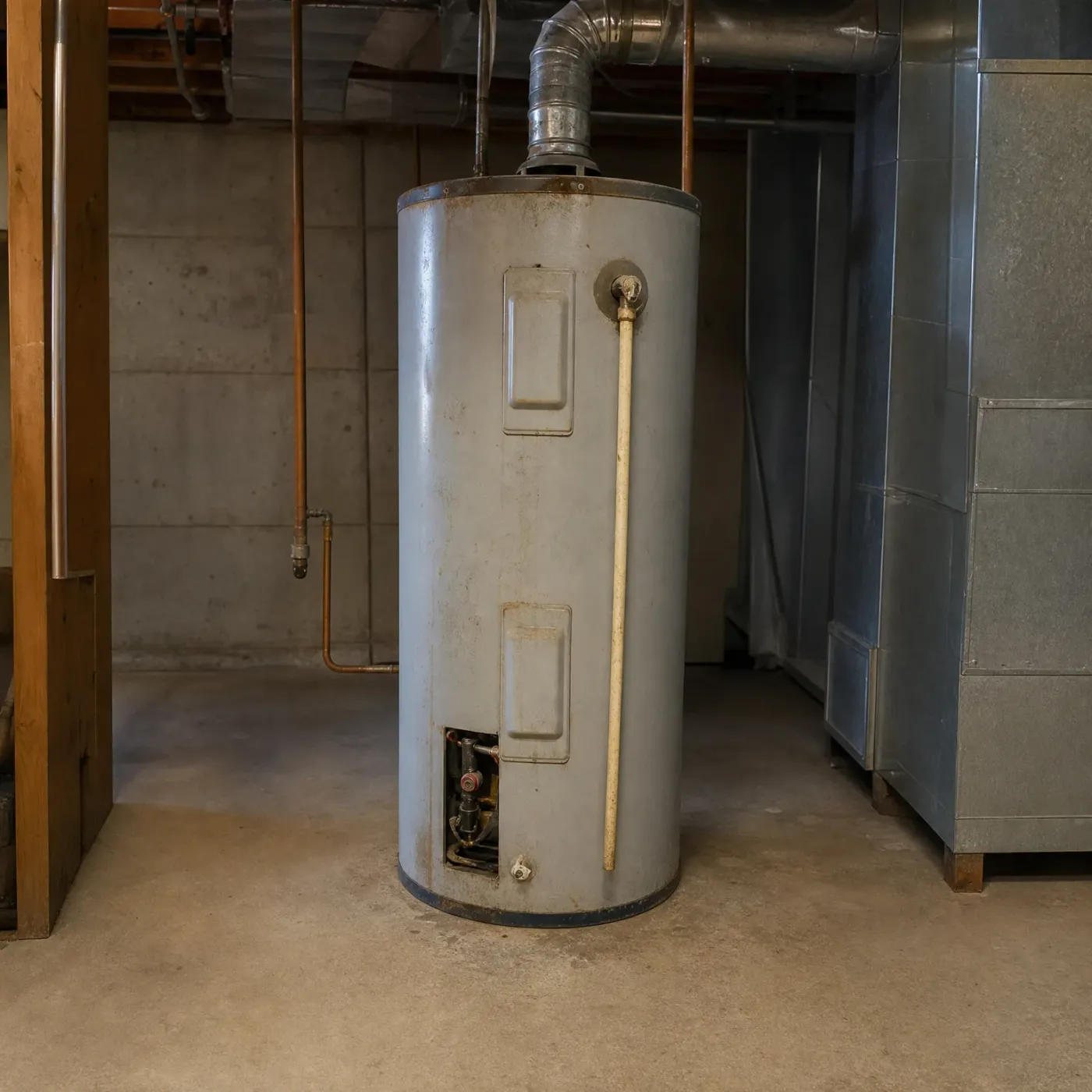
An older gray gas water heater with a metal flue pipe stands on a concrete basement floor beside ductwork and exposed copper piping.
A tank showing rust like this is near the end of its life, and that's the moment to decide what replaces it.
A woman in a cream knit sweater sits in an armchair with her eyes closed and a slight smile, beside an open window showing orange autumn foliage, with a mug, books and a lit candle on a small side table.
An older man with gray hair and a beard leans back on a beige sofa with his eyes closed, in a sunlit room with potted plants, a wicker chair and large windows behind him.

Where that leaves you

  • A heat pump water heater costs less to run than a standard electric tank, month after month, for as long as you own it.
  • It asks for space around it and a warmer spot, like a garage or a utility room, not a sealed-off closet.
  • If your tank is already rusting or near the end of its life, that's the point to decide what replaces it.
  • Skipping the search, the calls, and the back and forth on quotes gets you to a straight answer faster.
  • The equipment itself won't tell you if your space works for it; someone has to look at your setup to know for sure.

A heat pump water heater costs more up front than a standard electric tank, but it runs on a fraction of the power, and in a state where electricity is what heats most homes and most water, that difference shows up on every bill from here on. The question was never whether it works. It does. The real question is whether your utility room gives it the space and air it needs, and whether your current tank is far enough along that replacing it now makes sense instead of waiting. Those two things are specific to your house, not something a page can answer for you.

What a page can do is save you the part that has nothing to do with your water heater: finding a contractor who installs these, calling a few, explaining the same thing about your tank and your utility room each time, then sitting with quotes that are hard to compare because nobody looked at the same space. That's the work that disappears when you ask to be matched with someone local who handles this installation. They look at where your tank sits, how much room is around it, and what kind of shape your current one is in, and tell you straight whether a heat pump water heater fits your house. From there it's a decision you're making with real information instead of a guess.

A dark gray cylindrical water heater with copper pipes at its top stands against a concrete basement wall, with wooden shelving and framing in the foreground at both edges.

A local pro for your water heater installation

Describe the project once instead of to every installer.

Step 1 of 3: Equipment