Profile view of a bearded man wearing a dark baseball cap and a dark gray T-shirt against a plain off-white background.

No hot water in Huntsville, AL

Step 1 of 3: Equipment

No hot water usually means one of a few things, depending on what kind of water heater you have. With an electric tank, which is what most homes here run, the likely cause is a failed heating element or a tripped high-limit switch that needs a reset. With gas, a pilot that won't stay lit or a bad thermocouple is the usual cause. If the water is lukewarm instead of cold, only one of two elements may have failed, or the tank is undersized for your household now. Sediment built up at the bottom of the tank can also keep the lower element from heating water properly, especially in a tank that's gone a while without being flushed. A tripped breaker is worth checking first since it costs nothing to rule out. Past that, the fix depends on which part failed and whether the tank itself is still sound.

Why does no hot water hit your whole house so fast?

  • 2.39 people per household on average

    Your household runs about 2.39 people here, and a water heater sized for that runs out of spare capacity fast once a heating element fails.

  • Half the homes here were built by 1992

    Half the homes in Madison County were built in 1992 or earlier, so the tank, the wiring to it, or both may be original and due for a look.

  • 74.4% of homes heat with electricity

    Electricity heats 74.4% of homes here, which means most of this area's water heaters are electric tanks, and a bad element or switch is the common cause.

ACS 2020-2024

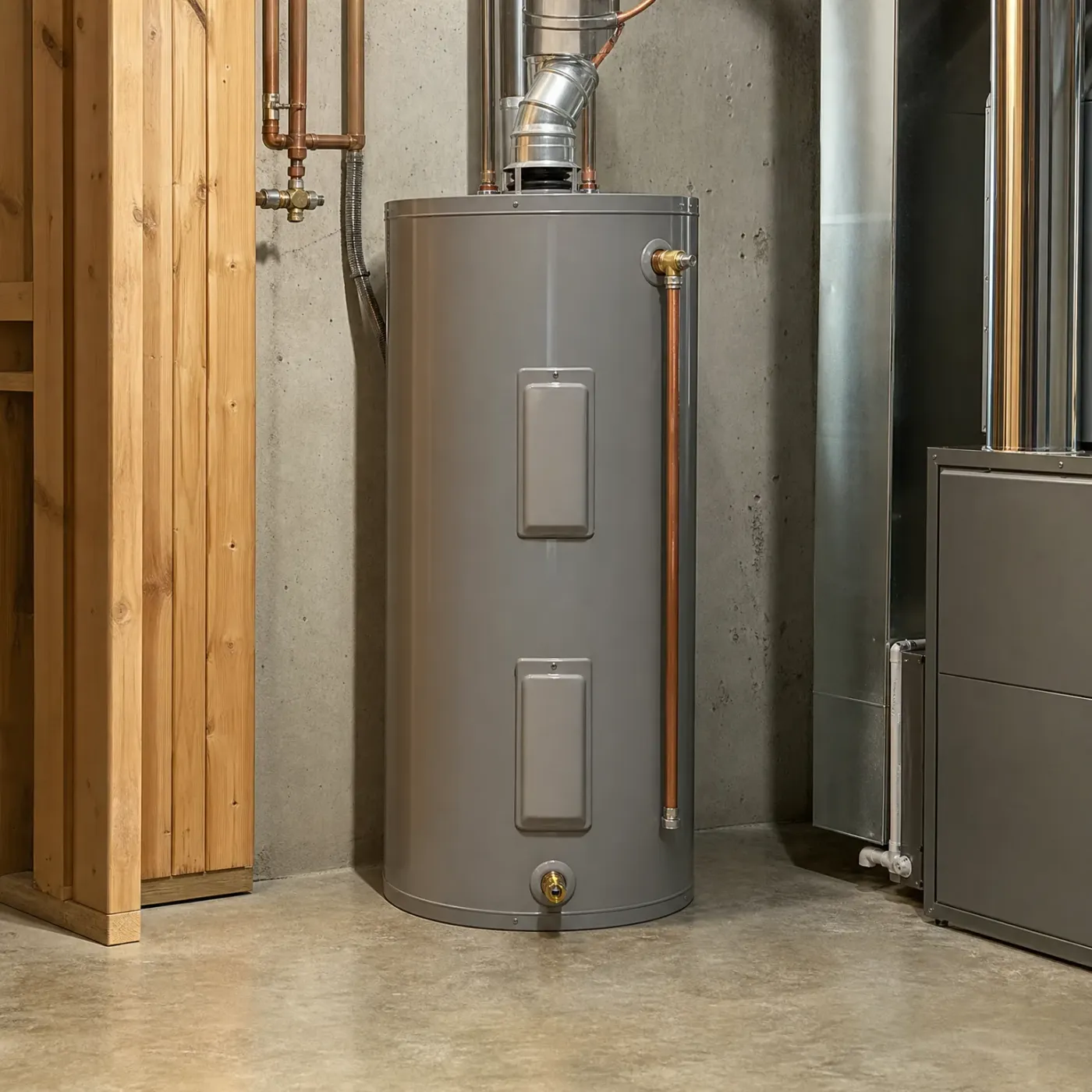
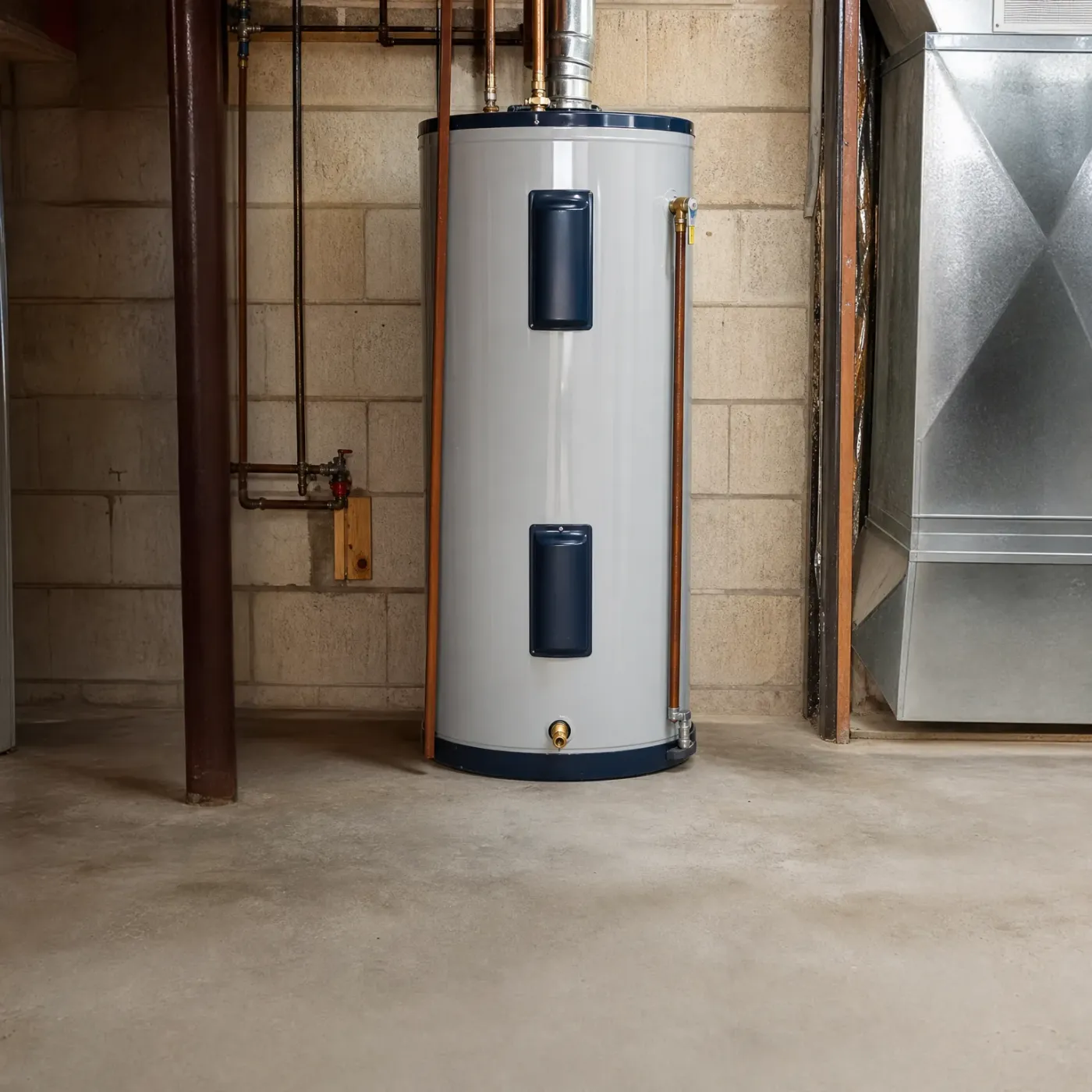
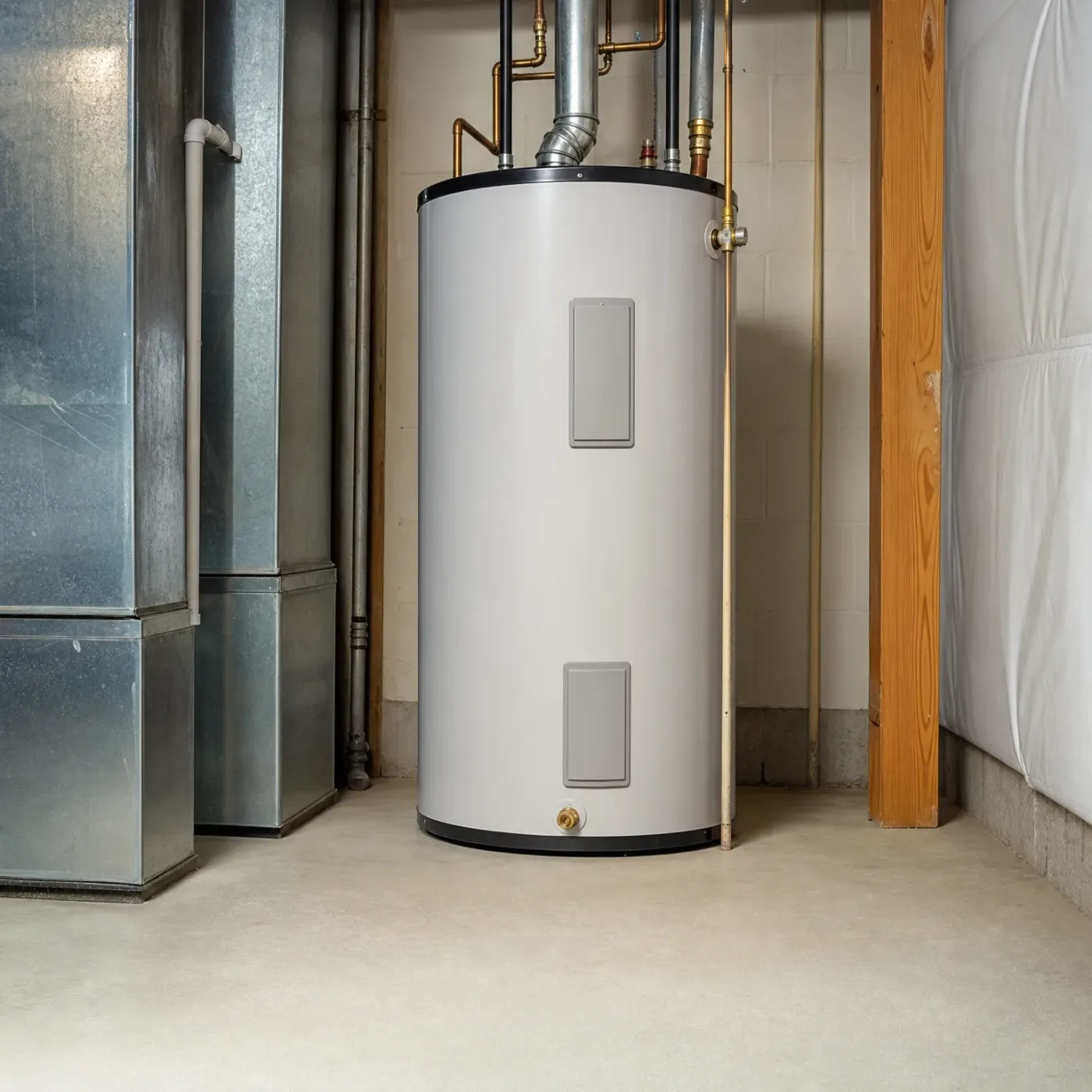
A white cylindrical water heater with two access panels stands on a concrete floor in a basement corner, beside galvanized ductwork, copper and metal pipes, a wooden post, and a concrete block wall.

Electric tank, working right

This is a standard electric tank, the kind in most Huntsville homes. Both heating elements are doing their job and the high-limit switch is holding. Water comes up to temperature and stays there, no resets needed, no cold surprises partway through a shower.

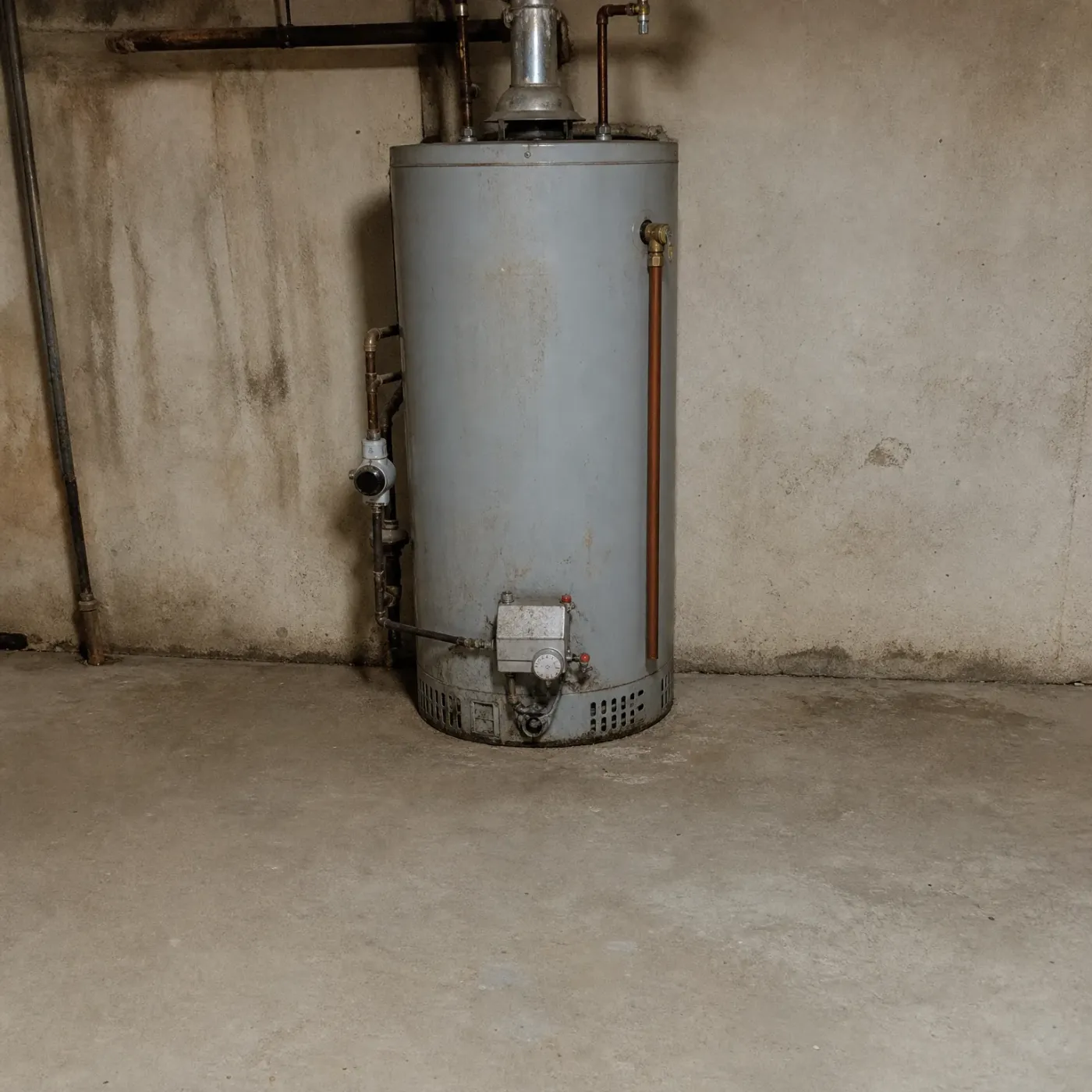
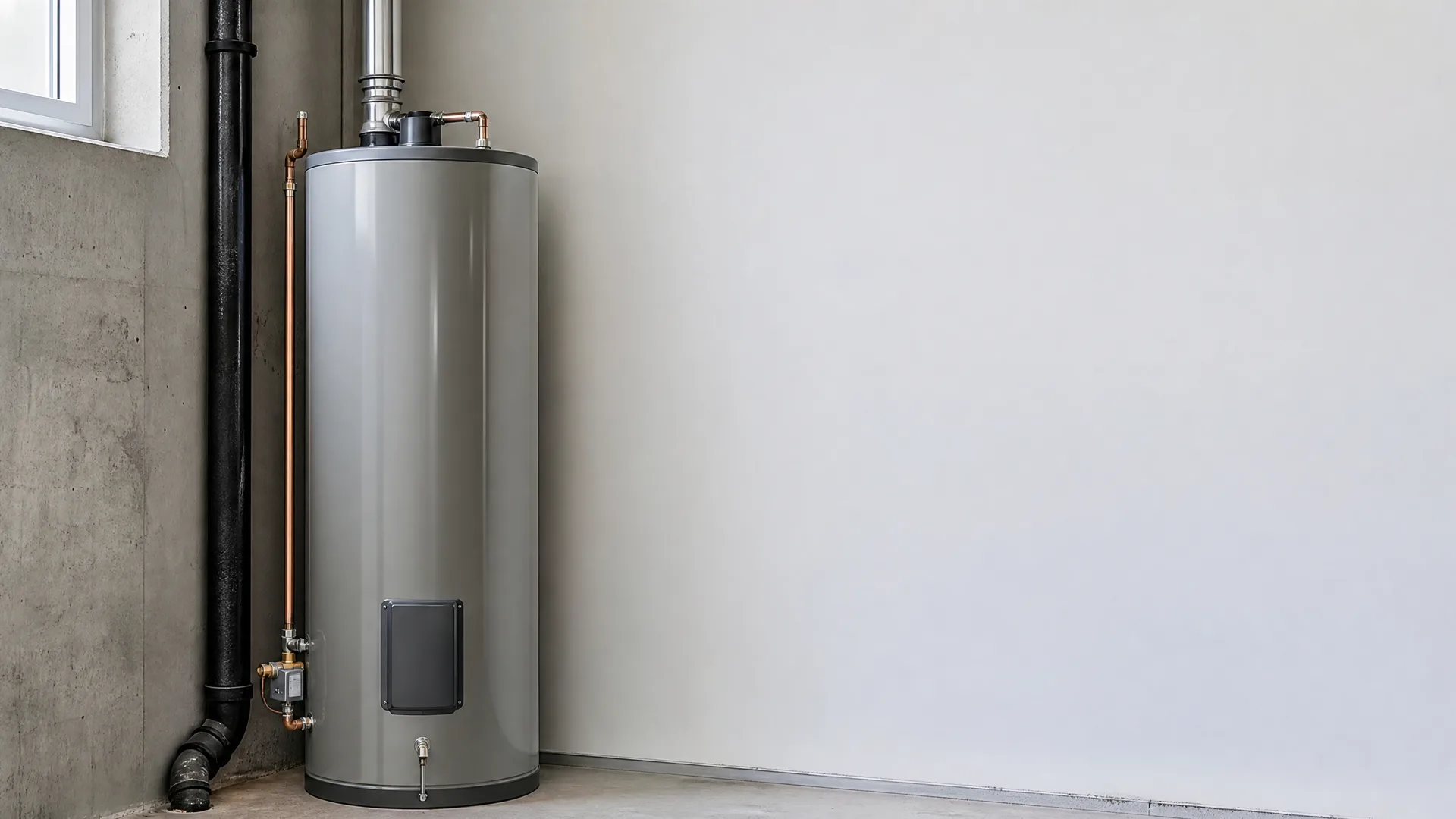
An older gray cylindrical gas water heater with copper and steel piping and a flue, standing on a concrete floor against a stained concrete wall.

Old gas tank, giving out

This one is older and running on gas, with a control unit at the base and a flue vent up top. A worn-out gas valve, a bad thermocouple, or a pilot that won't stay lit all show up the same way: water that never heats. A unit this age is also closer to needing a full swap than a repair.

Why is your water cold with no warning at all?

You go to the shower or the sink and it just never warms up. No sputtering, no lukewarm stretch first, just cold. If you've got an electric tank, check the breaker panel before anything else, since a tripped high-limit switch can cut power to both elements at once and leave you guessing. Ignore it and you're looking at cold showers for the whole household, dishes left soaking, laundry pushed off. If the tank is leaking at the same time, that's water finding its way into your flooring or the drywall around it, which costs a lot more to fix than the heater itself.

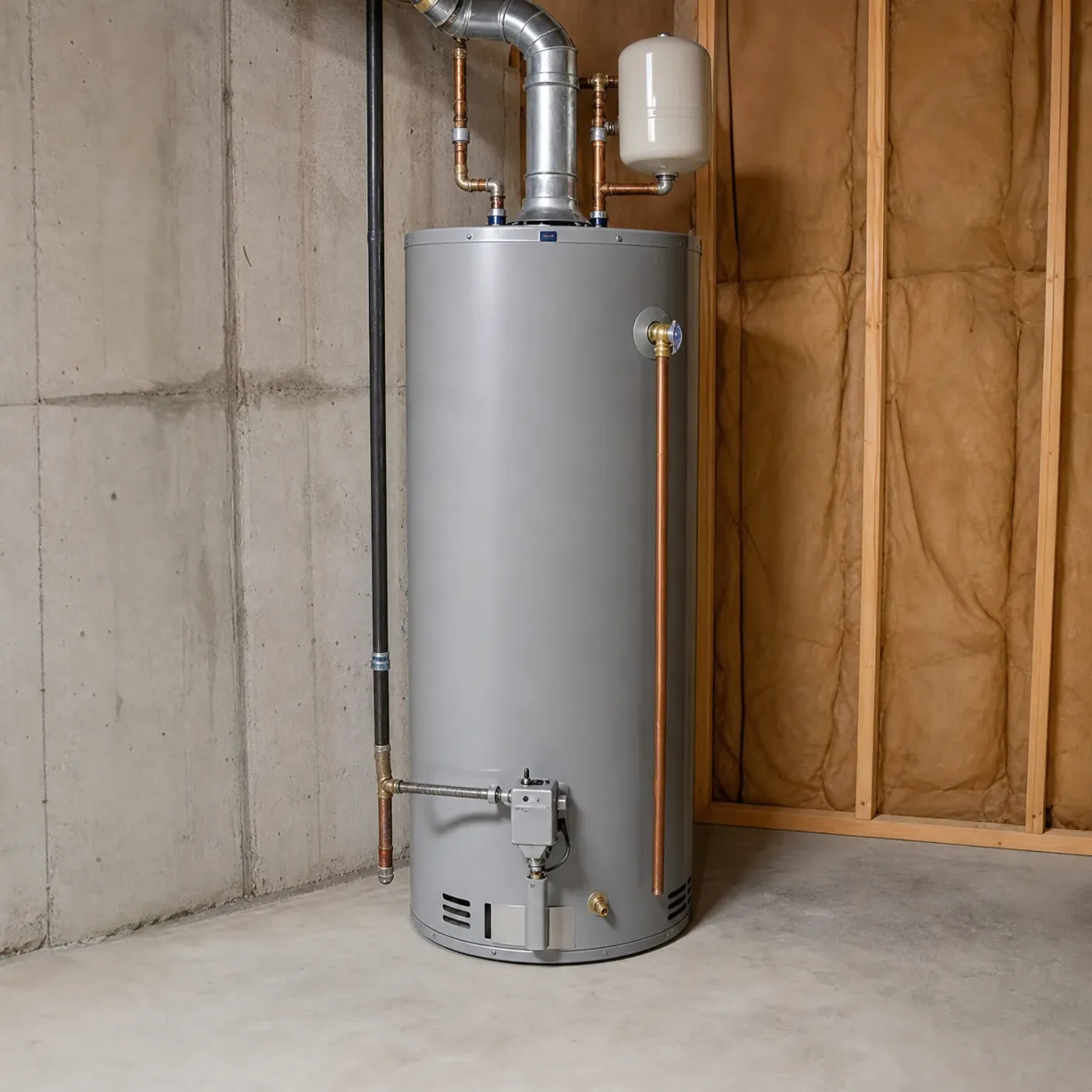
A gray cylindrical gas water heater with copper piping, flue vent, and a small expansion tank stands in a basement corner between a concrete wall and an insulated stud wall.

Gas water heater running right

This tank is doing what it should. The flue vent is drawing properly, the gas lines are intact, and the expansion tank above it is handling pressure the way it's supposed to. Hot water on demand, no surprises.

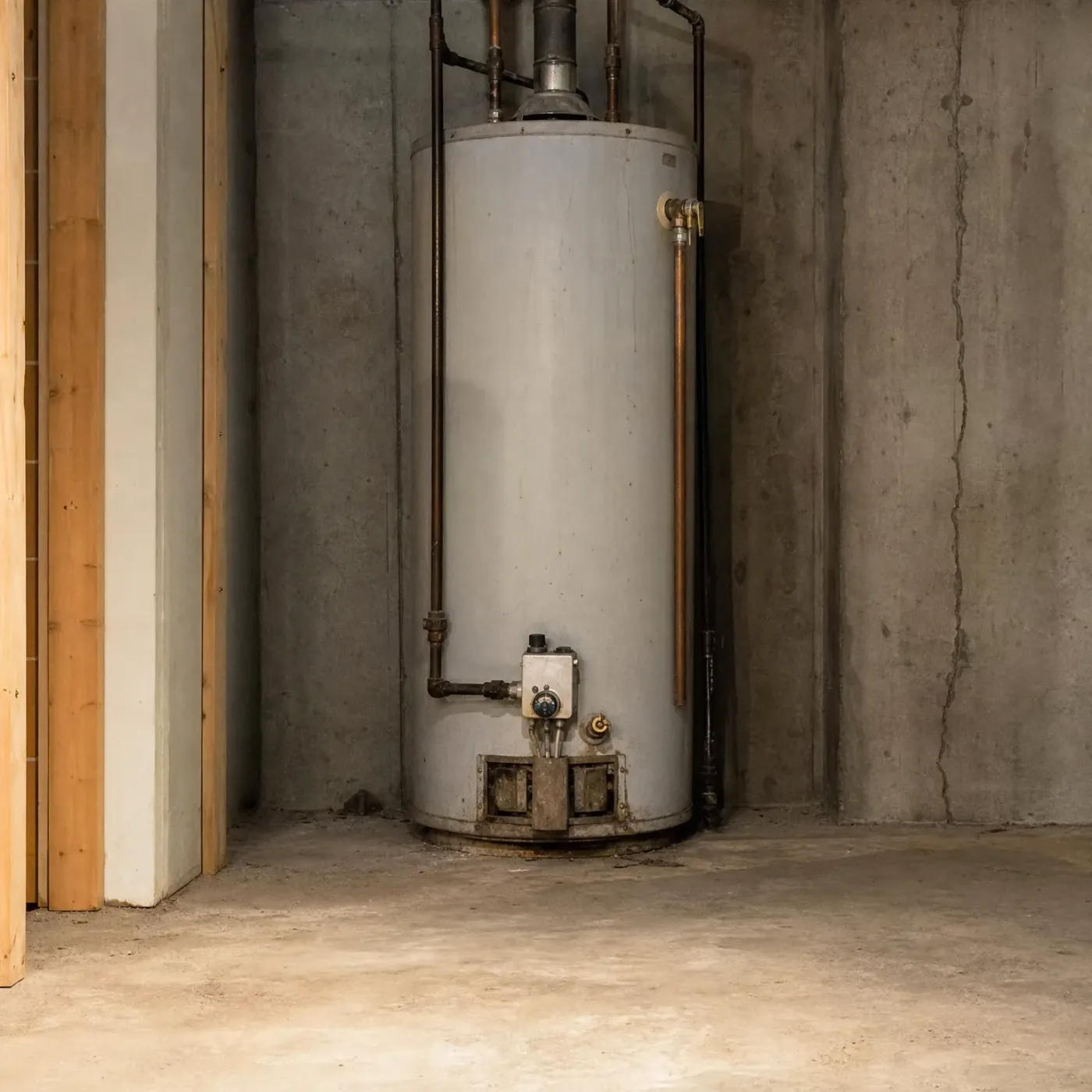
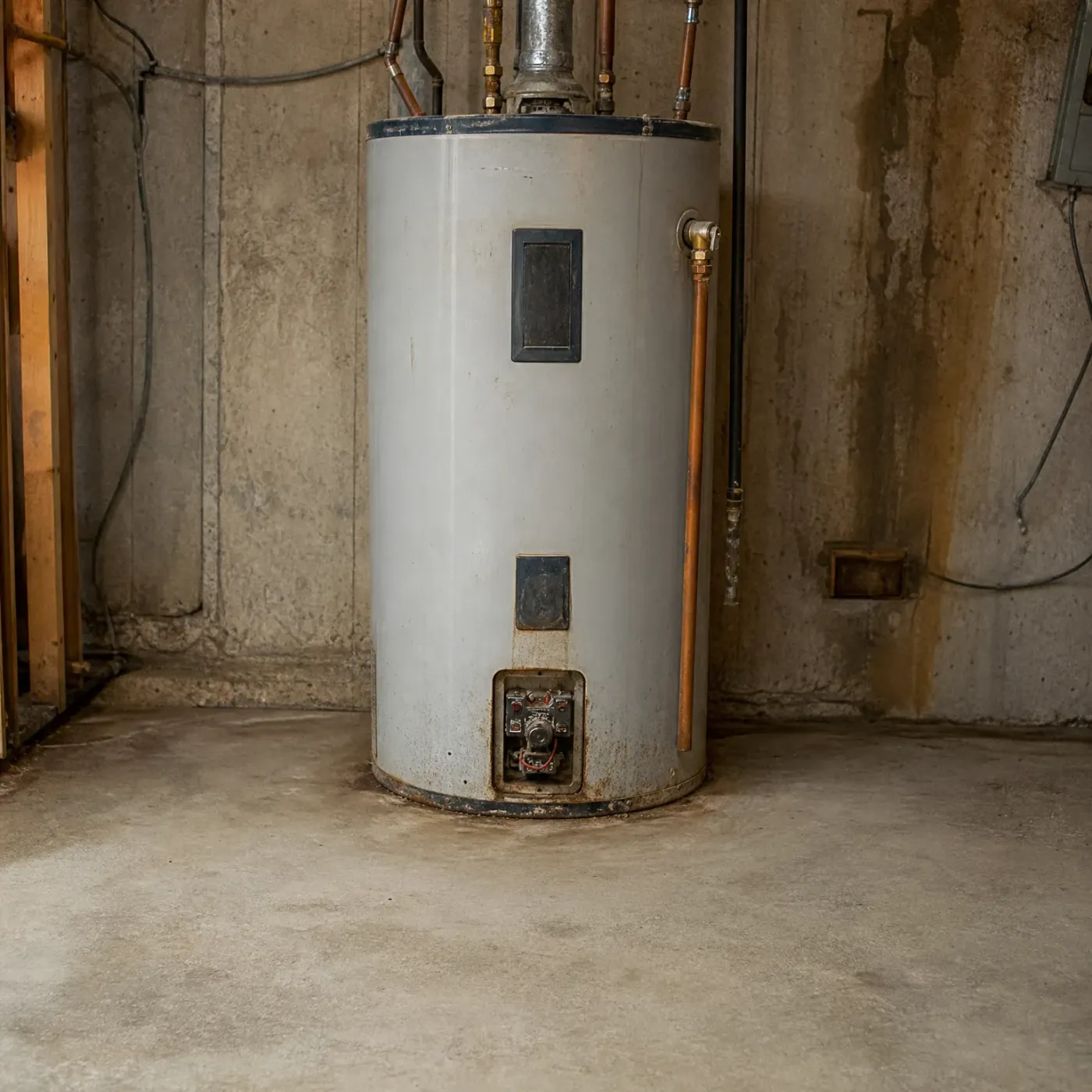
An older gas water heater with copper and black pipes stands in the corner of a bare concrete basement next to a wood-framed partition wall.

Gas water heater in trouble

An older tank like this one is worth a look at the gas control valve first. If the pilot won't stay lit or the valve itself has worn out, you'll get cold water with no warning. Corroded fittings on the supply lines are another sign something's failing.

Reset It or Replace It

Element reset

  • A tripped high-limit switch cuts power to both elements, and pressing the small red reset button under the access panel can bring it right back.
  • This only works if the switch tripped from a one-time spike, not from an element that burned out for good.
  • If it trips again within a day, the heating element itself has likely failed and needs replacing, not just resetting.
  • Resetting takes a few minutes once the panel is off and the breaker is confirmed on.
  • It costs you nothing but time, so it is worth trying before anything else.
  • If the reset button will not stay in, that switch itself may need replacing along with the element.

Element replacement

  • A failed upper or lower element stops heating water even though power is reaching the tank fine.
  • Testing an element for continuity with a multimeter tells you for certain whether it is the problem.
  • Hard water buildup on the element is a common reason they burn out in homes across Madison County.
  • Replacing one takes draining the tank partway and shutting off power at the breaker first.
  • A new element should restore full hot water output once it is wired in and the tank refills.
  • If both elements have failed around the same time, the tank's age and water quality are worth a look together.
  1. Power or gas supply cuts off to the tank.

  2. The thermostat or heating element stops heating water.

  3. Water sitting in the tank slowly drops to room temperature.

  4. Any hot water left in the pipes runs out fast.

A gray cylindrical water heater with two access panels and copper piping stands against a concrete wall in a basement, beside wood framing and metal ductwork.
A tank like this holds its heat because nothing on it is eating through the metal or the fittings.
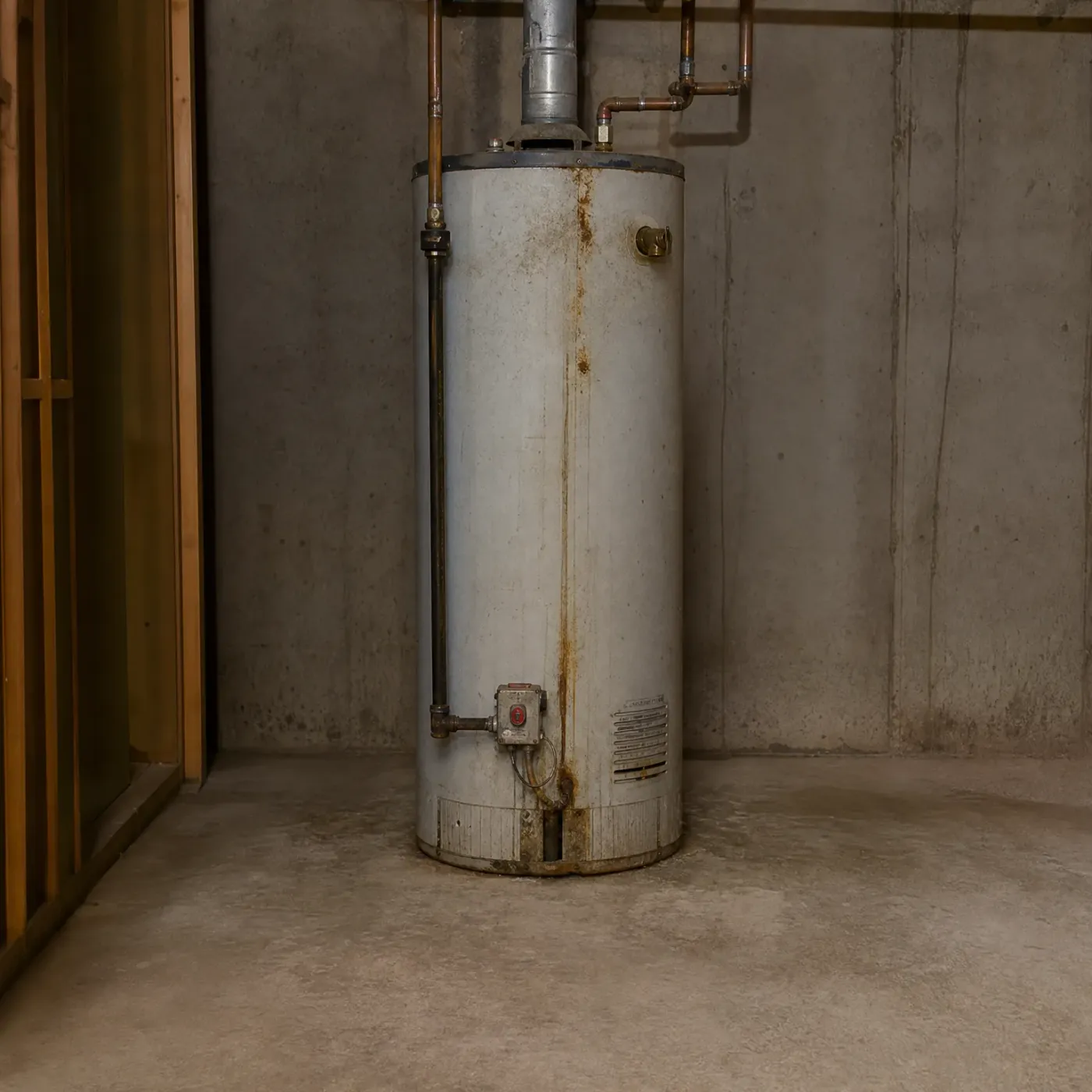
An aging rust-streaked gas water heater with copper and galvanized pipes stands against a bare concrete basement wall beside wooden stud framing.
Rust like this on the tank and valve is a sign the tank is failing, not something a reset will fix.
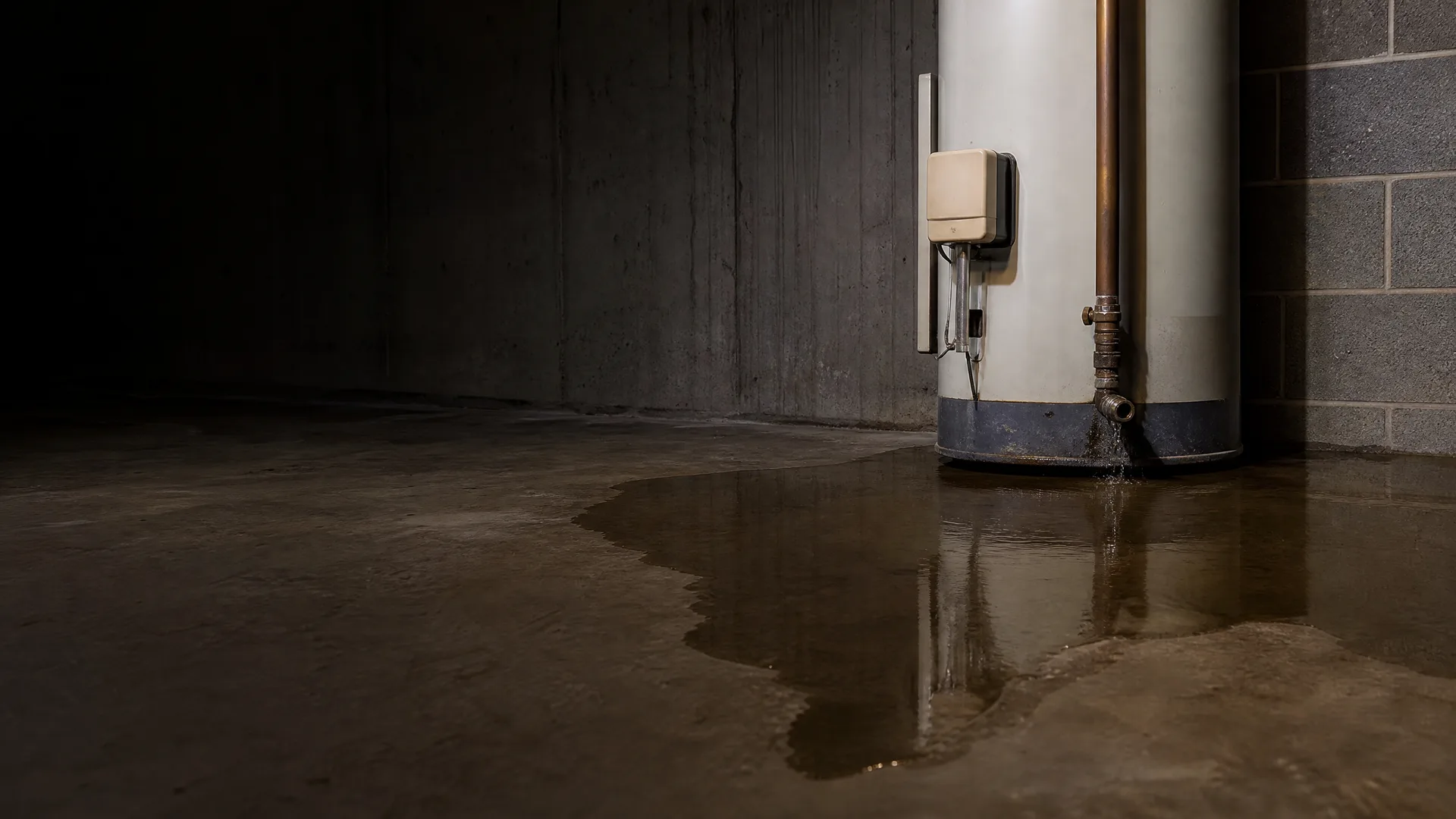
A water heater tank with copper piping and a drain valve stands against a concrete and block wall in a dim basement, with a large puddle of water spreading across the floor.

Saturday morning, and you're down in the basement with a load of laundry when you feel it before you see it. Your sock goes wet on the concrete. You look over and there's a pool spreading out from the base of the tank, already reaching toward the drain. The water heater isn't making any sound at all, no hum, no click, nothing. You crouch down and the metal near the bottom feels cool and damp all the way around.

You shut off the water line and stand there looking at it. This isn't a reset button or a breaker. A tank that's leaking from the bottom like this needs someone to look at it in person, and soon, before it lets go all at once.

A pro who works on water heaters

Explain the water heater problem once instead of to every shop in Madison County.

You're not committing to anything by asking.

A failed heating element doesn't make noise or smell. The water just stops getting hot, and nothing about the tank looks wrong from the outside.

That's why a reset button or a new element can bring a tank back to full working order even when it looked like it was dying. The tank itself is often fine.

A woman in a cream cowl-neck sweater stands in a lamp-lit room looking out a window at a snow-covered yard with shrubs and bare trees at dusk.
A woman in a gray turtleneck sweater stands near a large window in a lamp-lit living room, looking out at falling snow and snow-covered conifers.
A woman in a chunky knit sweater stands by a large window looking out at snow-covered ground, with a dimly lit living room containing a gray sofa, framed artwork, shelves and table lamps behind her.
A woman in a gray turtleneck sweater stands in a dimly lit living room with a lamp and bookshelves, looking out a multi-pane window at falling snow.

Most tanks don't fail all at once. The upper element usually does the bulk of the heating, so if it burns out first, you might still get a few warm minutes before the cold hits, which throws people off when they're troubleshooting. A burned-out element doesn't trip the breaker either. It just stops drawing power, so the panel looks completely normal while the tank sits cold. Gas tanks have their own quiet failure: a bad thermocouple or igniter cuts gas to the burner as a safety measure, no leak, no smell, just no flame. Sediment is another slow one. It settles at the bottom of the tank and insulates the lower element from the water above it, so that element works harder than it should and burns out sooner than it would otherwise. A cracked dip tube causes a stranger problem, letting incoming cold water mix in near the top of the tank instead of the bottom, so what should be hot water never quite gets there. And a pressure relief valve stuck open can drain away hot water as fast as the tank makes it, even when both elements are doing their job fine.

What's Actually Happening Inside the Tank

  • A failed heating element draws no power once it burns out, so the breaker never trips and nothing looks wrong at the panel.
  • The upper element handles most of the heating, so when it fails first the tank may still deliver a few minutes of warm water before running cold.
  • A thermocouple or igniter problem on a gas tank cuts gas to the burner as a safety measure, which stops heat production without any leak or smell.
  • Sediment settling at the bottom of the tank insulates the lower element from the water, making it work harder until it burns out early.
  • The dip tube feeds cold water to the bottom of the tank, so if it cracks, incoming cold water mixes into water that should be hot near the top.
  • A pressure relief valve that's stuck open lets the tank lose hot water as fast as it heats it, even with both elements working fine.
A white cylindrical water heater with copper piping and a gas control valve stands against a stained concrete basement wall on a bare concrete floor.
Before you get your water heater repair
A white cylindrical water heater with two dark access panels stands on a concrete basement floor against a concrete block wall, with copper pipes, a flue duct above, and sheet metal ductwork at right.
After you get your water heater repair

Power here costs 12.48 cents per kilowatt-hour

Electricity here runs 12.48 cents per kilowatt-hour, cheap enough that most homes run electric tanks without a second thought about cost. That's also why a failed element is usually the first sign anything's wrong. Low rates don't warn you before the water goes cold.

EIA-861 2025

A gray cylindrical water heater with copper piping and a black vent pipe stands in the corner of a room with concrete and white walls.

Calling around on your own

You start with a search and get a list of names you know nothing about. You call one, explain the tank, the reset button, the cold water, and get a voicemail. You call the next and start over from the beginning. Some don't serve Madison County at all. By the time someone answers, you've told the story three or four times and still don't know who's any good or when they can come.

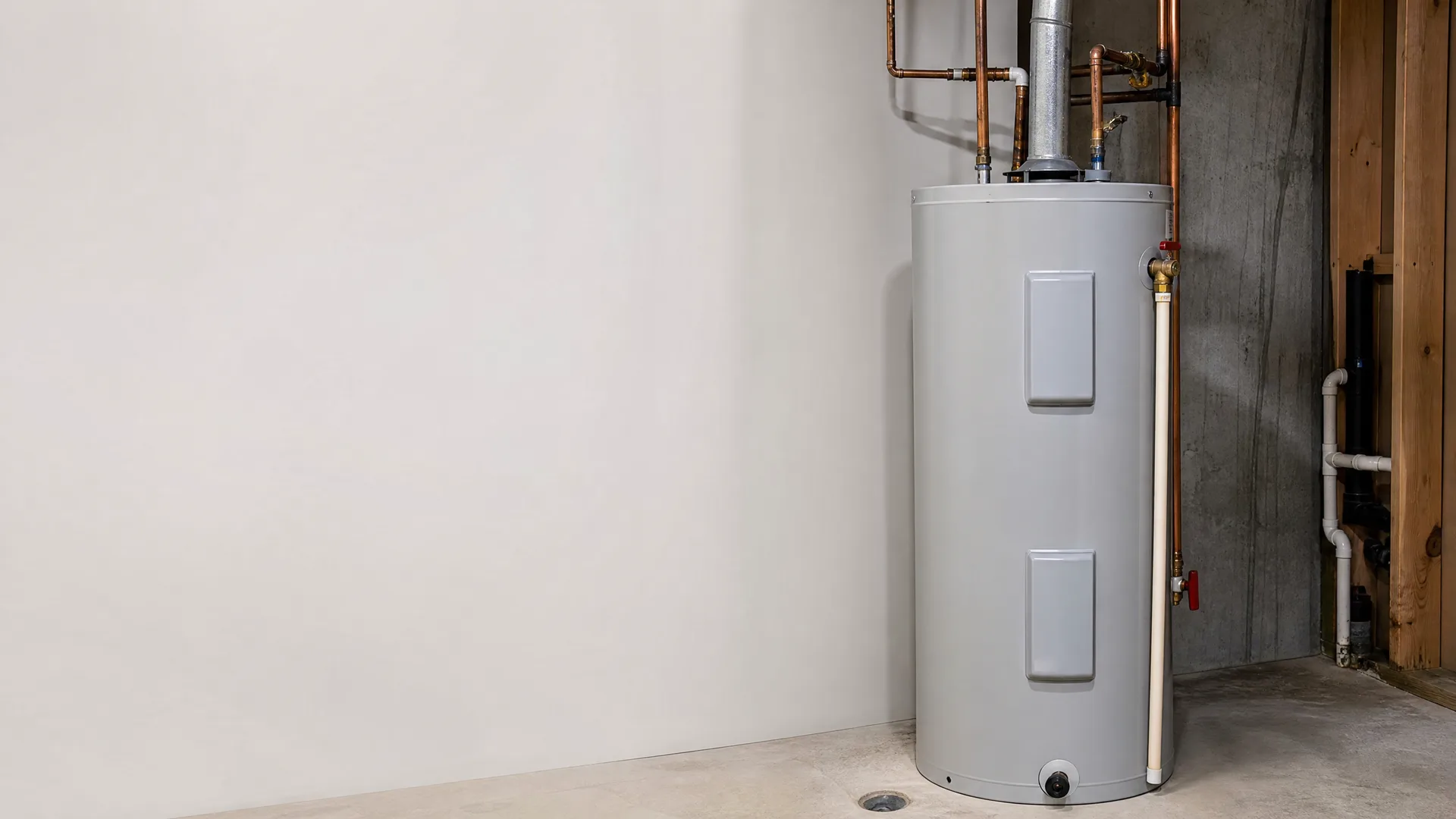
A gray cylindrical electric water heater stands in a basement corner against a white wall, with copper pipes and a vent duct above it and a concrete wall and PVC piping to the right.

Getting matched instead

You answer a few questions about what's happening with your tank, and a contractor who works in your area reaches out to you. No list to work through, no voicemail roulette, no repeating the same explanation to five different people. You've already said what you need once. The comparing and sorting that usually falls on you happens before you ever pick up the phone.

A woman stands in the open black front door of a white-sided house with a dark shingled roof while a man in a navy jacket approaches along the walkway, with lantern wall lights, a potted shrub, and flowering garden beds nearby.

No hot water comes down to a part that failed or a tank that's done

Most of the time it's a heating element or a high-limit switch, and a reset or a replacement part brings the tank back. Sometimes, especially with rust showing at the fittings, the tank itself is the problem and no part fixes that. Either way, you don't have to figure out which one it is before you get help.

You've already dealt with no hot water for longer than you wanted to. You don't need to spend more of today calling around, explaining the reset button and the cold water to one voicemail after another, then starting over with the next name on the list. Get matched with a contractor who handles water heaters like yours, and let them call you back.

A dark ceramic mug on a round wooden table beside a light grey sofa with a woven cushion and knit throw, with a window, potted plant, floor lamp and wooden cabinet blurred in the background.
A house roofline with a stone chimney rises above trees, with a tall pine, Spanish-moss-draped oak branches, and misty hills in the background.

Get your water heater to the right pro

Skip the search

It costs nothing to send, and you don't have to hire anyone.

A cold shower on a work morning doesn't fix itself, and a tank that's failing gets worse while you wait on hold with someone else's receptionist. Send the request and skip the calling around, the voicemails, and explaining the same problem twice. One call, matched to someone who can look at your tank.