Signs your water heater needs replacing in Alabama
A local pro who knows water heaters gets your details and gets in touch.
Most water heaters in Alabama run on electricity, and with power costing what it does here, a unit that's starting to fail doesn't just leak or quit, it quietly runs your bill up for weeks before anyone notices. A tank working harder to hold its temperature, a heating element cycling more than it should, that costs you before it ever fails outright.
Some signs are easy to catch. Water that takes longer to heat than it used to. A pilot or indicator light that won't hold, or warm water that goes lukewarm halfway through a shower. Rust-colored water, a tank that's started making popping or rumbling sounds, or any dampness around the base are all worth paying attention to. None of these are things to wait out.
What's harder to judge on your own is whether what you're seeing means repair or replacement, and that's where it helps to have someone local look at it, someone who services water heaters in Alabama homes all year and has a sense for what tends to go first and what's worth fixing versus what isn't.
Submitting a request here doesn't commit you to anything. It connects you with one licensed contractor near you, not a handful of companies competing for your callback. That contractor will reach out directly, look at your situation, and tell you plainly what they're seeing. No guesswork about who's going to show up, no sorting through quotes from strangers. Just someone who knows this equipment and works on it in homes like yours, reaching out to walk you through what your water heater is telling you.
The rest of this page goes through the specific signs in more detail, what each one usually means, and when it points to a repair versus when it's telling you the unit's done. But if you're already seeing two or three of these at once, that's usually answer enough.
What are the signs my water heater needs replacing?
You've noticed something off, maybe rusty water, a popping sound, or a bill that crept up, and you're trying to figure out if it's a repair or if the whole unit is on its way out. With most Alabama homes running electric water heaters and power costing what it does here, you want to catch this before it fails outright, not after you're standing in cold water or paying for a leak that's already done damage.
Rusty water, a tank that's noisy, or a water heater over 10 years old all point to replacement
Water with a rusty tint, especially from the hot tap only, means the tank itself is corroding from the inside, and that doesn't get better. Popping or rumbling sounds mean sediment has built up on the heating element, which makes an electric water heater work harder and longer to heat the same amount of water. Water pooling at the base of the tank usually means a crack has already formed. Most tanks last 8 to 12 years, and once one passes that mark, the risk of a sudden failure goes up each year you keep it. If your water heater is in that range and showing any of these signs, replacing it now costs less than waiting for it to fail.
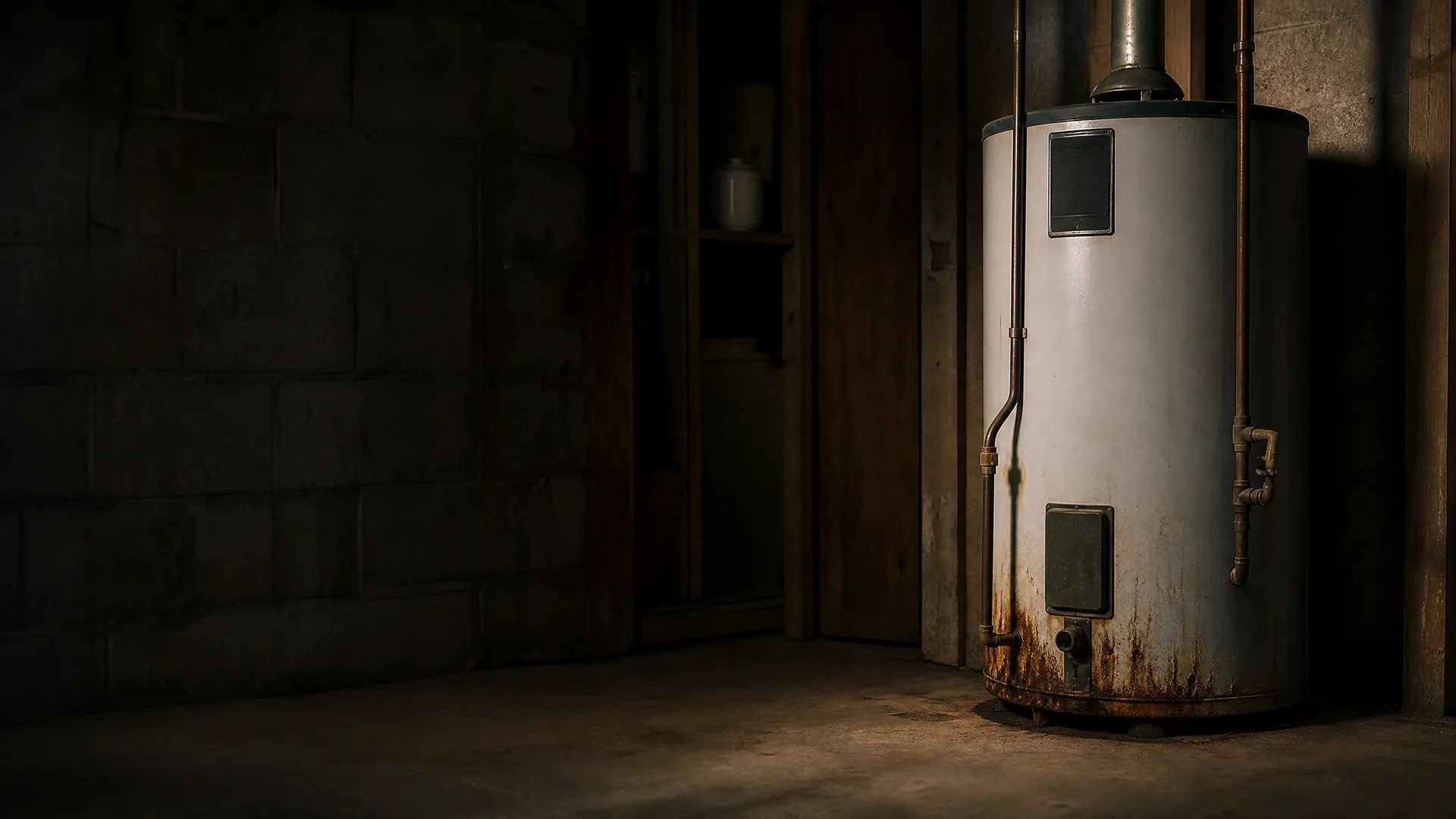
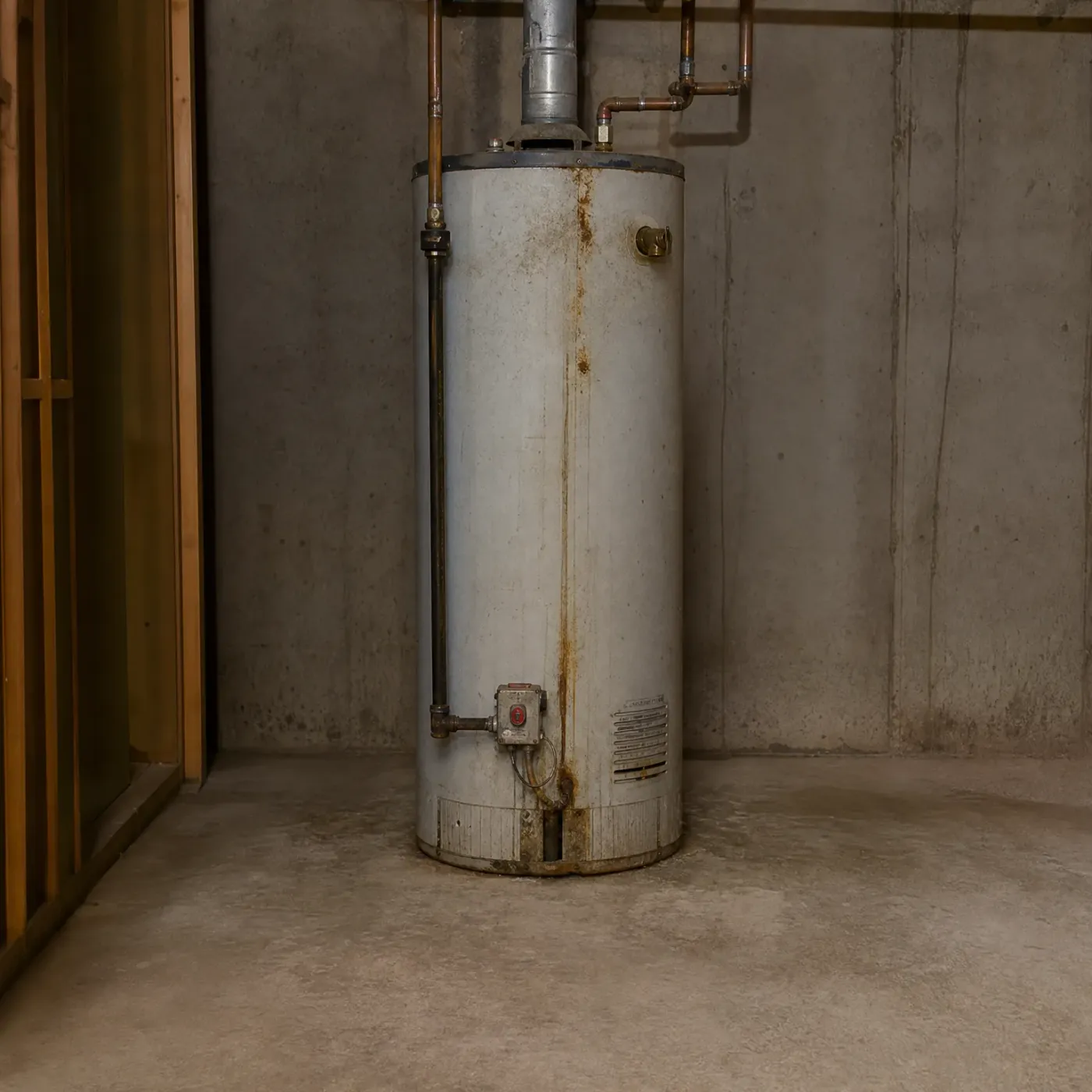
You're down in the utility room after dinner, swapping a load of laundry, and the bulb overhead catches it: a ring of rust at the base of the tank, dried in streaks down to the floor pan. The air in here is warm and a little damp, same as it's been all summer. You crouch down and touch the streak. Dry, not fresh, but it wasn't there last month. The tank ticks once as it cycles on. You think about the next hot morning, the next shower, and whether this is the night it finally gives out instead of next week. You turn the light off and go back upstairs, already running through who you'd even call about it.
One installer gets your project, so there's no bidding war over it.
It costs nothing to send, and you don't have to hire anyone.
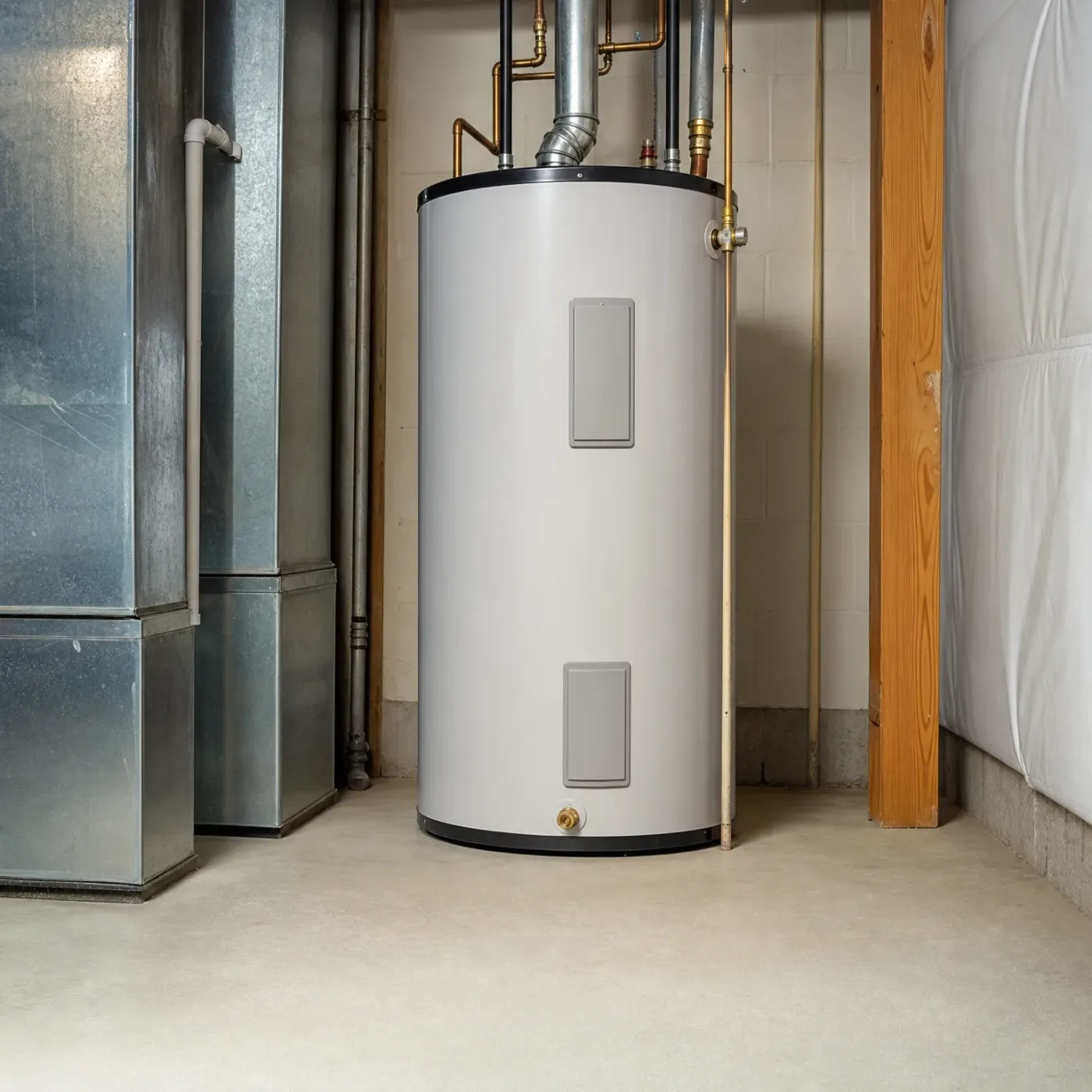
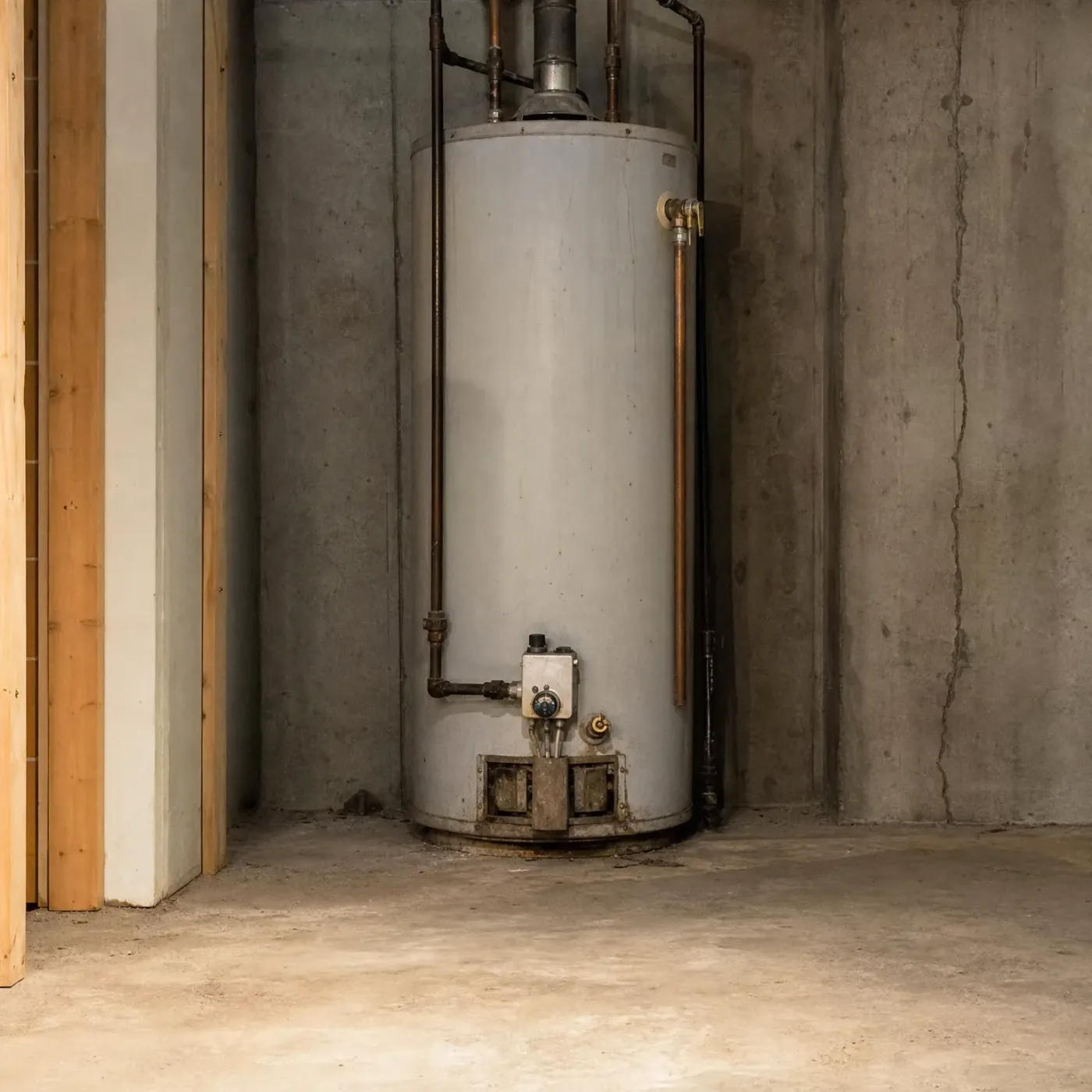
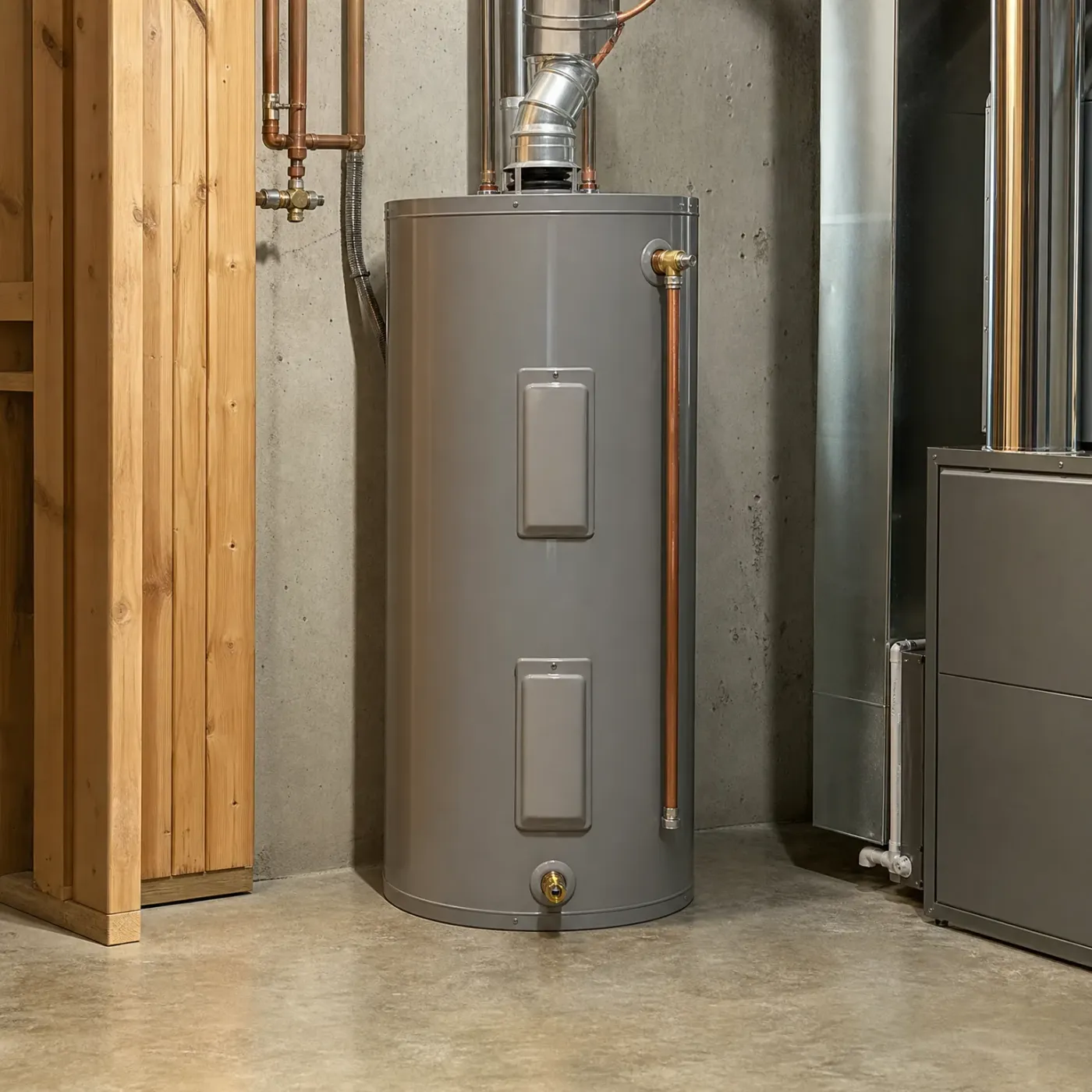
Working as it should
This is what a healthy tank looks like. No rust at the fittings, no water pooling under the access panels, the drain valve dry. The connections at top stay tight and clean, and the tank holds its heat without running longer than it used to.
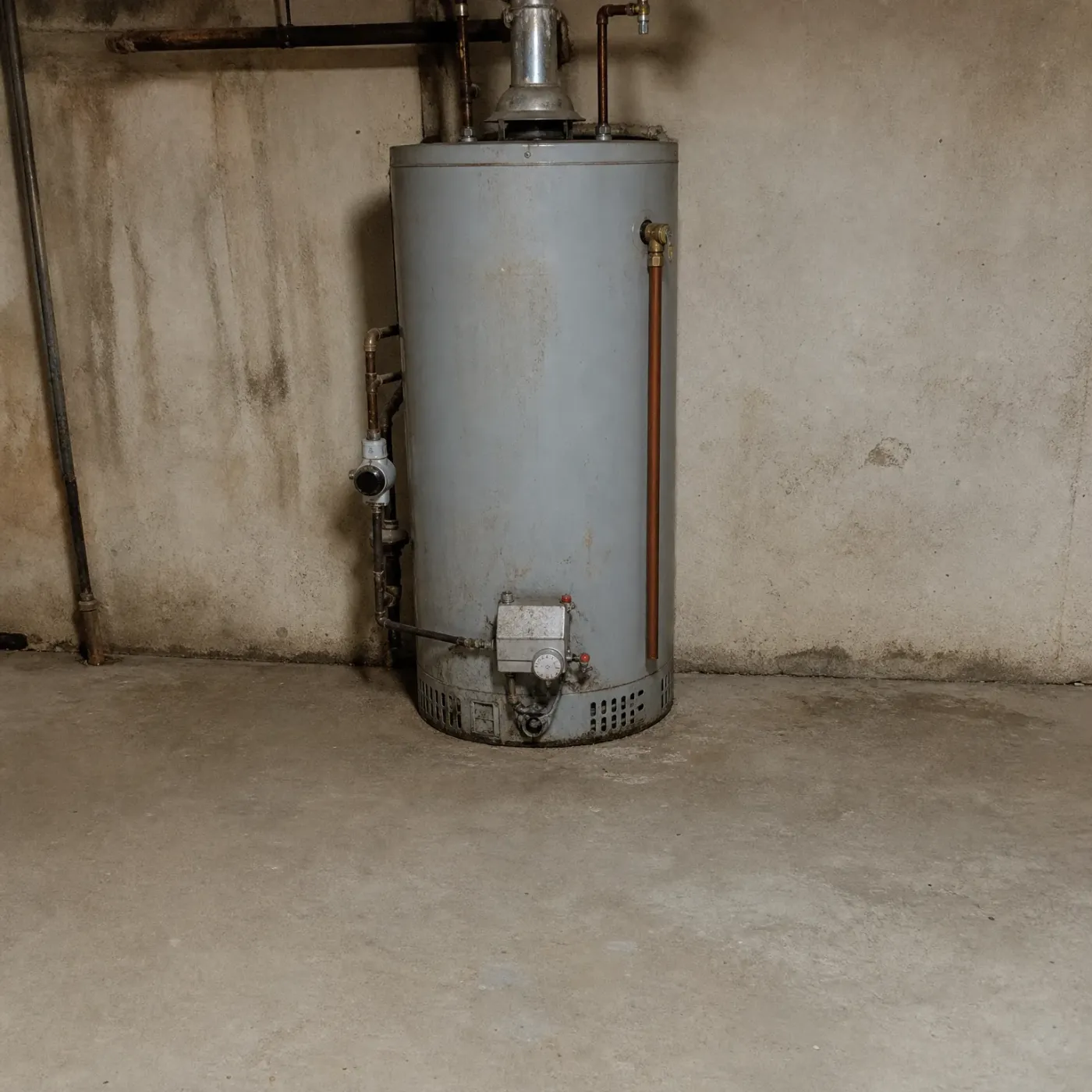
On its way out
This is an old tank near the end. The flue vent and relief valve show their age, and a unit built like this is past the years a tank is expected to last. Once a water heater gets here, waiting usually means a leak finds you first.
What are you noticing in your own house
You might catch it first in the water. It comes out of the tap with a rust tint, or it stays lukewarm no matter how long you run it. Down at the tank, look for a damp ring on the floor around the base, or a trail of dried mineral down one side. Some units start making a low rumble or a popping sound when they heat, which usually means sediment has built up on the bottom of the tank. Your electric bill climbing without a clear reason is worth checking too, since a tank losing efficiency has to run longer to hold its temperature. Left alone, a leak at the base can soak the floor underneath it and whatever is stored nearby.
Copper and black iron lines run clean to the flue and the expansion tank, no sign of wear anywhere on the tank itself.
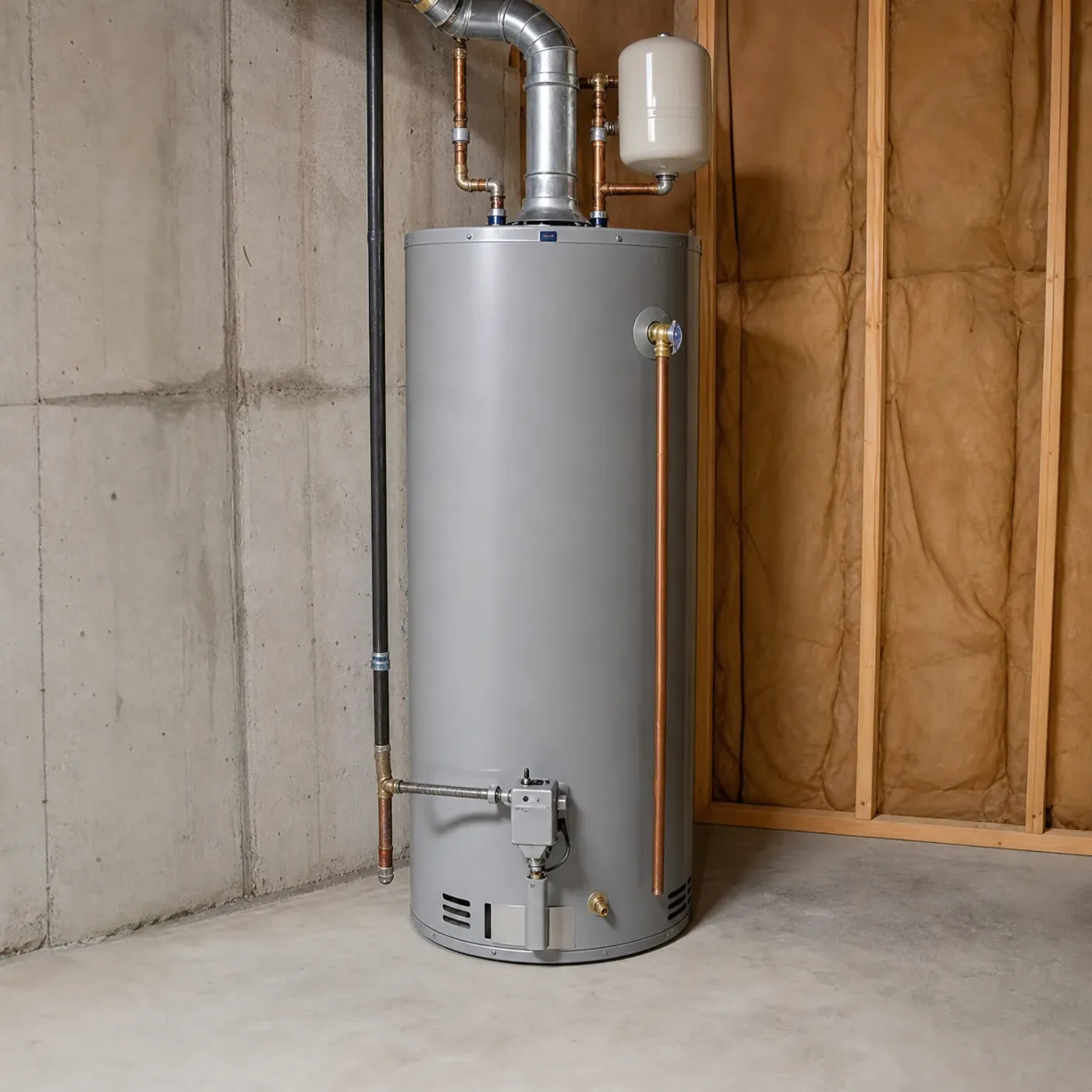
The control valve and fittings sit low in an unfinished basement, with vertical supply lines carrying years of use on an aging tank.
Most electric water heaters fail from the inside out, in a fairly predictable order. The anode rod is the first piece to go. It's there to corrode instead of the tank, drawing the rust-causing reaction onto itself. Once it's used up, the bare steel underneath starts taking the hit, and that's when a tank that's lasted for years can fail in a matter of months. Before that happens, sediment builds up at the bottom, especially in electric models where the lower heating element sits right in it. The element has to heat through that layer to warm the water above, which is why you might notice the hot tap taking longer to run warm. That same trapped water can boil under the sediment and escape as the popping or rumbling you hear during a heating cycle. Pressure follows a similar pattern. If the relief valve drips, or keeps dripping after you've reset it, something inside is building more pressure than the tank is built to hold. None of these are things a new part can undo once the tank itself gives way.
What's happening inside the tank
A tank that's failing usually heats slower first, so you run the hot tap longer before it ever turns warm.
The anode rod inside the tank sacrifices itself to corrosion, and once it's used up, the steel tank is next.
Sediment settles at the bottom of an electric tank and the lower heating element has to push through it to heat the water above.
A popping or rumbling sound during a heating cycle is that sediment layer trapping water underneath and letting it boil.
A pressure relief valve that drips or won't stop dripping after a reset means pressure inside the tank is building past what it should.
Once the tank itself has a pinhole leak, no part replacement fixes it, since the steel has already given way.
1
Sediment builds up and hardens on the tank's bottom
2
The heating element works harder to push heat through it
3
The anode rod finishes corroding and stops protecting the steel
4
Rust starts eating through the tank wall from the inside
Before you get your water heater installationAfter you get your water heater installation
67.4% of homes statewide heat with electricity
With two out of three Alabama homes running an electric water heater, yours is likely one of them. An electric tank that's losing efficiency, from sediment or a dying element, shows up straight on your power bill before it ever fails outright.
ACS 2020-2024 5-year B25040
Rust in the water, a tank that takes longer to heat, a damp ring on the floor, a bill that keeps climbing even though nothing's changed, any one of these is reason enough to get the tank looked at, and more than one together usually means replacement makes more sense than another repair. You don't have to be sure which it is. A licensed plumber local to your area sees this exact failure pattern every summer, knows what a tank at this stage usually needs, and can tell you straight whether it's worth fixing or time to replace it. You'll be matched with one contractor, not a handful calling you back at once, someone who already knows Alabama tanks and what a year of this heat and this kind of water use does to them. Once you know what to look for, the next step is just getting a straight answer about your own tank.