 Get matched
Water heater leaking in Huntsville, AL
Get matched with a pro who fixes water heaters in Madison County.
Water pooling around the tank, dripping from a fitting, or a wet spot spreading on the floor near it means something is actively failing. It is not something to watch for a few days. A leak gets worse, and depending on where it is coming from, it can mean the tank itself is corroding from the inside, which does not get better.
First, find where the water is actually coming from if you can do it safely. Water at the top, near the pipes, often points to a loose connection or a valve. Water at the bottom, or rust-colored water, more often means the tank is cracked or corroded through. If you can get to it without getting hurt, shutting off the water supply to the heater and the power or gas to it will stop things from getting worse while you wait.
Not every leak means a new water heater. Some are a fitting or a valve that a licensed plumber can replace in an afternoon. Others mean the tank is done. There is no way to know which one you have without someone looking at it, and guessing wrong either way costs you.
This is where the page stops being general advice and starts being about your house. Once you send the form, you are not the one calling around Madison County trying to find a plumber who answers and has time today. That part is handled for you. A contractor who takes on jobs like this reaches out to you directly, already knowing roughly what you are dealing with, so the conversation can start with your actual leak instead of a cold explanation from scratch.
Below is what else matters here, in Huntsville and the rest of Madison County: what a leak usually means, what tends to cause it, and what to do right now before anyone arrives.
Why is my water heater leaking?
A puddle under the tank or water dripping from a fitting is unsettling, especially when you're not sure if it means a quick fix or a full replacement. Before you call anyone, it helps to know what's actually driving the leak, because a loose fitting and a corroded tank are two very different problems, and the water heater keeping showers and dishwashing running for your household is what's at stake.
Most leaks come from a loose fitting, a failed valve, or a tank that's rusted through
A fitting or connector can work loose over time and just needs tightening or a new seal. The pressure relief valve can fail and let water drip out as it releases pressure it shouldn't need to release. Neither of those means the tank itself is bad. But if the leak is coming from the tank body, the steel has rusted through from the inside, and that's not something that gets patched. Power here is cheap and electric water heaters are common throughout Huntsville and Madison County, and electric tanks fail the same way gas ones do, from corrosion working through the metal over years of holding hot water. Where the water is coming from decides whether this is a small repair or a tank that needs replacing.
Where the leak is coming from matters
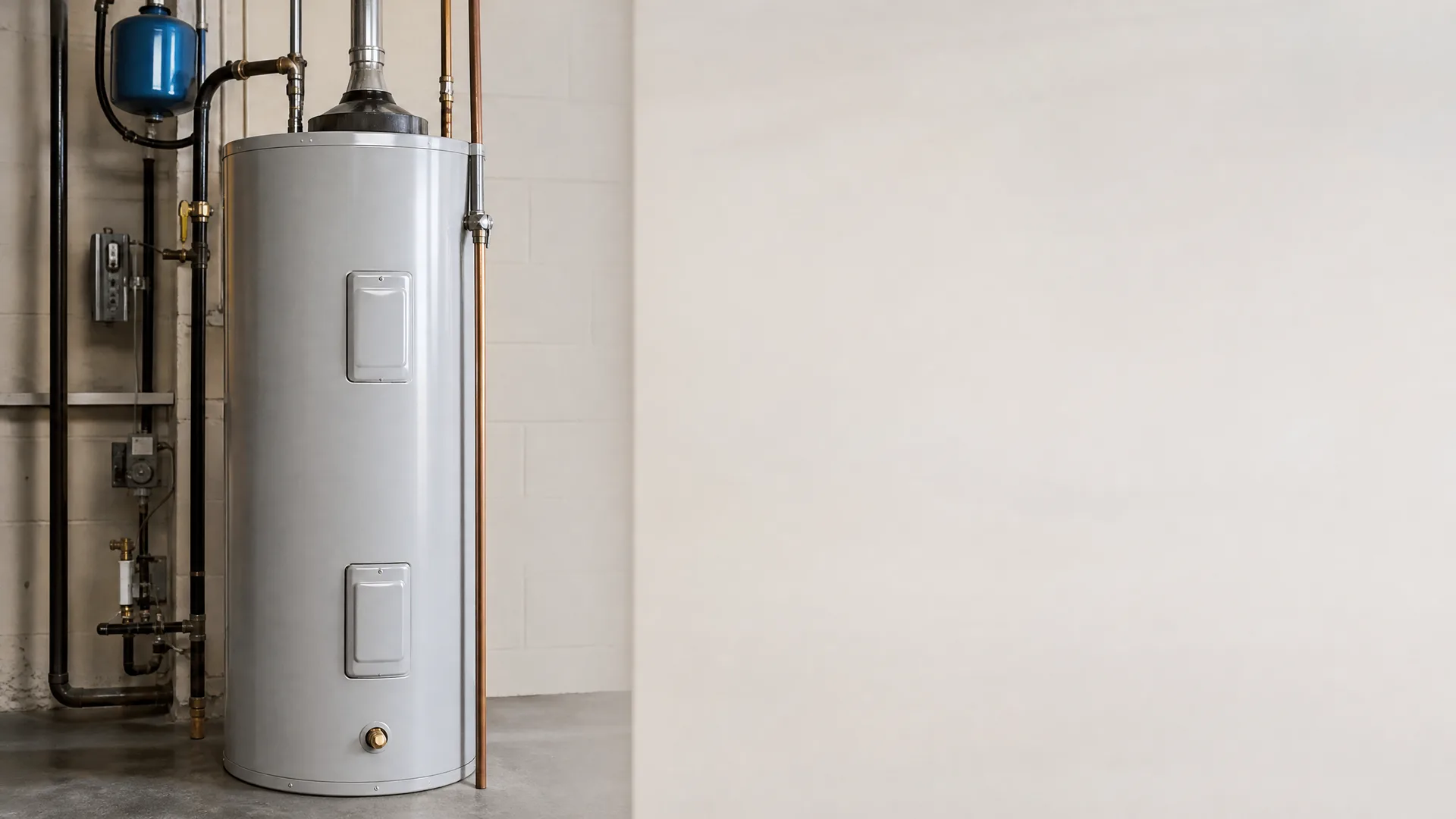
A fitting or valve that's dripping is a different job from a tank that's failed. The connections at the top, the drain valve near the bottom, and the pressure relief valve on the side can all loosen or wear out on their own and be replaced without touching the tank itself. Once water is coming from the tank body, through a seam or a crack in the steel, that tank is done. No sealant or part swap fixes a tank that's rusted through from the inside.
Why tanks fail from the inside out
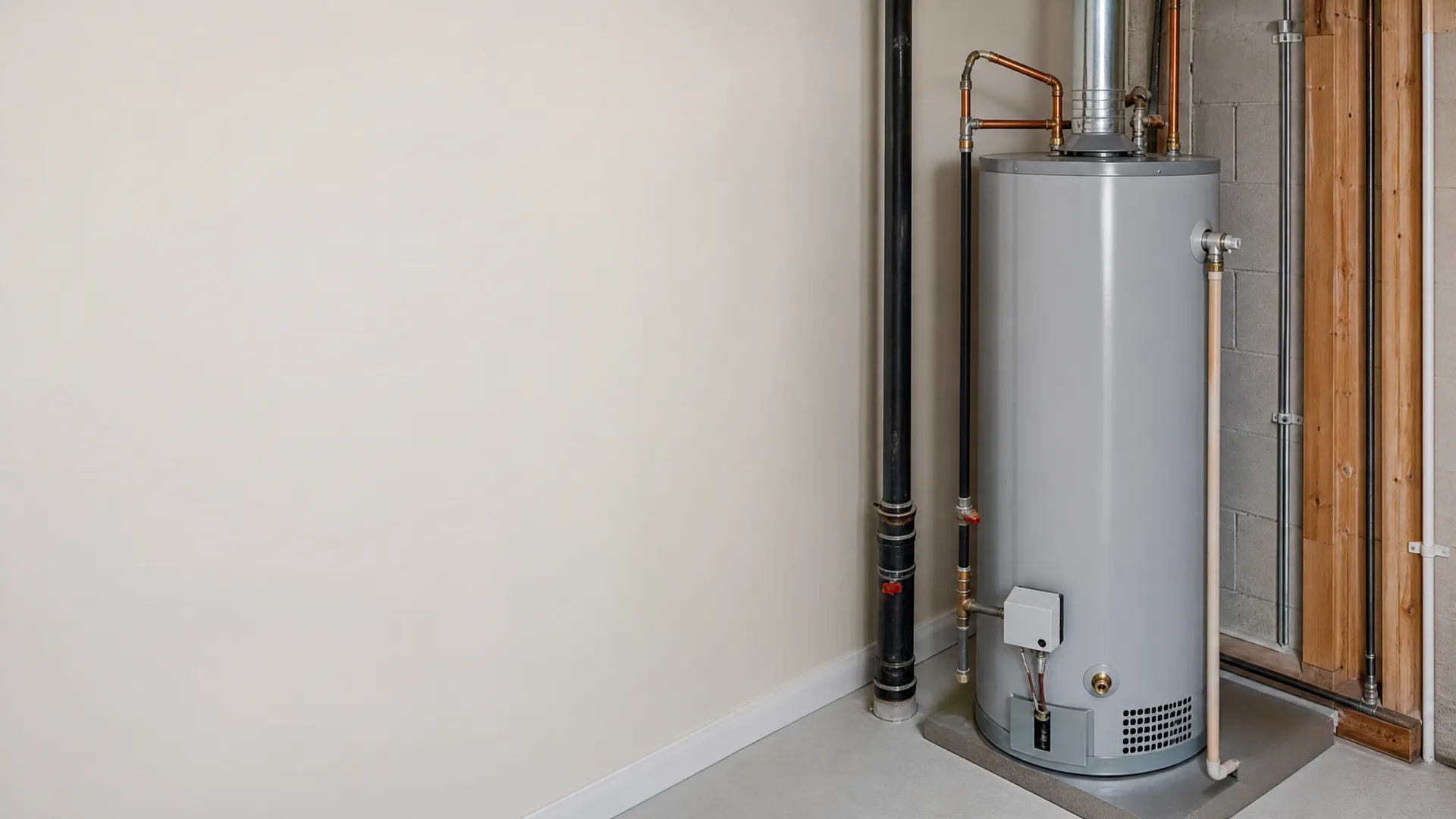
Inside the tank, a steel liner holds the water, and a glass coating protects that steel. Once the coating wears thin anywhere, that spot is exposed and starts to rust. Rust eats through from the inside, so the tank can look fine on the outside right up until it isn't. By the time water is showing up on the floor, the metal has usually been thinning for a while, and that process doesn't reverse itself.
What does your home's setup mean for a leaking water heater?
2.39 people per household on average
Madison County households average 2.39 people, so a tank that fails usually means everyone goes without hot water at once, not just one bathroom.
Half the homes here were built by 1992
Half the homes in Madison County were built in 1992 or earlier. If yours is one of them, check whether the water heater is original or has already been swapped once.
74.4% of homes heat with electricity
74.4% of homes here heat with electricity, so most tanks in the area are electric models, where a leak often traces to a failed gasket or a cracked tank rather than a gas line.
ACS 2020-2024
A dripping fitting versus a failed tank
A fitting that's loose or a valve that's worn can be tightened or swapped out, and the tank keeps working. The drain valve at the bottom, the connections at the top, the pressure relief valve on the side: any of these can be replaced on their own without touching the tank itself. Water around one of these spots doesn't mean the tank is bad. It means that one part needs attention, and once it's handled, the leak stops. This kind of repair is usually quick, and the rest of the unit is unaffected. If you can see exactly where the water is coming from and it's not the tank wall itself, this is likely what you're dealing with.
Water coming from the tank itself
Rust-colored water, or moisture seeping from a seam or the bottom of the tank, points to the steel having corroded through. Once the tank itself has failed, there's no fitting to tighten or valve to replace that fixes it. The tank holds the water under pressure, and a breach in that steel only gets larger. A leak from the tank body means the unit needs to be replaced, not repaired. There's no sense spending money patching a tank that will fail again in the same spot or a new one nearby. If the water is coming from the tank's shell rather than a connection point, replacement is the honest answer.




Get matched with a water heater pro in Madison County

After this form, you can stop searching for a water heater pro.
No fee to send it, and nothing to sign.
How a water heater actually starts leaking
- Sediment settles at the bottom of the tank over time and can work into the drain valve, keeping it from sealing fully.
- A tank leak usually starts as a hairline crack in the glass lining, and once it lets go, the steel shell corrodes from the inside out.
- The pressure relief valve is designed to open and release water if pressure inside the tank climbs too high, so water there can mean it's doing its job.
- Water dripping from the top of the tank often traces back to the cold inlet or hot outlet fitting working loose rather than the tank itself.
- A leak that only shows up when the burner or heating element is running points to the tank expanding slightly as it heats, widening an existing crack.
- Once the inner tank is compromised, no amount of tightening or part replacement stops the leak for good.
Most leaks trace back to one of a few places, and where the water shows up tells you a lot before anyone opens up the tank. At the bottom, the drain valve can stop sealing once sediment works its way into it, especially in homes with harder water that leaves more behind. On the side, the pressure relief valve is built to open when pressure inside climbs past what it should, so water there isn't always a failure. It can mean the valve did exactly what it's supposed to do. At the top, the cold inlet and hot outlet fittings loosen over years of the tank heating and cooling, and that's often mistaken for a tank problem when it's really just a connection that needs tightening. The leak that's harder to live with starts inside the tank itself. The glass lining that coats the steel develops a hairline crack, and once that happens, the water underneath starts corroding the metal. That kind of leak tends to show up only when the burner or heating element is running, because the steel expands slightly with the heat and opens the crack wider. It comes and goes at first, which makes it easy to dismiss. It doesn't stay that way. Once the inner tank is compromised, there's no valve to swap or fitting to tighten that fixes it. The tank itself has to go.
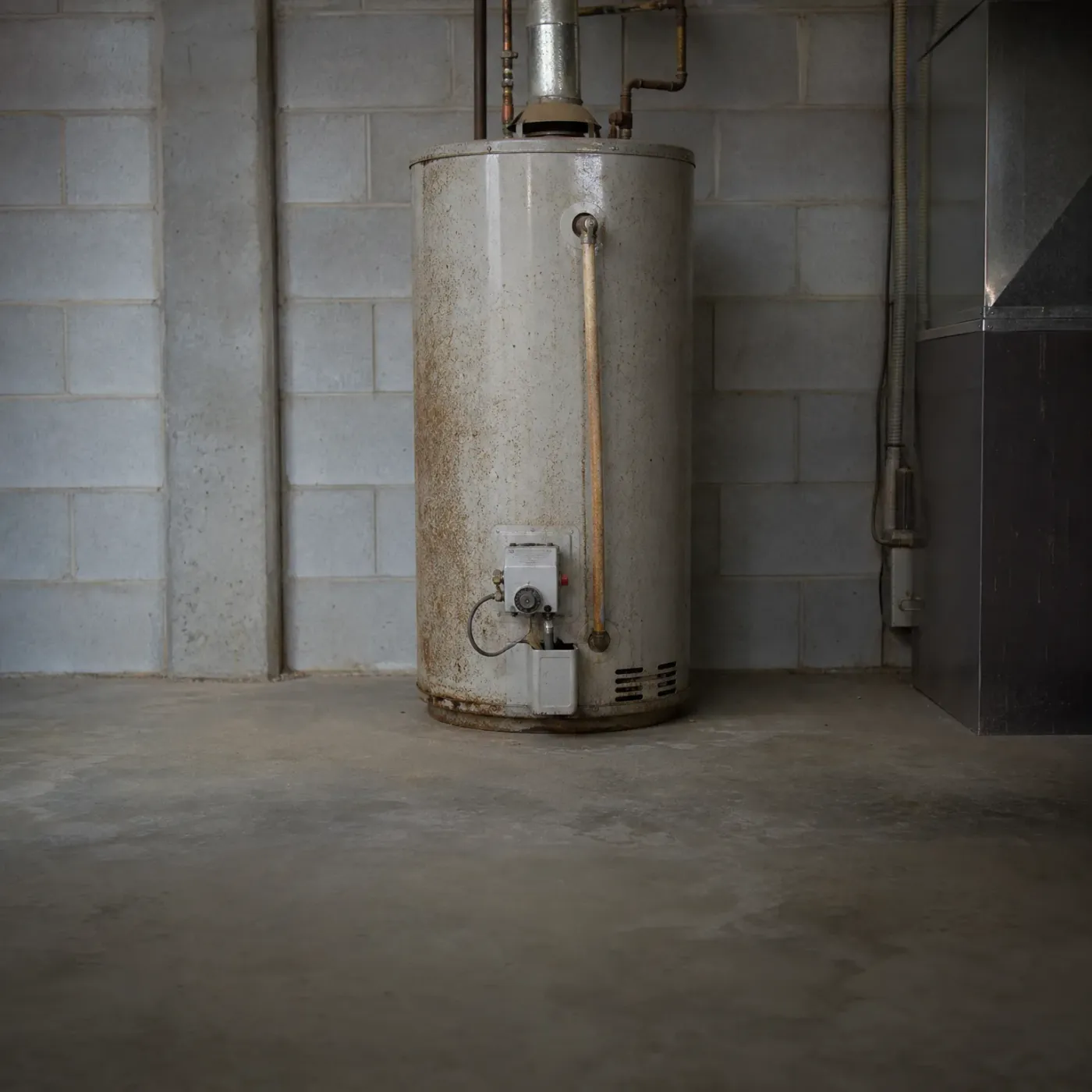
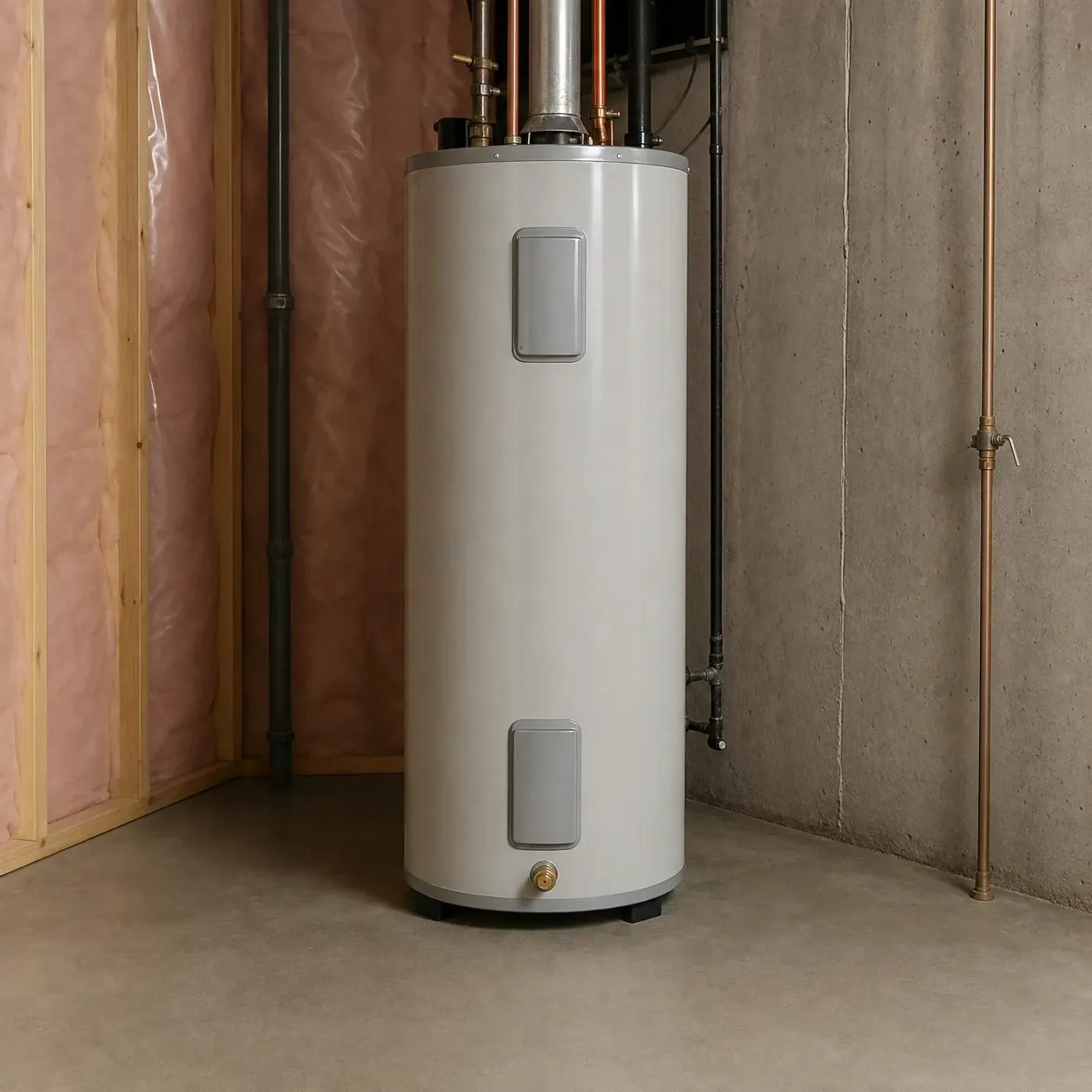
A leaking tank doesn't pause for the morning rush. If it fails overnight, you're finding out when someone turns on the shower and nothing but cold water comes out.
Left alone, that water finds the nearest floor, the nearest drywall, whatever is stored nearby. A leak you catch today is a repair. A leak you don't is water damage on top of it.


Inside the tank, water sits under real pressure, usually somewhere between 40 and 80 psi. That's why a crack doesn't seep, it pushes water out steadily until someone notices. The anode rod is there to take the corrosion so the steel tank doesn't have to. Once that rod wears down, rust starts working on the tank itself, and that happens on the inside first, out of view. An electric tank has two heating elements, each sealed with a gasket, and either one can fail and let water through the side of the tank. Not every drip means the tank is dying. The temperature and pressure relief valve is designed to open when pressure builds too high, so water coming from there can just mean it's doing the job it's supposed to do. And sometimes the leak has nothing to do with the tank at all. The flexible supply lines and shutoff valves at the top loosen over time from age and vibration, which is its own separate problem from whatever might be happening inside.
What's actually happening inside the tank
- Water pressure inside the tank runs around 40 to 80 psi, so even a small crack pushes water out steadily rather than seeping slowly.
- The anode rod inside the tank is meant to corrode first and protect the steel shell, but once it's used up, the tank itself starts rusting.
- Electric tanks have two heating elements, and a failed gasket around either one can leak straight through the side of the tank.
- The temperature and pressure relief valve is built to open and release water if pressure inside climbs too high, so a slow drip from it can mean it's doing its job.
- A tank that's rusting from the inside won't show rust on the outside until the leak has already started.
- Flexible supply lines and shutoff valves at the top of the tank loosen with age and vibration, which is a separate problem from anything happening inside the tank itself.
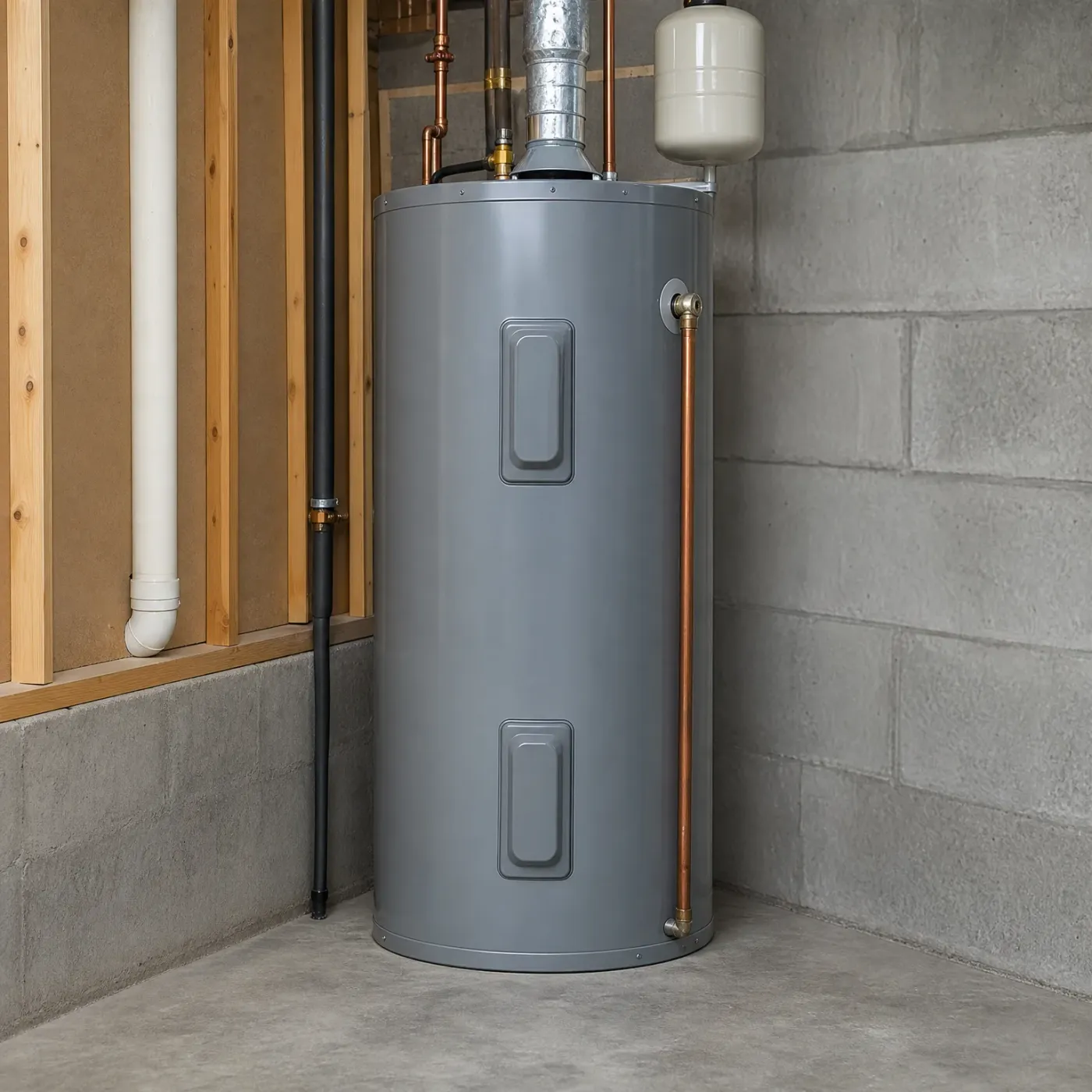
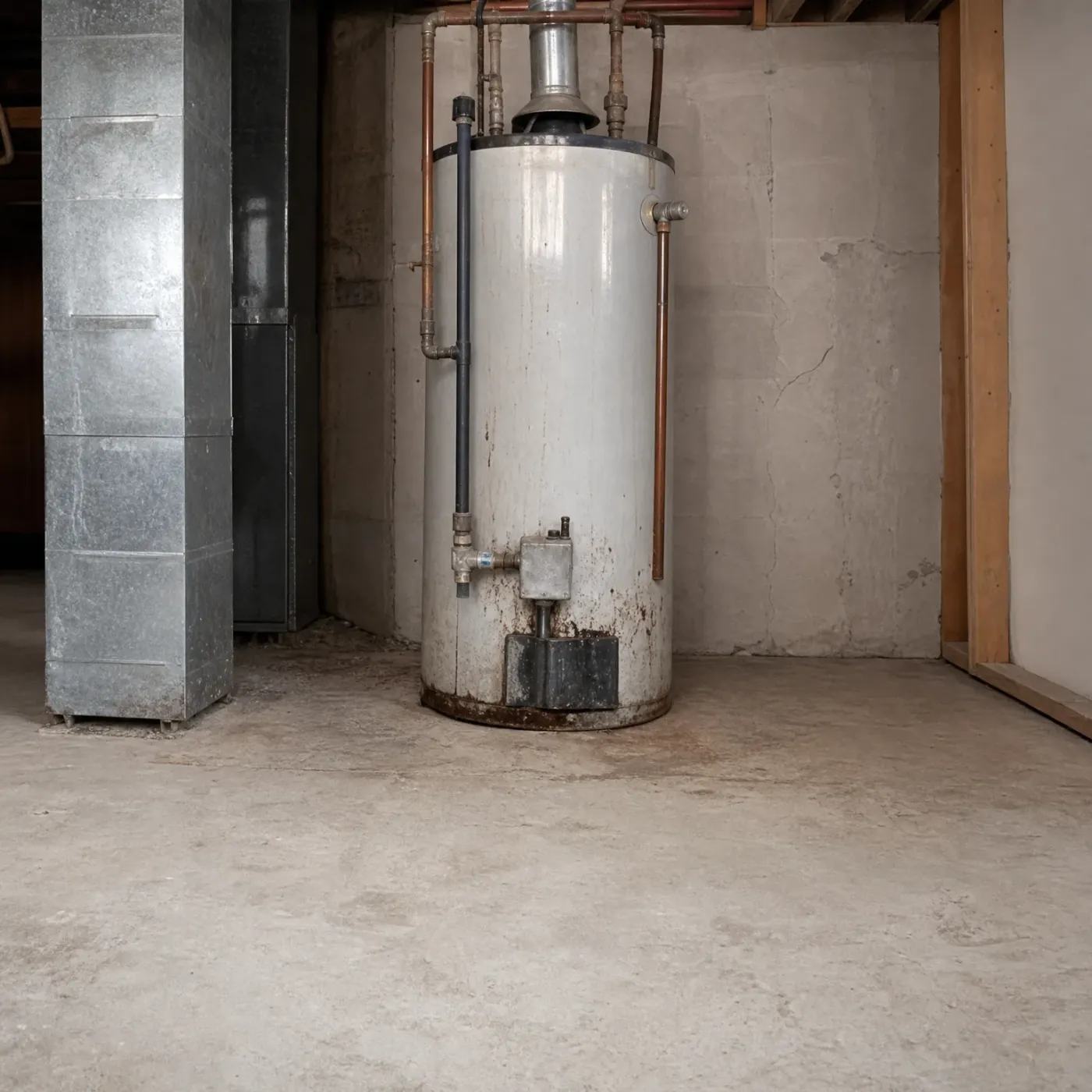
Power here costs 12.48 cents per kilowatt-hour
At 12.48 cents per kilowatt-hour, keeping a standard electric tank topped off and heating water all day isn't a big expense here. That's worth knowing once a leak forces the question of repairing the one you have versus replacing it.
EIA-861 2025
A leaking water heater has a cause, and that cause tells you what happens next. A loose fitting or a worn valve gets tightened or swapped, and the tank keeps working. A cracked tank doesn't get repaired, it gets replaced, because once the lining fails the steel underneath is already corroding. Either way, the leak won't wait, and neither should you. Once you send the form, you're done hunting for someone to call. A contractor who covers Huntsville and Madison County takes it from there, looking at the fitting, the valve, and the tank itself to tell you which one you're dealing with. You don't have to figure out whether this is a quick fix or a full replacement before you reach out. That's the part they sort out once they see it. What matters now is getting water to stop where it shouldn't be and getting someone qualified to look at it, and that part is off your plate the moment you ask for it.
Get the right pro for your water heater