A water heater leaking is never nothing, and where it's coming from changes what happens next. This page walks through the likely causes and what each one means for your tank. Skip the search for someone who can look at it today, the back and forth calls, and the retelling of the same problem to three different companies.
A water heater usually leaks for one of a few reasons. The tank itself can corrode from the inside and start weeping through the steel, and once that happens it won't stop or seal itself. A loose drain valve or a bad inlet connection can leak too, and those are simple to fix. The pressure relief valve can open and drip if pressure inside the tank builds too high, which is its job, but a valve that drips often is telling you something upstream is wrong. If your water heater is electric, which most homes in Alabama have, a leak can also come from a failed gasket around one of the heating elements. Where the water is actually coming from matters, because a leak at a fitting means a repair, while a leak from the tank body means the tank is done and needs replacing. Either way, water heaters don't fix themselves, and water finding its way onto a floor or into a closet gets worse the longer it sits.
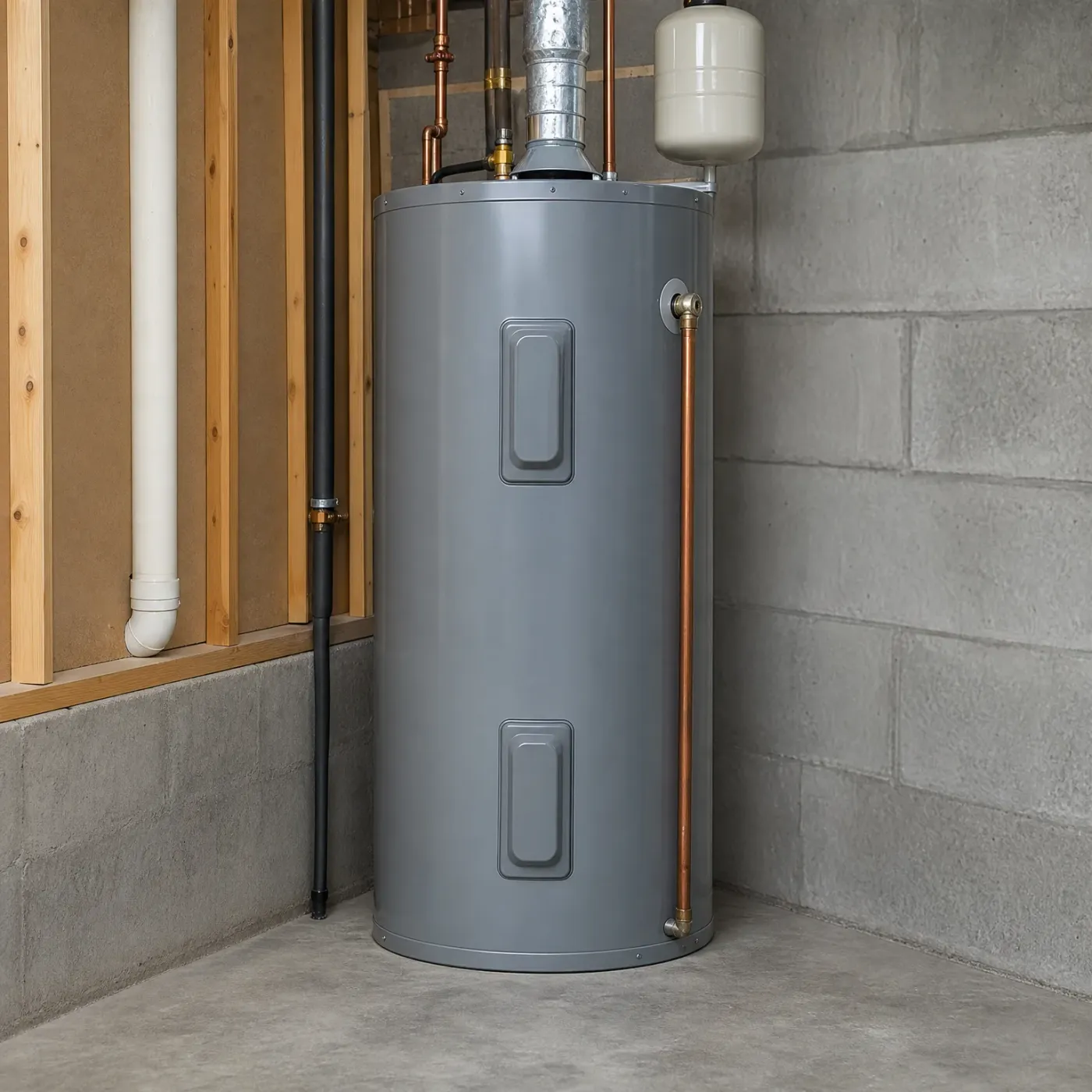
A tank that's still sound
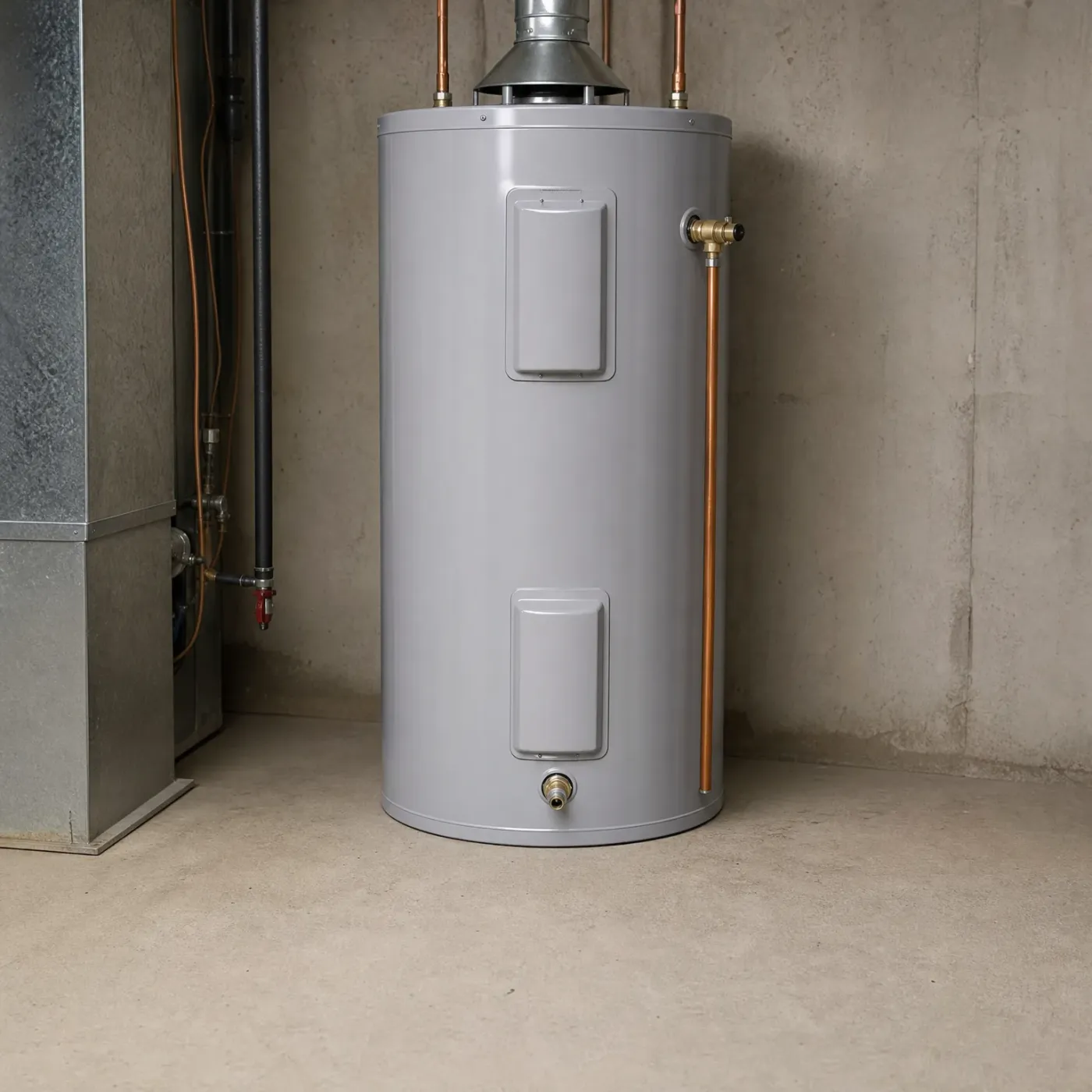
This is what a water heater looks like when nothing's wrong yet. The panels are sealed, the drain valve is dry, and the relief valve's copper pipe shows no sign of ever having discharged. No rust on the floor, no staining on the tank.
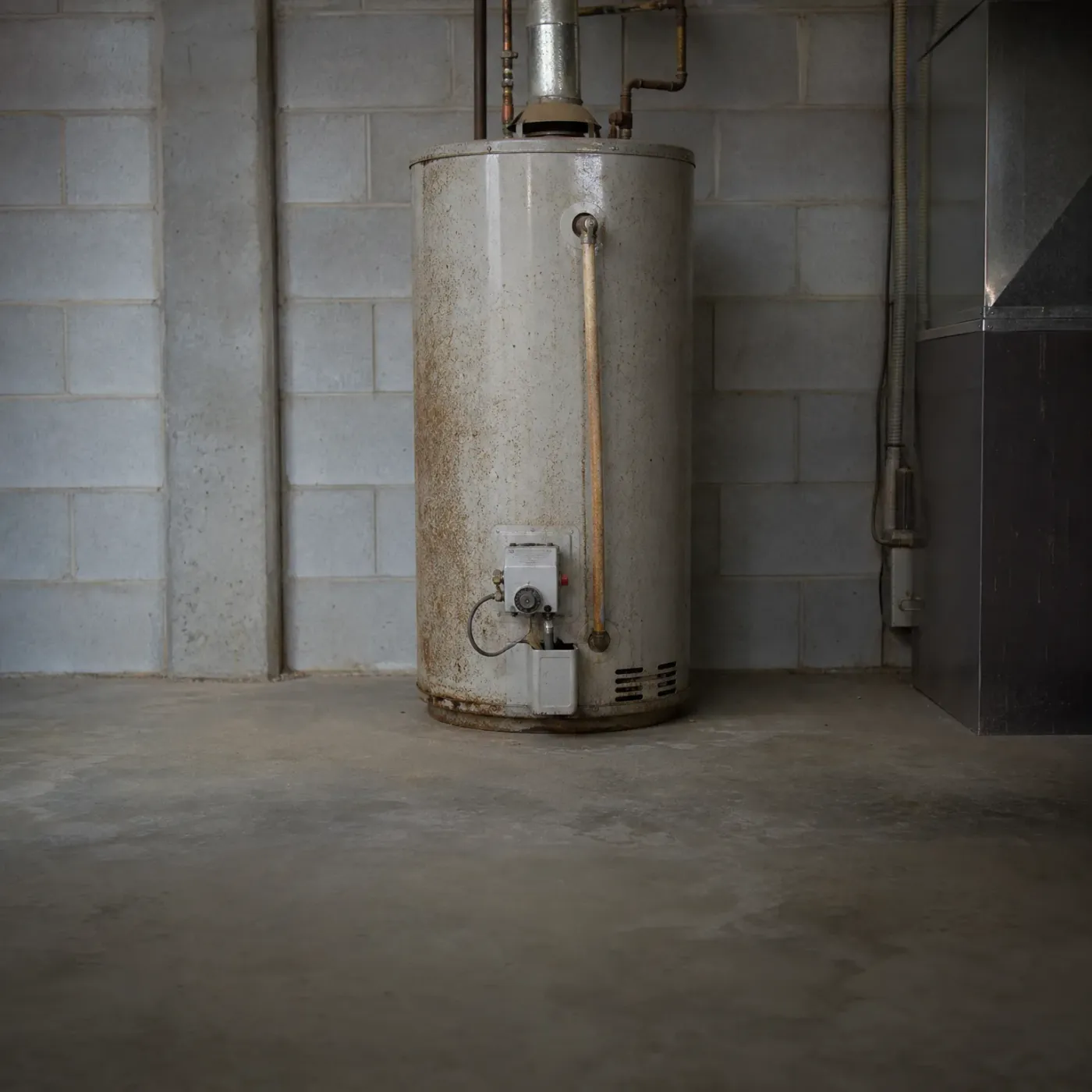
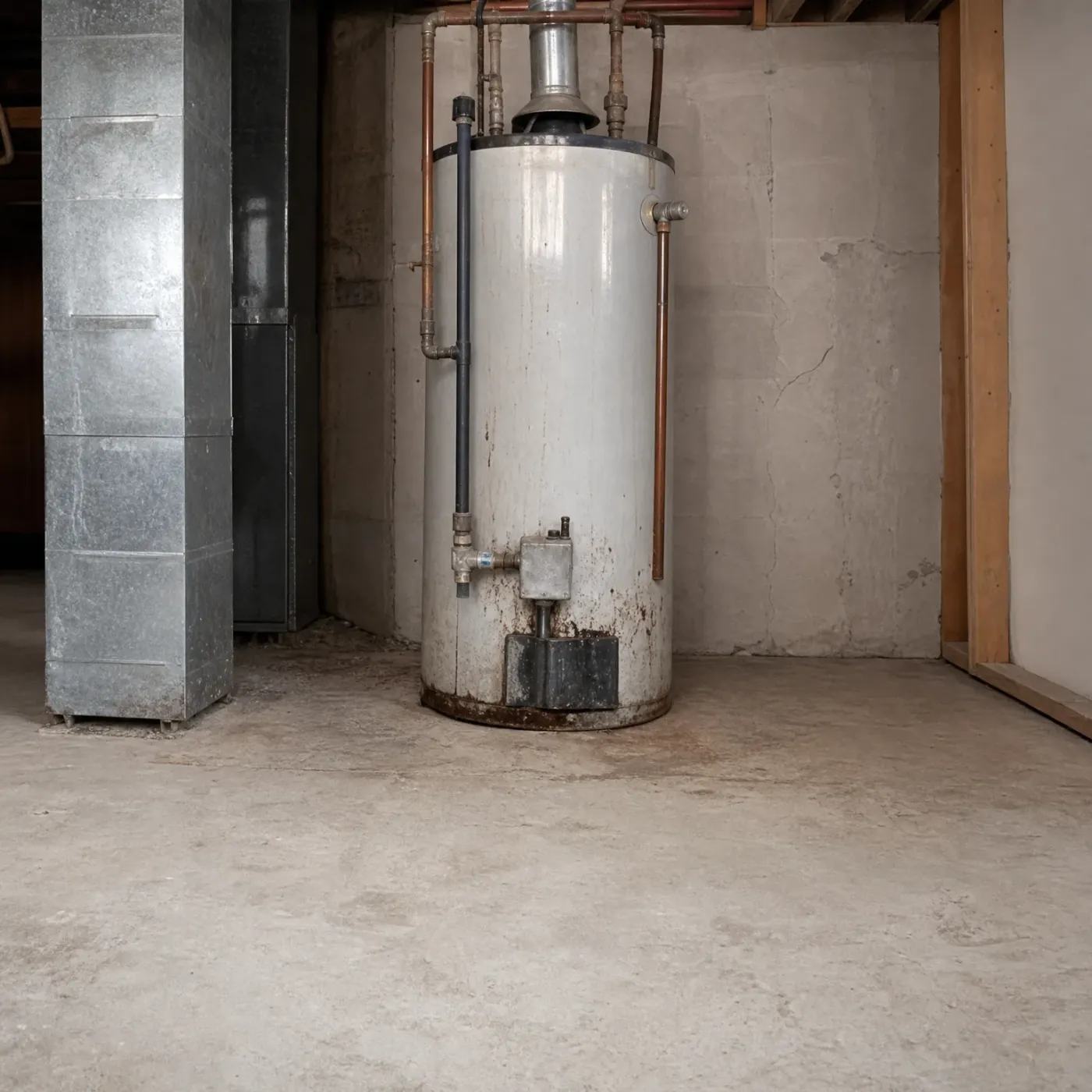
A tank past the point of repair
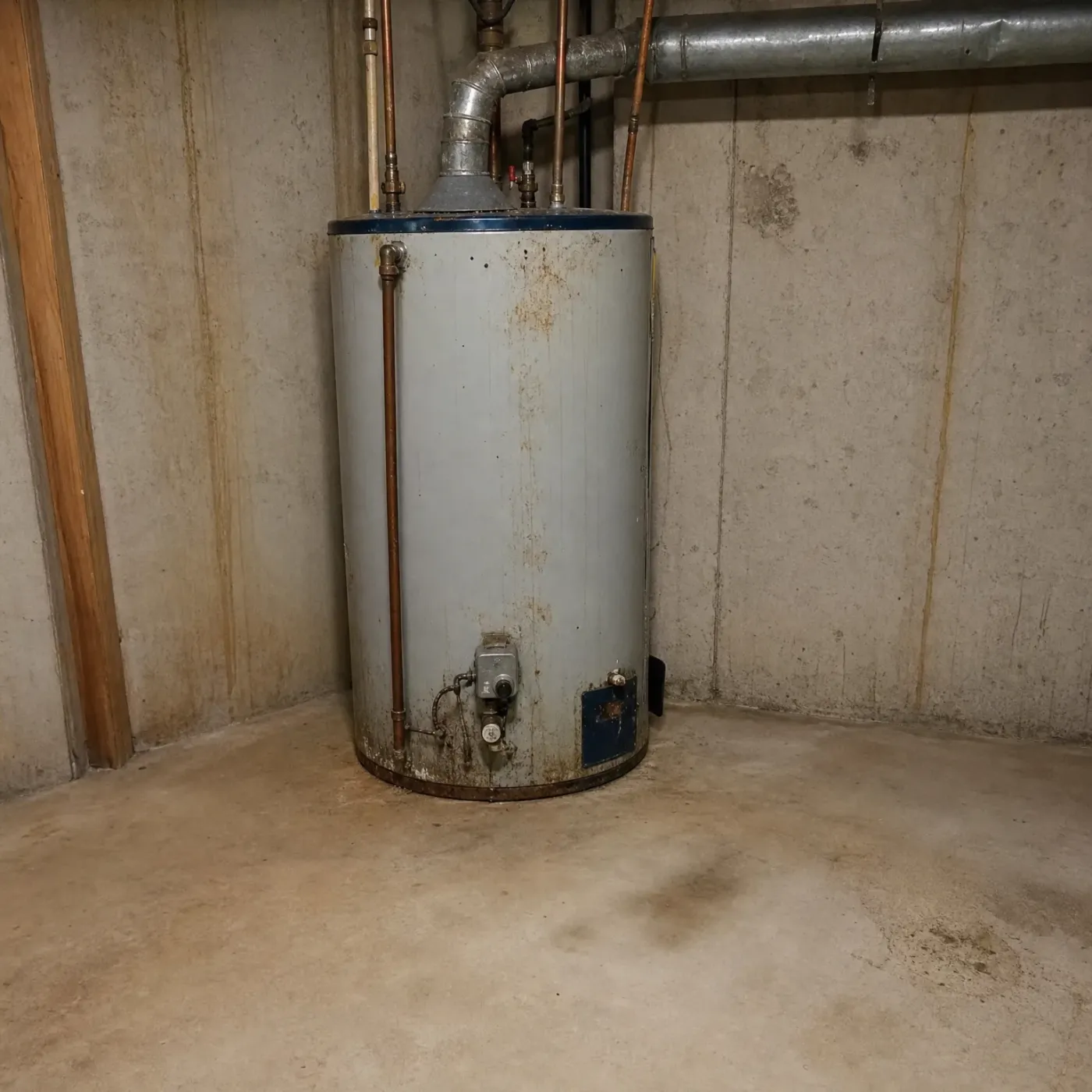
Rust like this on the tank body itself means the steel is corroding from the inside, not just a fitting gone bad. Once staining spreads down the side and onto the floor, the leak is coming from the tank, and no amount of tightening fixes that.
Tank Leak or Just a Fitting
Tank Leak
Water is coming from the tank itself, usually through a spot where the steel has rusted from the inside out.
Once the tank is pitted through, no fitting tightens and no sealant holds, because the leak is in the metal, not a joint.
Most tanks are warrantied for a set number of years, and that number is a decent guide to when the steel starts to give out.
A tank leak means replacement, not repair, since there's nothing inside a sealed tank a contractor can get to and patch.
You may see water pooling under the tank itself rather than near a pipe or fitting, which is usually the giveaway.
With Alabama's humidity, a slow weep can look worse than it is at first, so it helps to have someone confirm where the water's actually coming from before assuming the tank is done.
Fitting or Valve Leak
Water is coming from a connection point, like the drain valve, the inlet or outlet fittings, or the temperature and pressure relief valve.
These parts thread into the tank rather than being part of it, so a contractor can replace a bad one without replacing the tank.
A drain valve that won't fully close, or a loose inlet fitting, often just needs to be tightened or swapped out.
A relief valve that's discharging may be doing its job because of pressure buildup, not because the valve itself is bad.
This kind of leak tends to show up as water or staining right at a specific fitting rather than spread across the floor.
Catching it early, before the moisture sits under an electric water heater's wiring or connections, keeps a simple fix from turning into a bigger one.
1
Rust forms inside the tank years before any water shows.
2
A pinhole opens where the steel has thinned the most.
3
Water seeps out slowly through that one weak spot.
4
The puddle collects at the base near the tank.
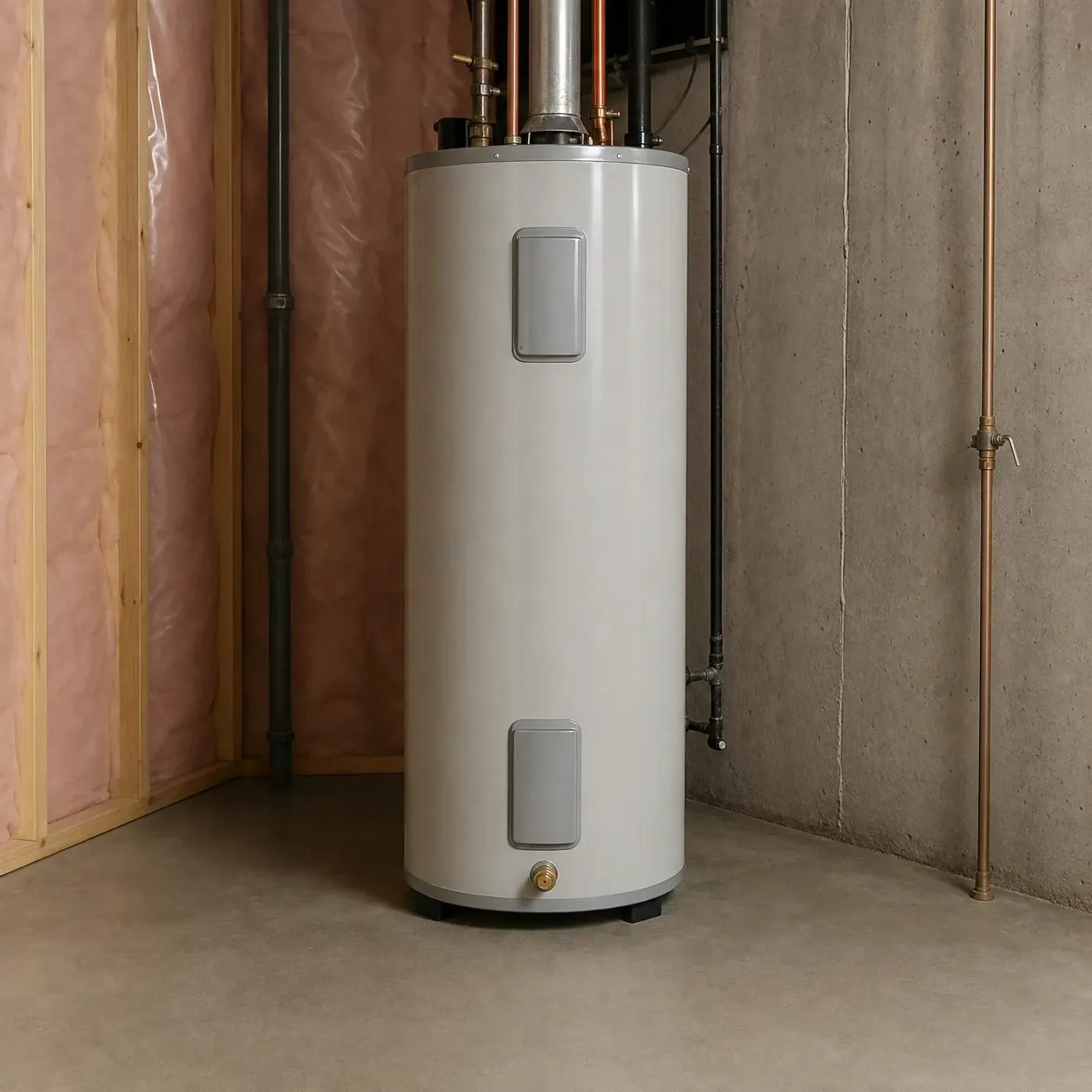
This electric tank shows no rust, no staining, and the fittings behind it sit clean against the insulated wall.
This gas tank is rusted through from top to bottom, and nothing short of replacing it will stop that.
What are you seeing near your water heater right now
Maybe it's a puddle spreading across the closet floor, or the carpet nearby staying damp no matter how many towels you put down. Maybe you noticed a rust streak running down the side of the tank, or the drain valve at the bottom dripping steadily instead of staying dry. Some of you are hearing it before you see it, a faint trickle or a hiss near the fittings. If this has been going on for a while, the floor underneath has probably taken on water longer than you'd like, and in a closet or upstairs utility space that means warped flooring or water finding its way into the room below before anyone catches it.
Only one pro gets your request, so you hear from one company.
No fee to send it, and nothing to sign.
How much water a tank holds
Most homes in Alabama run an electric tank of 40 or 50 gallons. That much water sits inside the steel at all times, so a pinhole leak doesn't show up as a drip and stop. It keeps finding its way out because the tank stays full, refilling itself through the cold water line every time you draw hot water from it. A leak that looks small on a Monday can mean the tank has been losing water around the clock since it started. The puddle size tells you how long it's been going, not how bad the leak is.
Why the location of the leak matters
A water heater is usually set in a closet, garage, or utility space, often on a pan with a drain line meant to catch exactly this kind of water. If that drain line is there and clear, a slow leak may never reach the floor until the pan itself fills. If the heater sits on a finished floor with no pan, water shows up fast and spreads under baseboards and into nearby walls. Where you find the water, and whether it's pooling or already soaked into drywall, tells a technician how long this has likely been happening before you noticed it.
Before you get your water heater repairAfter you get your water heater repair
You can tighten a drain valve, replace a relief valve, or reseat a loose fitting, and the leak stops the moment that part is fixed.
You cannot fix a hole in the tank. Once the steel itself is leaking, the only thing left to do is replace the tank, and waiting only means more water finding the floor in the meantime.
Fixable
A drain valve, relief valve, or inlet fitting can be replaced or tightened. Once that part is sorted, the water stops. The tank keeps working.
Most houses here run on an electric water heater, since electricity heats two out of three Alabama homes. The heating elements sit inside the tank itself, bolted straight through the steel. Once one of those gaskets wears out, water finds its way out around the bolt threads, not just through a rusted spot.
ACS 2020-2024 5-year B25040
Where that leak is coming from
A leaking water heater is either a part that failed or a tank that's rusted through. A drain valve, a relief valve, an inlet fitting, those get replaced and the leak stops. A tank weeping through pitted steel only gets worse, and the fix at that point is a new tank, not a patch.
Finding that out on your own means calling around to see who even works on water heaters, explaining the same puddle and the same rust streak to each one, then sitting with a stack of quotes trying to guess which contractor actually knows what they're looking at. Here you skip that. One licensed contractor local to Alabama, who sees this same tank and this same failure every week, comes to tell you which one you've got.
One form, no calling around
Your request goes to one pro, not a list of companies.